Statue of Žorik in Tallinn, Estonia
Žorik was the best-known dog in Tallinn for most of his roughly fifteen years alive, at a time when free-roaming dogs had already grown rare in the city. Born in 2007 in Kalamaja, once a working-class fishing district that has since gentrified, he lost his first owner as a puppy and spent most of his life on the streets nearby. The vagabond dog drifted between the harbor and the parking lot…
Žorik, the beloved dog of Tallinn, Estonia, became an iconic figure in the city during his roughly fifteen years of life. Born in 2007 in the once working-class fishing district of Kalamaja, Žorik spent most of his life roaming the streets, particularly near the harbor and a small shopping center. The free-roaming dog became a familiar sight for residents, drifting between the harbor and the parking lot outside the shopping center, where they kept him well-fed.
Nicknamed the "phantom dog" for his tendency to vanish whenever animal control tried to catch him, Žorik earned a Russian nickname, Ugaljok, due to his all-dark head, shaggy muzzle, and black-and-white body. Local legends suggest that past mistreatment had made him wary of anyone getting too close. Despite his reputation, Žorik drew admirers from across community lines.
Russian-speaking pensioners looked after him, while Estonian hipsters later opened a café named in his honor, signaling his growing significance in the neighborhood.
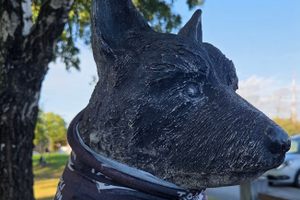
As Žorik aged and grew senile, he was found sleeping on train tracks, tram lines, and roads, prompting neighbors to report his dangerous sleeping spots. In 2020, Kalamaja residents raised funds for a statue in Žorik's honor. Local sculptor Kain Rezev was commissioned to create his likeness, funded by 61 donations. The bronze statue was unveiled on World Animal Day in October 2020, marking the exact spot where Žorik was known to sit and greet visitors.
The statue depicts Žorik with a small cat curled at his feet, a nod to the neighborhood cats he was known to share his space with and protect.
Tragically, Žorik lived just over a year after the statue's installation, cared for by the same foster family who had taken him in. His death in January 2022 sparked a candlelight vigil organized by local fishermen and heart-wrenching scenes of Estonian television footage showing tearful neighbors laying flowers at the memorial. Žorik's legacy lived on as the last of a once-large pack of free-roaming dogs from the harbor, a testament to his enduring impact on the community.
Written by urgent.news from Atlas Obscura's reporting — not their text. Machine-written — may contain errors; check the original before relying on it.