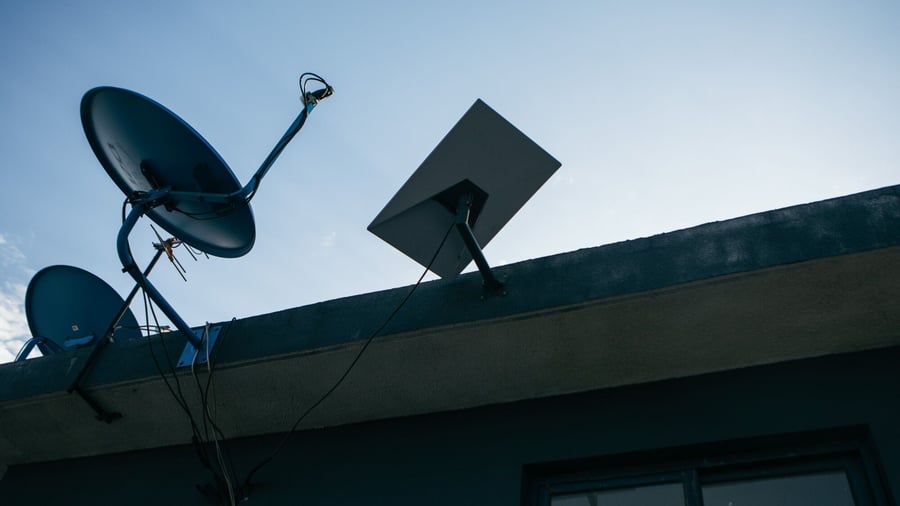
SpaceX: Suddenly a competitor for T-Mobile: The Starlink antenna on the roof is supposed to become a cell tower
SpaceX turns from mobile phone operators' partner to their rival. The telecom stock has been sharply down since Friday. An application to the US regulator FCC shows what Musk plans with Starlink.
Düsseldorf - US billionaire Elon Musk's SpaceX aims to build a mobile network, sending shockwaves through the global industry. Australian and New Zealand telecom values dropped significantly on Monday. Deutsche Telekom's share fell more than seven percent since Friday. The reason is SpaceX acquiring low-band frequencies from investment firm Grain Management.
These frequencies could help SpaceX establish a mobile network in the US. So far, the company has provided satellite connections as a supplement to offerings from Verizon, T-Mobile, and AT&T. However, Musk intends to become self-sufficient, potentially posing a direct rival to T-Mobile. Musk commented on the frequency purchase, which The Wall Street Journal estimated at eight billion dollars, saying, "That is the last crucial piece of the frequency spectrum SpaceX needs for nationwide mobile coverage."
Telecom executives have argued satellite services from Starlink were not a direct competitor, as the network primarily serves customers in hard-to-reach and rural areas. However, it becomes challenging to reach buildings due to walls and ceilings.
Rewritten by urgent.news; may contain errors — check the original.
Source: handelsblatt.com