Saudi shares fall after second airport attack as Gulf trade stays cautious
Saudi stocks retreated on Monday after a fresh attack weighed on sentiment, while several Gulf markets also ended lower as investors held back from big bets amid uncertainty over the US-Iran conflict. Saudi Arabia said on Monday it was facing a fresh barrage of incoming fire, with Riyadh airport to remain closed for now, days after Yemen’s Iran-allied Houthis claimed a deadly missile strike on a…
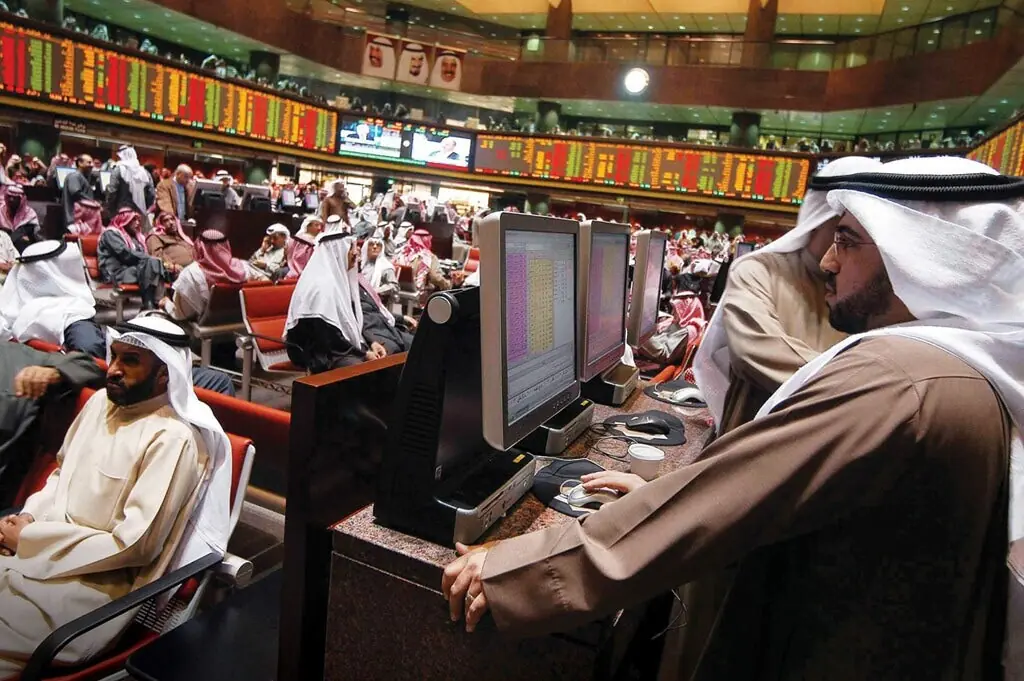
Saudi shares dipped on Monday following a fresh attack that dampened investor sentiment, while several Gulf markets also closed lower due to uncertainty surrounding the US-Iran conflict. Saudi Arabia confirmed it was enduring a barrage of incoming fire, with Riyadh airport temporarily shut since a deadly missile strike on a departure terminal on Saturday, carried out by Yemen's Iran-allied Houthis.
The country's benchmark index slipped 0.7%, with Saudi National Bank, the nation's largest lender by assets, shedding 1.2%. However, oil giant Saudi Aramco saw a slight gain of 0.2%. Brent crude prices rebounded from earlier drops, rising $1.24, or 1.2%, to $106.19 a barrel, despite the Saudi Arabian attacks overshadowing expectations of increased supply following US President Donald Trump's endorsement of additional Russian diesel exports and a Russia-Ukraine energy ceasefire.
Airlines have begun canceling flights to Saudi Arabia and neighboring nations following the weekend's Houthis' assault on Riyadh airport, exacerbating regional disruptions stemming from the Iran conflict. Diplomatic progress in resolving the US-Iran standoff over the Strait of Hormuz remains elusive, with Iran's security chief, Mohsen Rezaei, stating on Sunday that the US had not adequately responded to Tehran's seven conditions for reopening the critical waterway.
The attacks also impacted a key oil industry event in the kingdom, as BP CEO voluntarily declined to attend the World Petroleum Council Energy Congress in Riyadh. The Saudi energy ministry reported that the five-day conference proceeded as planned at a convention center situated approximately 6.2 miles away from the targeted airport.
Regional stock markets reacted differently to the developments. Dubai's main share index rose 0.3%, while Abu Dhabi's index fell 0.3%. In Qatar, the index increased by 1.2%, partially offsetting a 1.5% decline from the previous session. Outside the Gulf, Egypt's blue-chip index experienced a 1.1% decline. Egypt's central bank revealed that the country's current account deficit expanded to $22.5 billion in fiscal year 2025/26, up from $15.4 billion in the previous year.
Saudi Arabia's benchmark index closed at 10,284, while Abu Dhabi eased to 9,762, Dubai added 0.3% to 5,838, Qatar advanced 1.2% to 8,977, and Egypt declined 1.1% to 51,614. Bahrain's index eased by 0.4% to 1,882, Oman dropped 0.6% to 7,804, and Kuwait gained 0.3% to 9,061.
Written by urgent.news from Business Recorder's reporting — not their text. Machine-written — may contain errors; check the original before relying on it.