Saudi Arabia faces challenge of repeated and simultaneous attacks
Houthi attacks on Saudi Arabia have demonstrated that its build-up of batteries of air defence must stretch to all corners of the country. Saudi Arabia is the world’s second-largest Patriot operator, said Nawaf Obaid of King’s College London’s Department of War Studies. “Saudi Arabia does not lack air defences,” he told The National . “It possesses one of the world’s most sophisticated integrated…
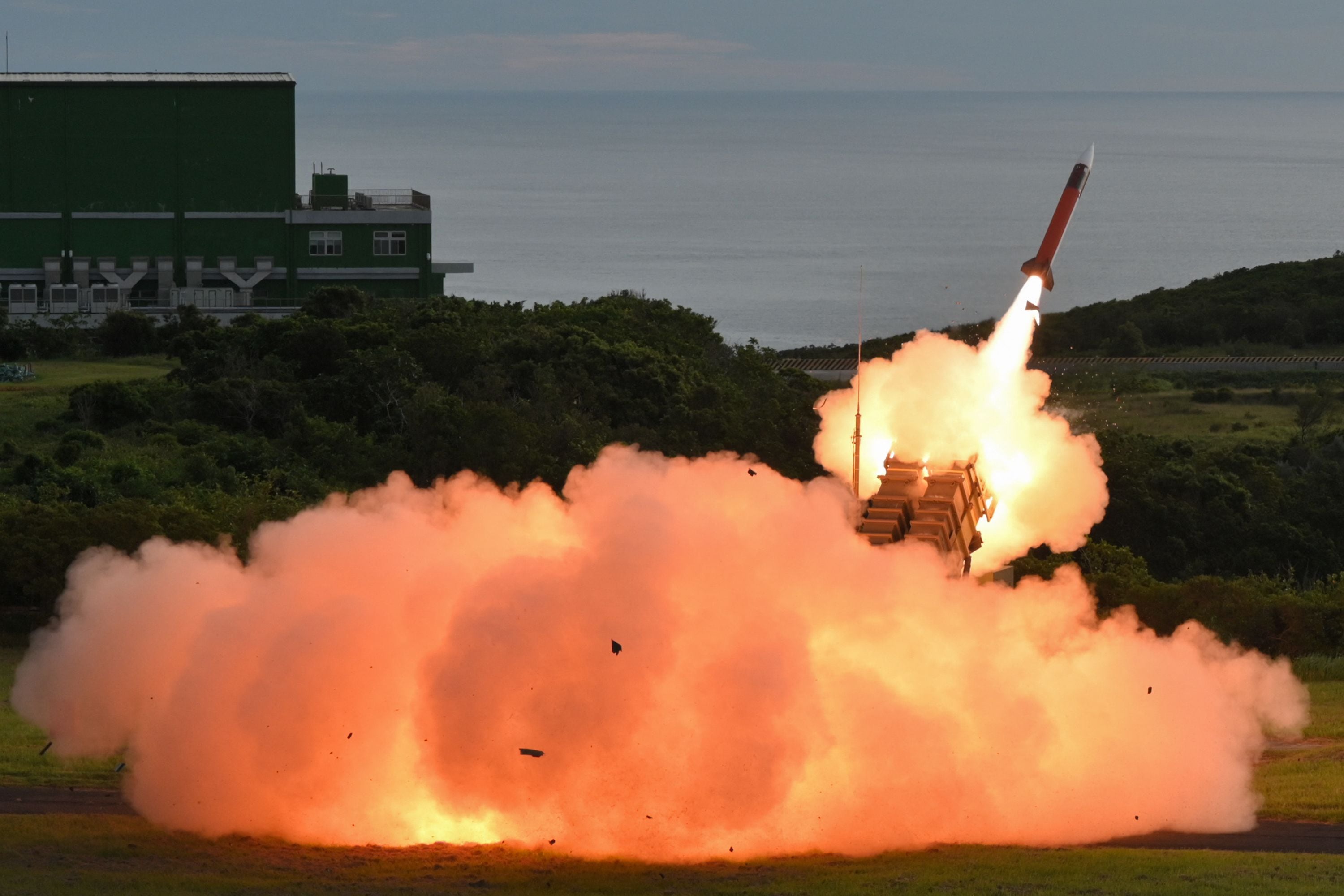
Saudi Arabia, the world's second-largest operator of Patriot missile systems, faces a growing challenge as it contends with repeated and simultaneous attacks from various threats. These include ballistic missiles, cruise missiles, and increasingly sophisticated drones. The Kingdom, which protects its vast territory larger than Western Europe, is expanding its air and missile defence architecture, but even with the largest programme of Thaad (Terminal High Altitude Area Defence) outside the US, it struggles to guarantee the interception of simultaneous attacks.
In a stark illustration, 13 people died and 308 were wounded when King Khalid International Airport in Riyadh was hit by ballistic missiles, causing significant damage and destruction.
While countries around the world are reassessing airport defences, experts suggest that close-in defence is nearly impossible given the number and size of civilian and military sites that could be targeted. The scale of interceptor expenditure during the Iran war has put significant pressure on American stocks, with the leak of interceptors leaving allies globally in a precarious position.
The Houthis' arsenal has also improved, with Iranian-derived missile systems like the Palestine-2, which has hypersonic capabilities, posing a more challenging interception problem during its terminal phase.
Saudi Arabia has more than 1,800 Patriot interceptors and has used a large number defending itself against Iranian and Houthi threats. The UK, however, failed to secure additional defensive support from Britain's Ministry of Defence despite Saudi Arabia's requests, leaving British frustration evident. British industry does offer solutions, such as the Starstreak high-velocity missile with an 8km to 9km range and the Martlet missile, which is relatively inexpensive.
However, Saudi Arabia's commanders must still decide where to position radars and interceptors without being able to protect everywhere. As the emergency escalates, US manufacturers are attempting to increase interceptor production, but replenishing stocks could take up to 30 months.
Written by urgent.news from The National Business's reporting — not their text. Machine-written — may contain errors; check the original before relying on it.
This story
This is one outlet's version. Read the fullest account.
- Saudi Arabia plans to double oil pipeline capacity to 10 million barrels a day within three years gulfnews.com
- Saudi Arabia faces challenge of repeated and simultaneous attacks thenationalnews.com
- FMs of UK, Bahrain call Prince Faisal to reaffirm solidarity with Saudi Arabia saudigazette.com.sa
- Saudi Arabia shifts from major supplier to key energy partner, expert says english.ajel.sa
- Saudi Arabia extends Riyadh aiport suspension, vows deadly response to Houthis strikes france24.com
- UK considers further support to Saudi Arabia, Burnham says middleeasteye.net