Robert E. Hall and Michael Woodford Win the Nobel Prize in Economics
The Royal Swedish Academy of Sciences awarded the 2026 Nobel Prize in Economic Sciences in Memory of Alfred Nobel on Monday to American economists Robert E. Hall and Michael Woodford for their contributions to the microeconomic foundations of macroeconomic stabilization. Their research has advanced understanding of how household and business decisions influence economic cycles and […]
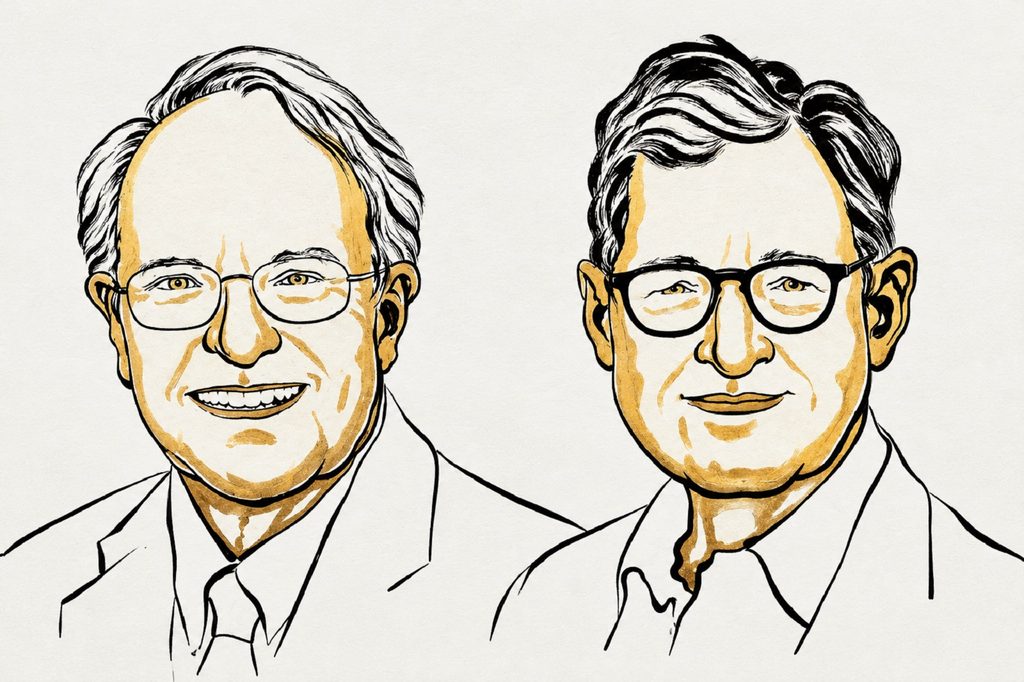
Robert E. Hall and Michael Woodford were awarded the 2026 Nobel Prize in Economics for their groundbreaking research on macroeconomic stabilization. The Royal Swedish Academy of Sciences honored the American economists for their contributions to understanding how household and business decisions impact economic cycles and how governments and central banks can respond to crises.
Hall, a professor at Stanford University born in 1943, focused on macroeconomics, consumption, economic growth, and household behavior. His research revealed that individuals consider future economic prospects when making spending decisions, not just current income. Woodford, a professor at Columbia University born in 1955, primarily studied modern monetary policy, emphasizing the relationship between central bank decisions, economic agents' expectations, and the evolution of inflation and economic activity.
Their work became crucial after the 1970s oil crises, which caused high inflation and unemployment, known as stagflation. Traditional economic policies were unable to effectively address such economic issues. Hall and Woodford helped renew Keynesian theories by integrating more rigorous analysis of individual decisions that collectively determine economic behavior.
Woodford's significant contribution was demonstrating that central banks' communication about future decisions can significantly influence the economy. If businesses and consumers understand and trust these measures, they can adjust their decisions even before interest rate changes fully take effect. This concept, known as forward guidance, gained importance after the 2008 financial crisis, when interest rates were near zero and central banks needed alternative tools to stimulate economic activity.
Hall's research helped explain how expectations about future income impact current consumption. For example, a family expecting a temporary income increase may save most of it, while another expecting long-term economic improvement is more likely to spend the additional money. These differences are vital when assessing the impact of fiscal and monetary measures.
The Swedish Academy noted that the models developed by both researchers have enhanced policymakers' ability to implement stabilization measures and respond to economic shocks like energy crises or sudden changes in household consumption. Although their work doesn't eliminate uncertainty and doesn't guarantee that government and central bank decisions will always produce the expected results, it provides tools to anticipate how economic agents will respond and assess the consequences of public interventions more accurately.
Written by urgent.news from Colombia One's reporting — not their text. Machine-written — may contain errors; check the original before relying on it.