Personnel on Pause
Andrey Pertsev sums up the political week (October 5−11)
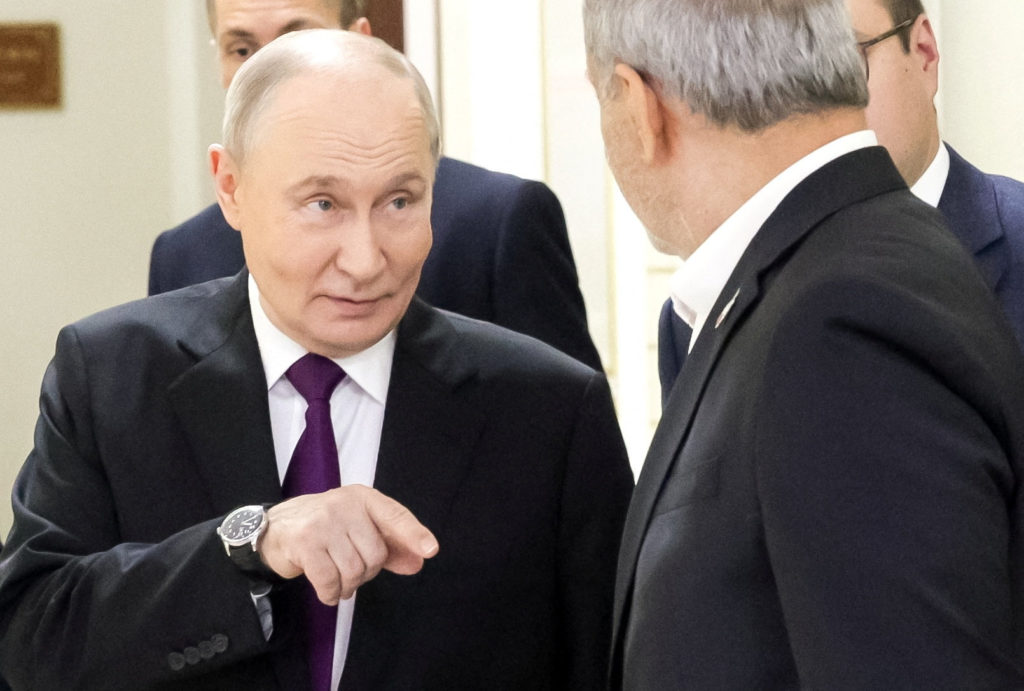
Vladimir Putin has always favored a cautious approach to personnel decisions. Long-standing officials, like Presidential Administration chief Anton Vaino, hold their positions for extended periods, while those who might have moved to less visible roles, such as Federation Council Speaker Valentina Matviyenko and Foreign Minister Sergey Lavrov, stay put.
Those with aspirations in other areas—former President and Security Council deputy chairman Dmitry Medvedev, and Sergei Kiriyenko, who oversees domestic politics—have yet to secure the roles they desire. Theoretically, opportunities could arise after federal elections when new governments and parliaments are formed, but these openings have not presented themselves.
Putin may occasionally offer promises of future appointments to maintain the elites' loyalty. Notably, personnel changes were anticipated following the parliamentary elections; State Duma Speaker Vyacheslav Volodin had completed his second term, which is typically seen as the limit for speakers. Vitaly Savelyev, now deputy prime minister for transport, had secured a United Russia party list position, indicating a probable future role as deputy speaker.
However, none of these expected post-election changes took place. Volodin remained in office, breaking the record for tenure in the position. Savelyev's former role remains unfilled despite rumors of Transport Minister Andrei Nikitin potentially being promoted to deputy prime minister. Mayor Sergei Sobyanin's prominent position on the United Russia list suggested he might take on another post, potentially the premiership, which would have freed up the mayoralty.
Yet, Sobyanin remained in place, and Prime Minister Mikhail Mishustin continued to hold his position, though a potential resignation was widely discussed among politically engaged individuals on Russian social media platforms. Putin's preference for continuity and comfort once again shone through as he re-appointed Volodin as speaker.
The ninth State Duma, elected in late September, has commenced its duties. The Kremlin and United Russia placed significant importance on electing members of the "new, real elite"—dozens of individuals involved in Ukraine's full-scale invasion—to parliament. This might have led to the perception that the presence of military personnel in the lower house could influence its operations and key appointments.
However, the new Duma has not transformed into a "military parliament." Instead, very few individuals with direct combat experience have secured electable positions. The authorities and political parties consider those who participated in the special military operation to be participants from elite circles, including federal and regional lawmakers, officials, and prominent business figures.
While some may have received military awards and been near the front lines, they should not be considered a separate "new elite" with distinct behavior. Even under the most optimistic estimates, "veterans" constitute slightly more than 10 percent of the Duma. The Presidential Administration's domestic politics bloc has been transparent about the Kremlin's unwillingness to incorporate a significant number of veterans into the lower house.
Even this small group has been dispersed, with parliamentary leaders ensuring veterans do not gain influential positions. Vladislav Golovin, the most prominent war veteran in the Duma, was assigned to head the Committee on Youth Policy, a committee with limited influence. None of the frontline participants has become a deputy speaker or committee chair.
Admiral Vladimir Kasatonov, who commanded the fleet's headquarters and is now leading the Defense Committee, likely participated in discussions about strikes against Ukrainian cities but was primarily appointed as an insider familiar with the Defense Ministry's objectives. Despite this, his presence does not necessarily signify a significant shift in the power structure.
Six military veterans were assigned to the Committee on Youth Policy, and another five to the Defense Committee, yet they have not formed a dominant bloc in either committee. The domestic politics team and Duma leadership can easily inform Putin that the "new elite" is represented in parliament while minimizing the risk of a "veterans' faction" emerging and challenging the current control.
Overall, the Duma's leadership maintains a remarkably conservative stance, consistent with Putin's broader ultra-conservative approach to personnel appointments.
Rewritten by urgent.news; may contain errors — check the original.
Source: ridl.io