‘More than 1,000 words’: AI models could be used to communicate procedures to cancer patients
Researchers at the University Health Network in Toronto are now leveraging AI to help create a 3D picture of what tumours look like.
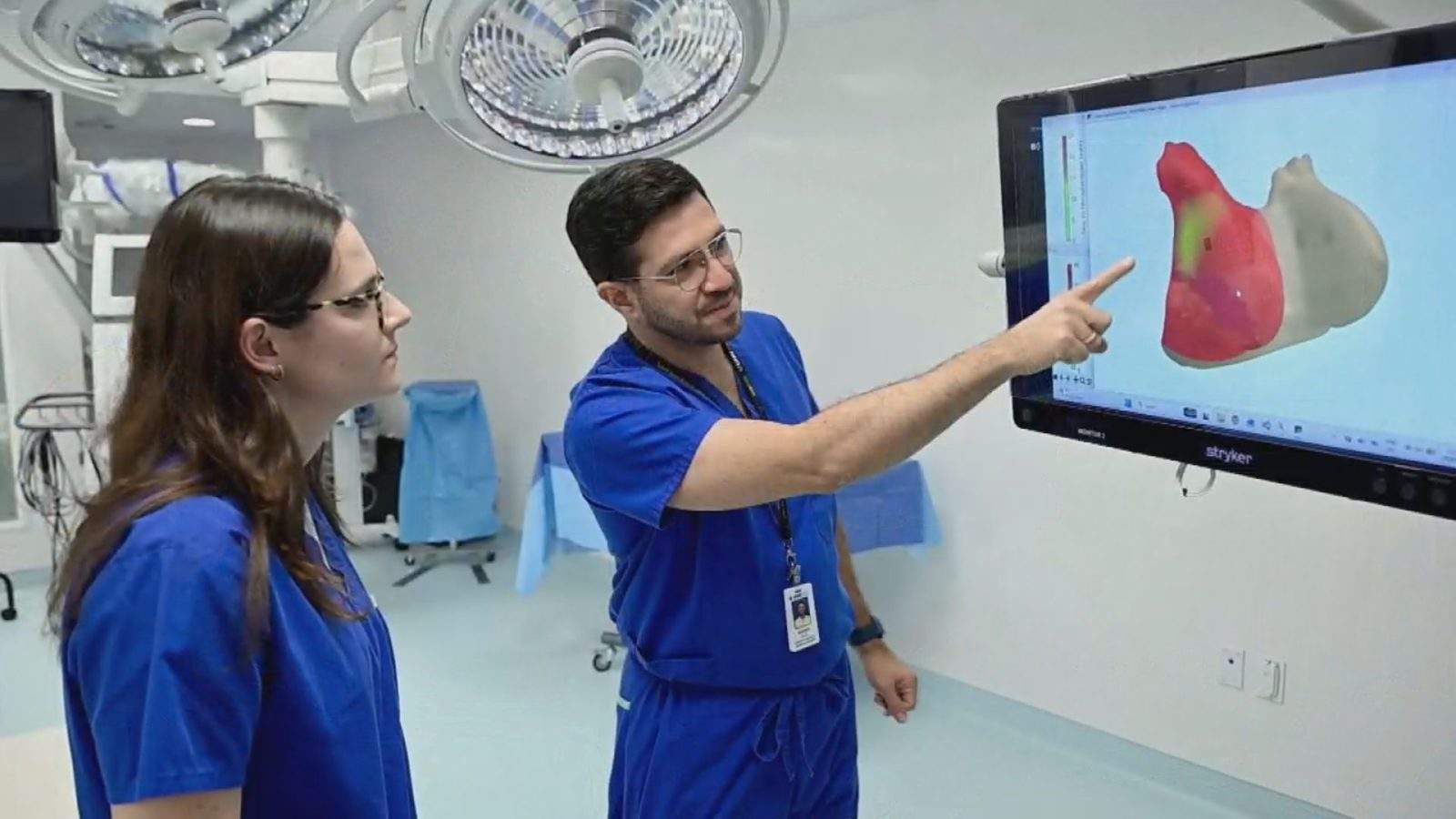
In a breakthrough for cancer patients, researchers at the University Health Network in Toronto are harnessing artificial intelligence (AI) to assist in preparing patients for their procedures. Adina Isenberg, a breast cancer survivor, shared her initial shock upon waking from her lumpectomy, noting the second scar in her armpit where the sentinel node was removed.
Now, Isenberg is collaborating with the UHN team to leverage AI technology to create a 3D "digital twin" of patients' anatomy, providing a more comprehensive understanding of their tumour and its potential impact.
This interactive model, which offers an in-depth look at the tumour from various angles, enables patients to visualize their condition and better comprehend the surgical process. "It’s you cloned in 3D, and we can play around from different angles, showing depth and the lesion’s location and appearance post-removal," explained Wagner Souza, a staff scientist at UHN and assistant professor at the University of Toronto.
By presenting patients with a model that feels more personalized, researchers hope to reduce unnecessary medical trauma and empower patients to participate actively in their treatment decisions. Isenberg emphasized that while cancer cannot be avoided, the experience following diagnosis can be significantly improved. Souza emphasized the empowering aspect of this technology, stating, "It’s empowering, because you know where you’re fighting."
Surgeons also stand to benefit from this technology, as it allows them to have a clearer understanding of the patient's anatomy before the procedure. Amin Madani, an endocrine and acute care surgeon at UHN, explained that traditionally, surgeons must rely on 2D images to mentally reconstruct the patient's anatomy, leading to potential errors during surgery. With AI-generated 3D models, surgeons can strategize more effectively, anticipating how the patient's body will respond to the procedure.
One limitation of the current technology is its inability to fully account for changes in body structure due to different patient positions during imaging and surgery. Souza highlighted the challenge of integrating physical properties into the model to predict how the lesion will move based on various factors, such as patient position and tissue elasticity. This is an area that will likely be explored further during clinical trials.
While the potential of AI-generated 3D models in improving patient understanding and surgical outcomes is promising, researchers acknowledge that there are still unknowns and limitations to overcome. However, the possibility of integrating AI and machine learning into the operating room represents a significant step forward in the field of cancer treatment, offering a new frontier for enhancing patient care and surgical precision.
Written by urgent.news from Global News's reporting — not their text. Machine-written — may contain errors; check the original before relying on it.