Man, 49, gets relief after Kumasi doctors remove 880g bladder stone
A team of surgeons at Kumasi Hospital, a private health facility in the Ashanti Region, has removed an 880-gramme bladder stone from a 49-year-old man after nearly three decades of pain and urinary difficulties. The medical team believes the case could rank among the largest bladder stones removed in Africa, although further verification against documented […]
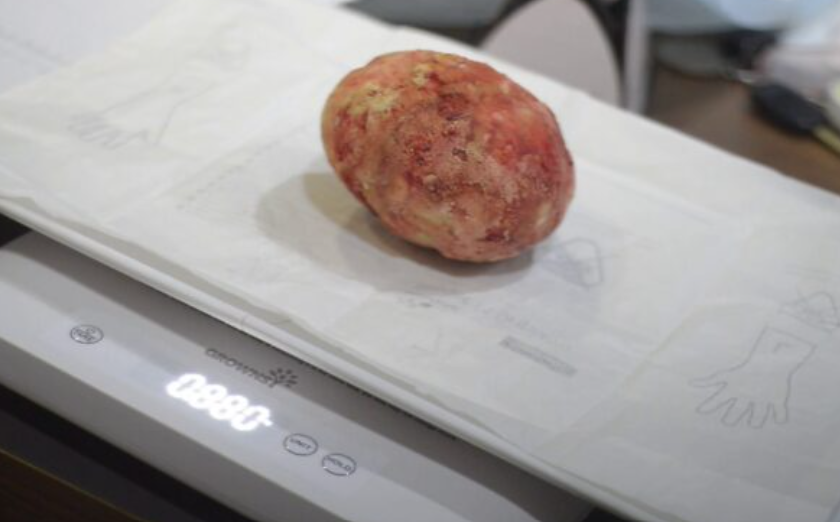
A 49-year-old man from the Ashanti Region, identified only as Akoto, received relief after Kumasi Hospital surgeons removed an 880-gram bladder stone that had caused him years of pain and urinary difficulties. The team believes this could be among the largest bladder stones removed in Africa, although further verification is needed against documented cases.
The stone measures 11.8 cm in length, 9.5 cm in breadth, and nearly 8 cm in width, with an oval shape and clay-like appearance, reflecting the accumulation of minerals inside the patient’s bladder. The patient described the condition as extremely painful, noting that being unable to urinate is something he wouldn’t wish on anyone.
Upon reviewing medical literature from across Africa, the hospital’s Chief Executive Officer, Dr (Med) Samuel Koranteng Asante, confirmed that no documented case of a similarly large bladder stone had been removed. The stone initially weighed 980 grammes but weighed 880 grammes after desiccating for over a day. Prior to treatment, the stone caused significant urinary issues, disrupting the patient’s social life and sexual intimacy.
Dr Asante explained that conditions such as prostate enlargement, urine retention, and untreated urinary infections can increase the risk of bladder stone formation. In Akoto’s case, a ureteric stricture—a narrowing of the tube carrying urine from the kidney to the bladder—likely contributed to the condition, possibly due to an untreated sexually transmitted infection.
Bladder stones are hard mineral deposits that form when urine remains concentrated in the bladder, allowing crystals to develop and grow. While some small stones may pass naturally, larger ones often require medical intervention. The hospital advises proper hydration to help dilute urine and reduce the risk of stone formation, though it noted that underlying conditions may still necessitate treatment.
For Akoto, the successful surgery alleviates his suffering and underscores the importance of addressing urinary tract issues promptly to prevent complications.
Written by urgent.news from GBC Ghana's reporting — not their text. Machine-written — may contain errors; check the original before relying on it.