Los cimientos de la estabilidad
La Academia sueca vuelve al corazón de la macroeconomía al otorgar el Nobel a Robert E. Hall y Michael Woodford, otro reconocimiento compartido (y exclusivamente masculino)
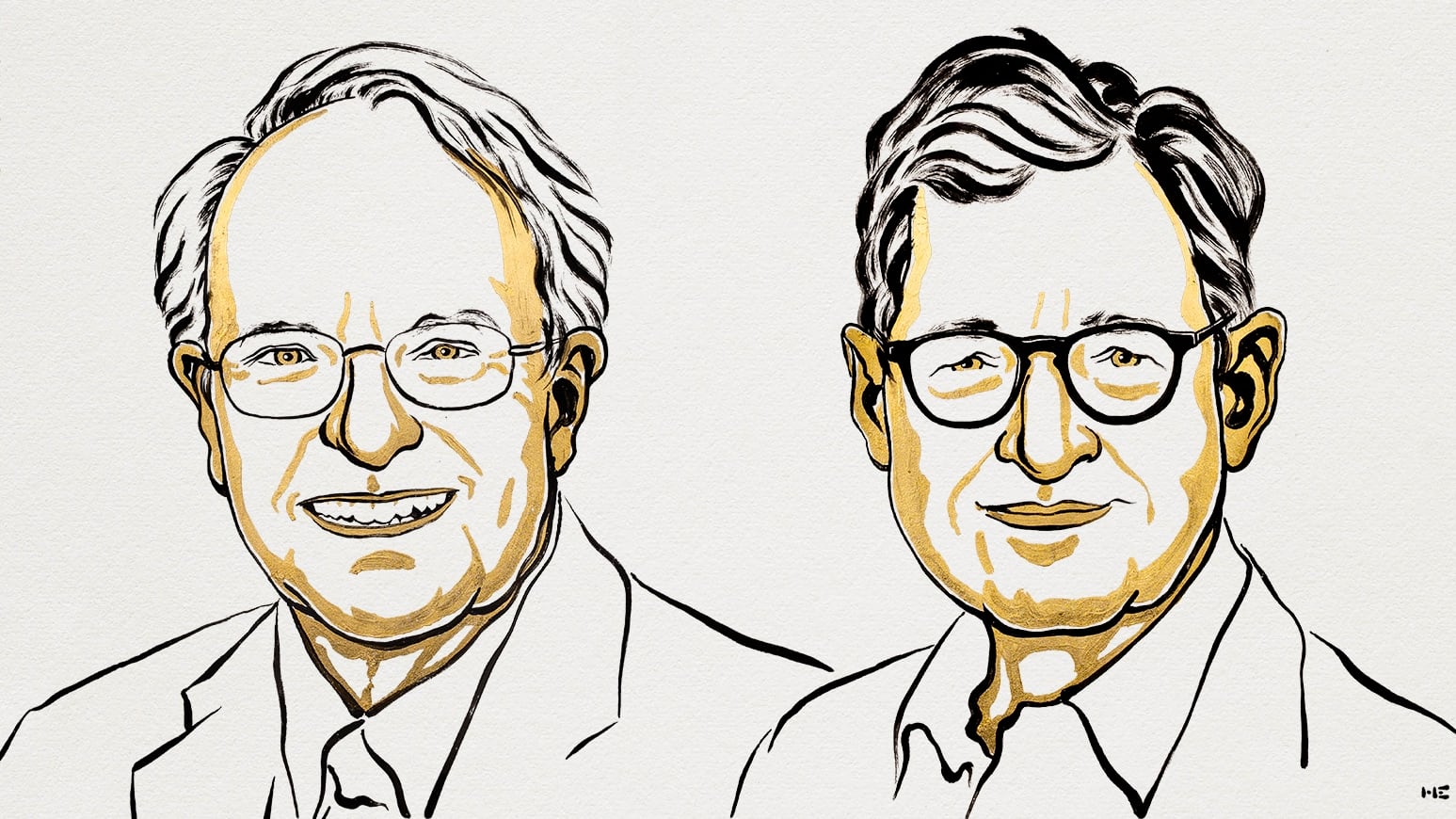
The 2026 Nobel Prize in Economics was awarded to two American scholars, Robert E. Hall from Stanford University, and Michael Woodford from Columbia University, "for their microeconomic foundations of macroeconomic stabilization." Once again, the award was shared, and, as usual, exclusively among males. The Swedish Academy returns to the heart of macroeconomics and highlights that their models enable well-timed fiscal and monetary measures to reduce "the peaks and troughs of the economy."
Extremely timely is the prize. Following the greatest inflationary episode in four decades, central banks are now navigating between deflation, trade uncertainty, and political pressures on their independence. The Swedish Academy recalls in its press release that, with the oil crises of the seventies, Keynesian models ceased to function.
Stimulus did not reduce unemployment and fueled uncontrollable inflation. Many began to think that stabilization policy did more harm than good. The merit of Hall and Woodford was to rebuild those models on a microeconomic foundation. Not on mere statistical correlations between inflation, production, or consumption, but on how millions of households and businesses looking to the future decide.
Written by urgent.news from El Pais Economia's reporting — not their text. Machine-written — may contain errors; check the original before relying on it.