Länger, breiter, digitaler: Mehr SUV als Softie: Hyundai Bayon wird bulliger
Er trägt jetzt Ecken und Kanten und bläst mächtig die Backen auf: Beim Generationswechsel mausert sich der Hyundai Bayon vom aufgebockten Kleinwagen zum souveränen SUV.
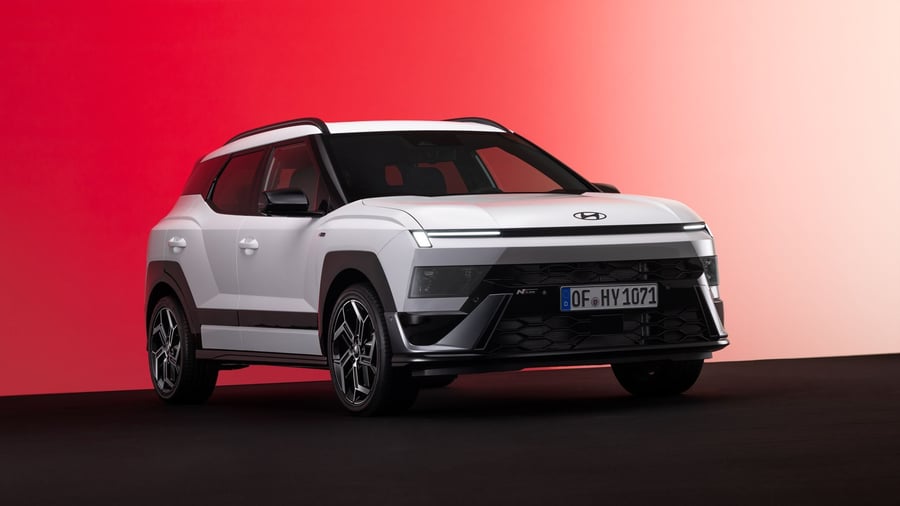
Hyundai is repositioning itself at the bottom of the compact car market with the second generation of the Bayon, a vehicle designed to be bolder and more digital. According to the manufacturer, the SUV-to-be will have more edges and personality compared to competitors like the VW T-Roc and Ford Puma. The Bayon is set to make its debut at the Paris Auto Show, scheduled from October 12th to October 18th, with Hyundai planning to bring it to market in the coming year.
Specific pricing details have not been disclosed yet, with the current generation starting at 23,900 euros. The transition to a new generation brings not only a more assertive appearance but also an increase in wheelbase to 2.60 meters and length to 4.25 meters. These changes provide more space for up to five passengers and a larger boot, which Hyundai claims will hold up to 440 liters.
The new digital cockpit features the option for two curved screens running an Android-based infotainment system, along with numerous driver assistance systems that Hyundai has only previously offered in higher vehicle classes. The Bayon will initially launch with a 1.0-liter turbo gasoline engine, available in two power outputs: 66 kW/90 PS or 85 kW/115 PS.
A hybrid version is expected to follow, combining a 1.6-liter gasoline engine with an electric motor for a combined output of 102 kW/138 PS. This hybrid variant can run solely on electric power for short trips. Regardless of the powertrain, the Bayon will continue to forgo four-wheel drive.
Written by urgent.news from Handelsblatt's reporting — not their text. Machine-written — may contain errors; check the original before relying on it.