Konjunktur: IWF-Chefin: KI-Boom stützt Weltwirtschaft – Asien kann profitieren
Laut IWF wird die Weltwirtschaft weiterhin mit rund drei Prozent wachsen. Ein wichtiger Grund sind demnach hohe Investitionen in KI. Allerdings dürften nicht alle Länder gleichermaßen profitieren.
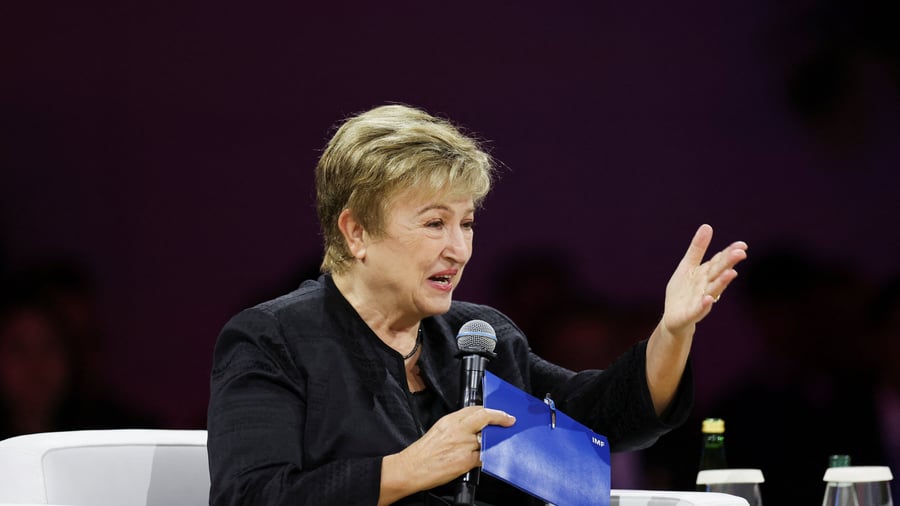
Bangkok – The International Monetary Fund (IMF) predicts the global economy will continue to grow at a rate of about three percent, according to its chief Kristalina Georgieva. A significant driver of this growth, Georgieva stated on Monday during the IMF's autumn meeting in Bangkok, is high investment in Artificial Intelligence (AI) infrastructure.
Asian economies, particularly China, India, and Thailand, are set to benefit most from this boom, as they provide the necessary hardware for AI development, alongside the United States.
Georgieva believes that the growth in more developed Asian countries could be boosted by half to one percentage point, while for the continent's emerging economies, it could increase by 0.2 to 0.8 percentage points. The IMF plans to release its updated economic forecasts for the world and key nations on Tuesday. Recent high energy prices, sparked by the US-led war in the Middle East, have previously put pressure on the global economy.
The IMF had previously forecasted a global growth rate of 3.0 percent for this year, which is expected to rise to 3.4 percent by 2027.
Written by urgent.news from Handelsblatt's reporting — not their text. Machine-written — may contain errors; check the original before relying on it.