Is it legal for the US to livestream the Fort Hood shooter's execution?
THE Pentagon said on Thursday that it would livestream the firing squad execution of the man who killed 13 people at the Fort Hood military base in 2009, raising questions about the legality of the unprecedented announcement.
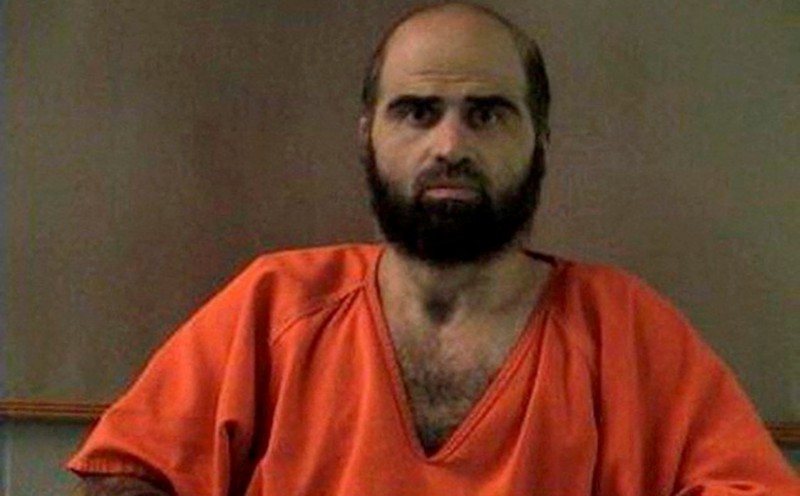
The Pentagon announced on Thursday that it will livestream the execution of Nidal Hasan, the gunman responsible for the 2009 Fort Hood mass shooting, sparking questions about the legality of this unprecedented action. US law permits execution by firing squad, as affirmed by the US Supreme Court in a 1879 unanimous decision, ruling that such punishment does not constitute cruel and unusual punishment.
Five states currently allow firing squad executions: Idaho, Mississippi, Oklahoma, South Carolina, and Utah. The Trump administration has also authorized firing squad executions in the federal prison system. Military history shows that executions by firing squad were frequently carried out on US soldiers during the Civil War. The Uniform Code of Military Justice requires the president's approval for a death sentence against a member of the US armed forces; in this case, President Donald Trump signed off on the plan.
Although executions in the US have been confined to correctional facilities since the early 20th century, military regulations have not imposed the same broadcasting prohibition as federal prisons. However, military regulations have not imposed the same prohibition on military executions. Hasan was convicted of premeditated murder in 2013 by a military jury.
Military executions are subject to state laws that generally limit access to authorized officials, family members, legal counsel, and a small number of media representatives. Courts have consistently rejected media requests for broader public access to executions. In 2001, a court denied an internet company's request to livestream the lethal injection execution of Timothy McVeigh, who bombed the Oklahoma City federal building in 1995, killing 168 people.
The Justice Department only provided a restricted, closed-circuit television broadcast to bombing survivors and victims' families. Hasan has exhausted his direct appeals within the military justice system but can still challenge his conviction and sentence in federal civilian court, a process known as a federal habeas corpus proceeding.
Executions could be challenged in court, potentially delaying or preventing the execution. The UN has condemned the livestreaming of Hasan's execution, citing it as a cruel and inhumane punishment that violates the Convention Against Torture. However, international law is not enforceable within the US court system.
Written by urgent.news from New Straits Times's reporting — not their text. Machine-written — may contain errors; check the original before relying on it.
This story
This is one outlet's version. Read the fullest account.
- Legal path seems narrow to challenge livestream of Fort Hood shooter’s execution, experts say winnipegfreepress.com
- Is it legal for the US to livestream the Fort Hood shooter's execution? - explainer jpost.com
- JD Vance says he won't watch livestream execution of Fort Hood shooter axios.com
- Rep. Adam Smith calls Pentagon plan to stream Fort Hood shooter execution "barbaric and gratuitous" cbsnews.com
- Legal path seems narrow to challenge livestream of Fort Hood shooter's execution, experts say pbs.org
- Trump Says No Decision Yet On Livestreaming Execution Of Fort Hood Shooter ndtv.com
- Watch: Can the Fort Hood shooter's execution be livestreamed? bbc.co.uk