Huanggang Port praised for ‘light speed’ checks, but some find layout huge
More than 42,000 travellers and 5,700 vehicles passed through the revamped Huanggang Port on Monday under a “smooth” first-day run of the new “joint clearance” system to cross between Hong Kong and mainland China, as officials braced for larger crowds over the coming long weekend. Early bird travellers and residents simply curious to see how the new system worked were the first to pass through…
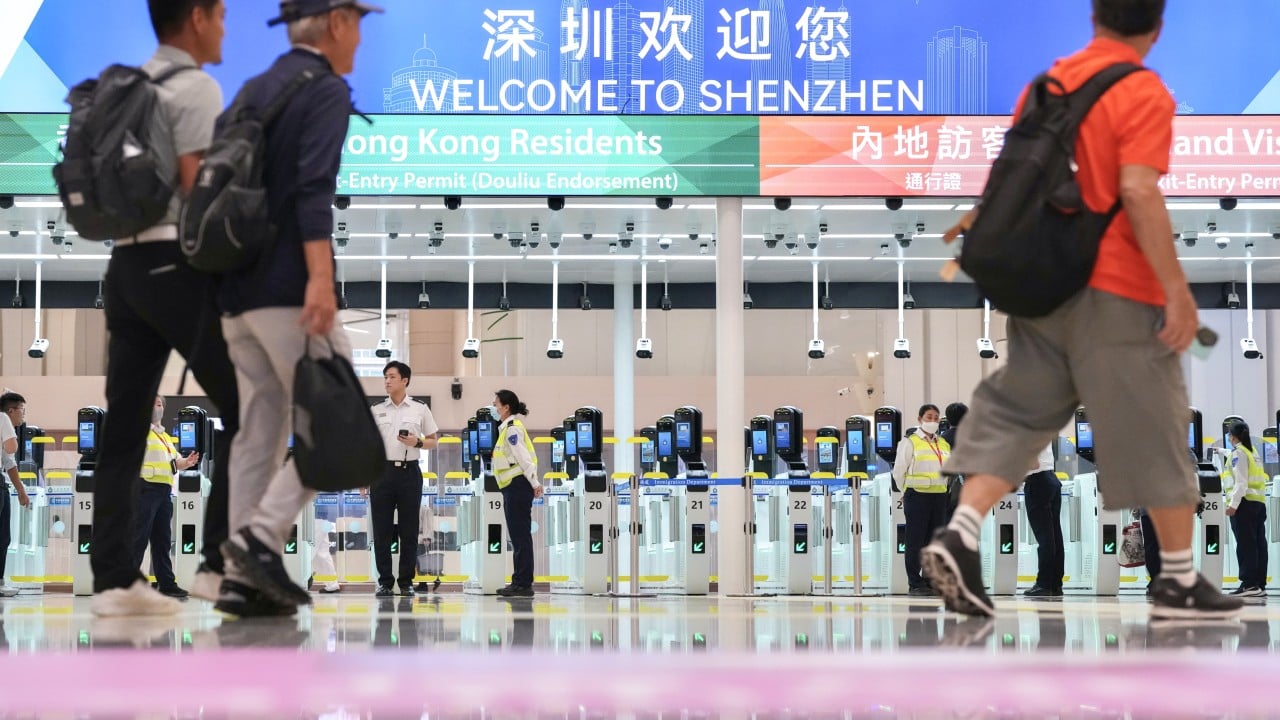
Huanggang Port's grand opening on Monday was a mix of excitement, confusion and long queues. At 8am, one and a half hours after the control point opened, orderly lines of private vehicles awaited immigration clearance. The new technology and location required extra patience. Tourists and retirees, primarily on foot, marveled at the modern facility and took numerous selfies.
Vehicles queued on San Sham Road in the morning before reaching the new facility, with police blocking roads and guiding traffic. Driver Ho Shun-ping, in his sixties, waited 25 minutes in a buffer zone and another 30 minutes at the integrated information device before crossing into mainland China. The process was longer than usual, with drivers struggling to use the new device.
Chief Executive John Lee Ka-chiu hailed the project as a key milestone for Greater Bay Area connectivity, boasting a capacity for 200,000 passenger trips per day. The border crossing now employs the "collaborative inspection and joint clearance" model, aiming to cut clearance time from 30 minutes to around five. Eligible passengers can clear both departure and entry procedures with one identity document and automated gates.
However, some Hong Kong motorists expressed confusion due to unclear signs, causing them to spend up to 10 minutes locating the correct road signs. Three retirees – a Liu couple and Lam – visited the crossing as tourists, spending almost 30 minutes in total. They enjoyed the spacious, well-designed building, taking photos in every available spot.
Despite forming queues of about 20 people at each "joint clearance" lane after 1pm, Lam wished authorities would open all lanes to avoid unnecessary waiting. The three retirees preferred the Heung Yuen Wai checkpoint, which required a cheaper HK$2 fare from their homes in Sheung Shui, as opposed to the HK$4.10 charged for the revamped Huanggang checkpoint.
Written by urgent.news from South China Morning Post's reporting — not their text. Machine-written — may contain errors; check the original before relying on it.
This story
This is one outlet's version. Read the fullest account.