Ghana launches Social Protection Act regulations and Affirmative Action Gender Equity Regulations
Ghana has taken a significant step towards strengthening social protection and advancing gender equity with the launch of three key legal instruments by the Vice President, H.E. Professor Naana Jane Opoku-Agyemang, in Accra on Wednesday, October 7, 2026.
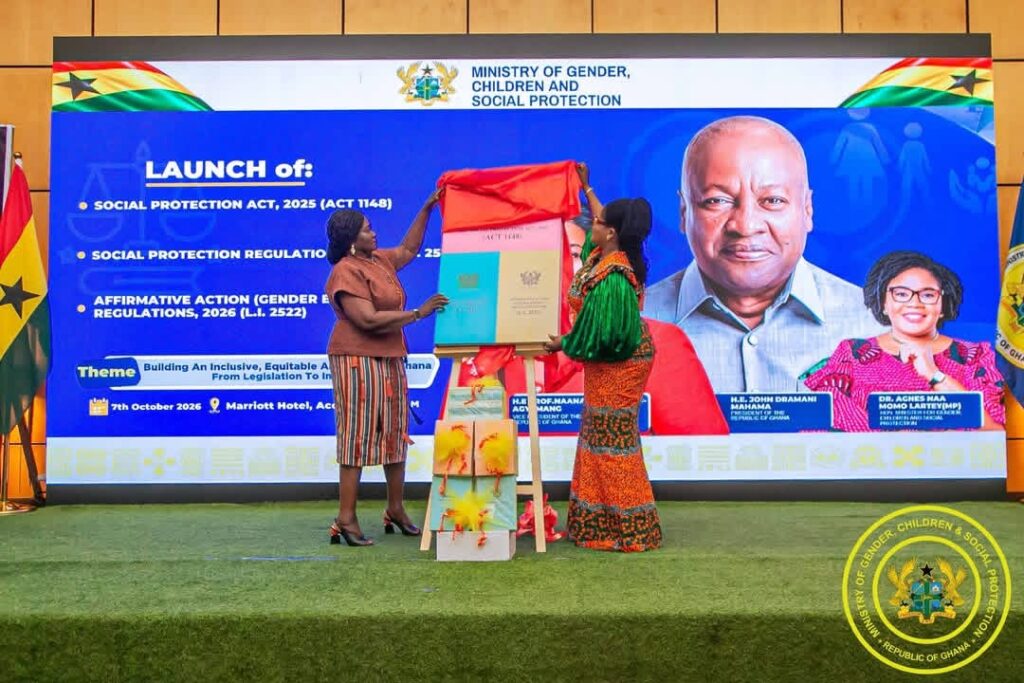
Ghana has introduced key legal frameworks to bolster social protection and promote gender equity, according to the Vice President, H.E. Professor Naana Jane Opoku-Agyemang. The launch, held in Accra on October 7, 2026, featured the Social Protection Act 2025, the Social Protection Regulations 2026, and the Affirmative Action (Gender Equity) Regulations 2026.
Organized by the Ministry of Gender, Children and Social Protection, the ceremony underscored the importance of translating legislation into tangible outcomes for Ghana's citizens. The Social Protection Act establishes a national system encompassing assistance, insurance, emergency aid, a dedicated fund, and complaint mechanisms.
The accompanying regulations will steer implementation, while the gender equity regulations aim to ensure women's fair participation in leadership and decision-making. The Vice President emphasized effective implementation, accountability, and prudent resource utilization, stressing that the success of these frameworks would be judged by their impact on the lives of Ghanaians.
The Minister for Gender, Children and Social Protection, Hon. Dr Agnes Naa Momo Lartey, acknowledged the extensive advocacy and consultation that shaped the instruments, highlighting five priorities for implementation. These include making laws easily accessible, providing practical guidance to institutions, enhancing data collection and coordination, improving feedback mechanisms, and ensuring regular progress reports.
The Minister urged officials to perform their duties with fairness, professionalism, and compassion, recognizing their crucial role in implementing these laws. The launch was attended by various stakeholders, including representatives from Parliament, traditional authorities, public institutions, development partners, civil society, organized labor, the private sector, women's groups, persons with disabilities, youth organizations, academia, and the media.
Rewritten by urgent.news; may contain errors — check the original.
Source: myjoyonline.com