Geld: Der Millionenerbe, der die Millionen nicht will
Kai Viehof hat den Großteil seines Erbes ausgeschlagen, auch vom Rest will der Enkel des Allkauf-Gründers das meiste weggeben. Über einen Mann, dessen Beruf es ist, sinnvoll Geld loszuwerden.
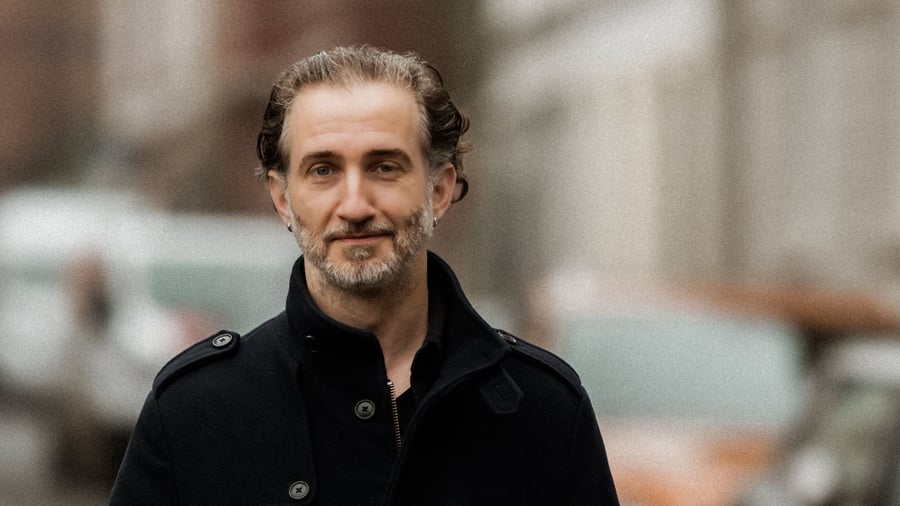
Kai Viehof, a self-made millionaire, defies the typical millionaire stereotype. Standing at slender shoulders under a black T-shirt and jacket, with a slight beard and rings in both ears, Viehof appeared reserved during an ARD talk show about inheritance. Unlike another wealthy entrepreneur from Neuss, who was more flamboyant, Viehof chose to keep his money well away from him.
His grandfather founded the retail chain "Allkauf" in the 1960s, which he later sold to Metro AG for about a billion marks in 1998. The family received the money from the sale, but Viehof declined his share when his turn came. At 44, Viehof is a new face in the ranks of millionaires who prefer to distribute their wealth rather than accumulate more.
He joins a group that includes Sebastian Klein, author of the book "Toxic Wealth," who became rich as a co-founder of the Blinkist app, and Marlene Engelhorn, a descendant of the BASF chemical company founder's family. Over half of all private wealth is not earned but inherited or inherited, according to the German Institute for Economic Research.
Only the United States and China have more billionaires than Germany, according to the 2025 Global Wealth Report by the Boston Consulting Group. This makes up 27 percent of Germany's financial wealth. Despite his reserved demeanor, Viehof decided to publicly discuss the issue of wealth distribution. He wants to reject the notion that questions of equitable distribution are nothing more than a "jealousy debate."
He sees it as a "central debate" that needs to be addressed by those who have gained their wealth through the system. This includes himself. Viehof has decided to donate or invest seven-eighths of the millions he already received. He is primarily interested in spending money meaningfully, until it runs out. Why did he decide to give away so much money?
Who will receive it, and what does he hope to achieve? At 17, Viehof decided he would donate his inheritance when his family sold the company. He told his family about his plan, but only after a significant internal conflict had passed. As a teenager, he had even considered entering the field of development aid. Great wealth and extreme poverty have always been two sides of the same coin for him.
Back then, his father, whose name was also Eugen, gave him shares and other assets worth a couple of hundred thousand dollars. At the time, he wasn't entirely sure what he was signing and how much the assets were worth. Would he refuse today? "I'm torn," he admits. "If I have control, I can use it for other purposes." For the first time in a decade, Viehof will receive a third-digit million-dollar inheritance.
This is the actual inheritance he declined. But he chose not to accept it. He realizes that these are luxury problems, but he feels that in many ways, legally and morally, he is not free to do what he wants with his money. He wants to pass it on to future generations. He saw the serious concern in his family about the next generation starving.
This must be prevented at all costs. No business relationship with the family is wanted. Like dynasties, the Viehof family passes on their wealth to blood relatives. He was aware that he would always have a business relationship with his family, but he did not want that. Neither with his father nor with his own children. And he resented being entitled to such a large sum of money without having earned it.
A thin line, he wanted to avoid becoming the wedge of the family. After a conversation with his father, who was not enthusiastic about his son's decision, they agreed. The third-digit million-dollar inheritance was to be given to a charitable foundation. However, this foundation is not under Viehof's control; his father is the authorized representative.
Nevertheless, Viehof retained the middle-two-digit million-dollar share, which he can manage more freely for himself and his two children, leaving a safety buffer. He has not calculated how long the rich will last. If he ever dies, Viehof plans to find a job. He knows he will face criticism for this, but he insists on focusing on the seven-eighths of the million.
He wants to donate these and invest them in companies that deliberately forego the pursuit of profits. His focus: democracy. Without democracy, he believes, there is no justice.
Written by urgent.news from Handelsblatt's reporting — not their text. Machine-written — may contain errors; check the original before relying on it.