First Nation-led effort replants kelp forests in Clayoquot Sound
Founder’s Briefs: An occasional series where Mongabay founder Rhett Ayers Butler shares analysis, perspectives and story summaries. In Clayoquot Sound, in the Canadian province of British Columbia, a partnership between the Tla-o-qui-aht First Nation, the Redd Fish Restoration Society, and West Coast Kelp is helping rebuild degraded kelp forests, reports contributor Jennifer Cole for Mongabay. […]
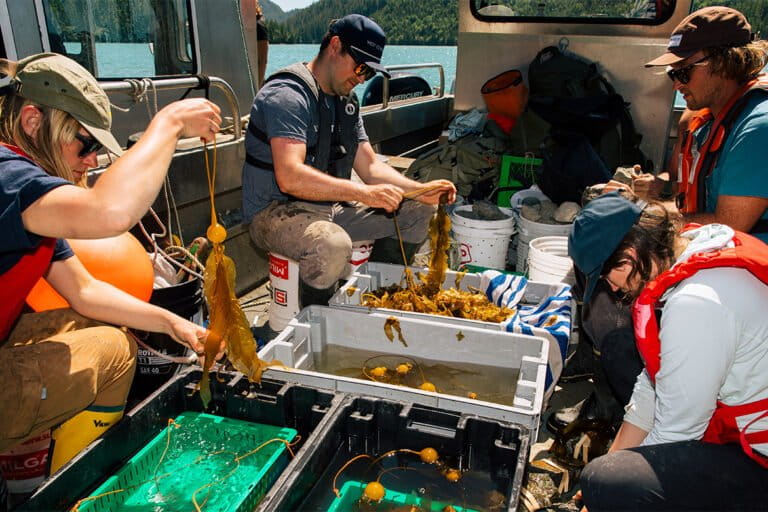
In Clayoquot Sound, located in the Canadian province of British Columbia, a collaborative effort between the Tla-o-qui-aht First Nation, the Redd Fish Restoration Society, and West Coast Kelp is working to restore degraded kelp forests. According to contributor Jennifer Cole for Mongabay, the initiative began in early 2026 and has already planted 4,200 square meters of young bull kelp (Nereocystis luetkeana) and giant kelp (Macrocystis pyrifera), which is roughly the size of 10 basketball courts.
The project's nursery initially focuses on growing kelp beyond the reach of grazers like sea urchins. Once the kelp reaches a suitable stage, it is harvested and transplanted to various sites within Clayoquot Sound. Emily Fulton, the marine program manager for the Redd Fish Restoration Society, expressed interest in quantifying the impact of kelp forests, stating that they know kelp creates habitat but need more data to measure the benefits.
Traditional knowledge from the Tla-o-qui-aht First Nation has played a crucial role in guiding the project's efforts. Tribal guardian Tatt Charlie explained how ancestral systems of reciprocity were used to determine where to plant the kelp, emphasizing the balance between taking and giving back. This traditional knowledge informs their approach, highlighting the importance of maintaining harmony within their territories. The article was originally published on Mongabay.
Written by urgent.news from Mongabay's reporting — not their text. Machine-written — may contain errors; check the original before relying on it.