Fed’s Hammack backs restrictive policy, says better if it comes ’relatively quickly’
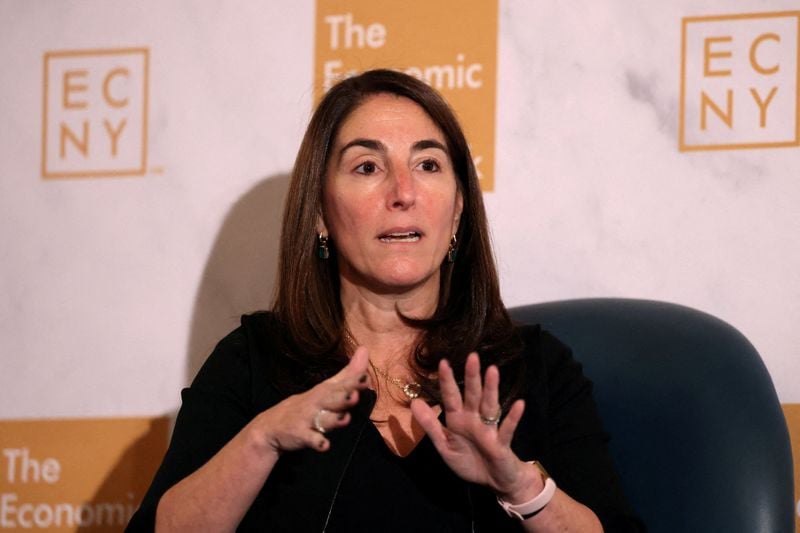
Cleveland Federal Reserve President Beth Hammack has advocated for the U.S. central bank to adopt a more restrictive monetary policy to curtail inflation, which she believes is becoming more widespread and impacting firms' pricing strategies. In remarks prepared for delivery to a National Association for Business Economics conference, Hammack noted that while energy prices have been a headline-grabbing factor in recent months, they are not the sole cause of inflation.
Hammack emphasized that a more restrictive monetary policy is necessary to bring inflation back to the 2% target. She also suggested that smaller, more frequent adjustments are preferable to a single, significant change, in order to avoid the need for a larger correction if inflation becomes more persistent or expectations rise. Her analysis suggests that underlying inflation currently sits in the mid-to-high 2% range, with her baseline forecast indicating it will take some time for inflation to return to the target level.
Hammack pointed to the AI-driven buildout as a driver of price hikes on key computer, electronic, and high-tech components, which in turn are raising costs for data centers, as well as projects in aviation, electricity production, and construction. However, the current economic landscape does not appear to be one of exhausted resources and mounting pressure, but rather one that can weather a tighter policy stance to complete the job of controlling inflation.
Investors anticipate the Fed to maintain its policy rate between 3.75% and 4.00% at the upcoming October 27-28 meeting. Hammack, a voting member of the central bank's policy committee, has been among the more hawkish voices and dissented in favor of raising rates during the July meeting. She has been among the few Fed officials to vote for a rate hike in September.
Hammack stressed the importance of policymakers continuing to explain their views, particularly by providing a reaction function to different economic data. This transparency, she argued, would enable households and firms to better understand the policymakers' thought process and plan accordingly.
Written by urgent.news from Investing.com's reporting — not their text. Machine-written — may contain errors; check the original before relying on it.
Also reported by 1 other outlet
- Cleveland Fed's Hammack sees restrictive policy as appropriate seekingalpha.com