Dell and Intel weigh the costs of enterprise AI scalability
Enterprise AI scalability is running into a hard budget wall for some customers. As agentic workloads multiply, cloud token bills are consuming allocations faster than planned, prompting companies to rethink where inference should run. That cost pressure is reshaping enterprise AI deployment strategy, with on-premises infrastructure and open-weight models moving back into the conversation…
Enterprise AI scalability is encountering budget constraints for certain organizations. As the demand for agentic workloads grows, the consumption of cloud token bills is surpassing initial projections, compelling businesses to reconsider where inference should take place. This financial strain is influencing enterprise AI deployment strategies, with on-premises infrastructure and open-weight models being revisited alongside cutting-edge models in the cloud.
Helen O'Sullivan, AI business development manager and solutions specialist at Dell Technologies, commented on the issue, saying, "A lot of our customers I support in the Bay Area, they're dealing with this real immediate struggle of running through their token budget in a matter of weeks that they had allotted for months." She suggested that while frontier models should still be utilized, on-premises open-source infrastructure can help alleviate some of the token stress and maxing currently experienced.
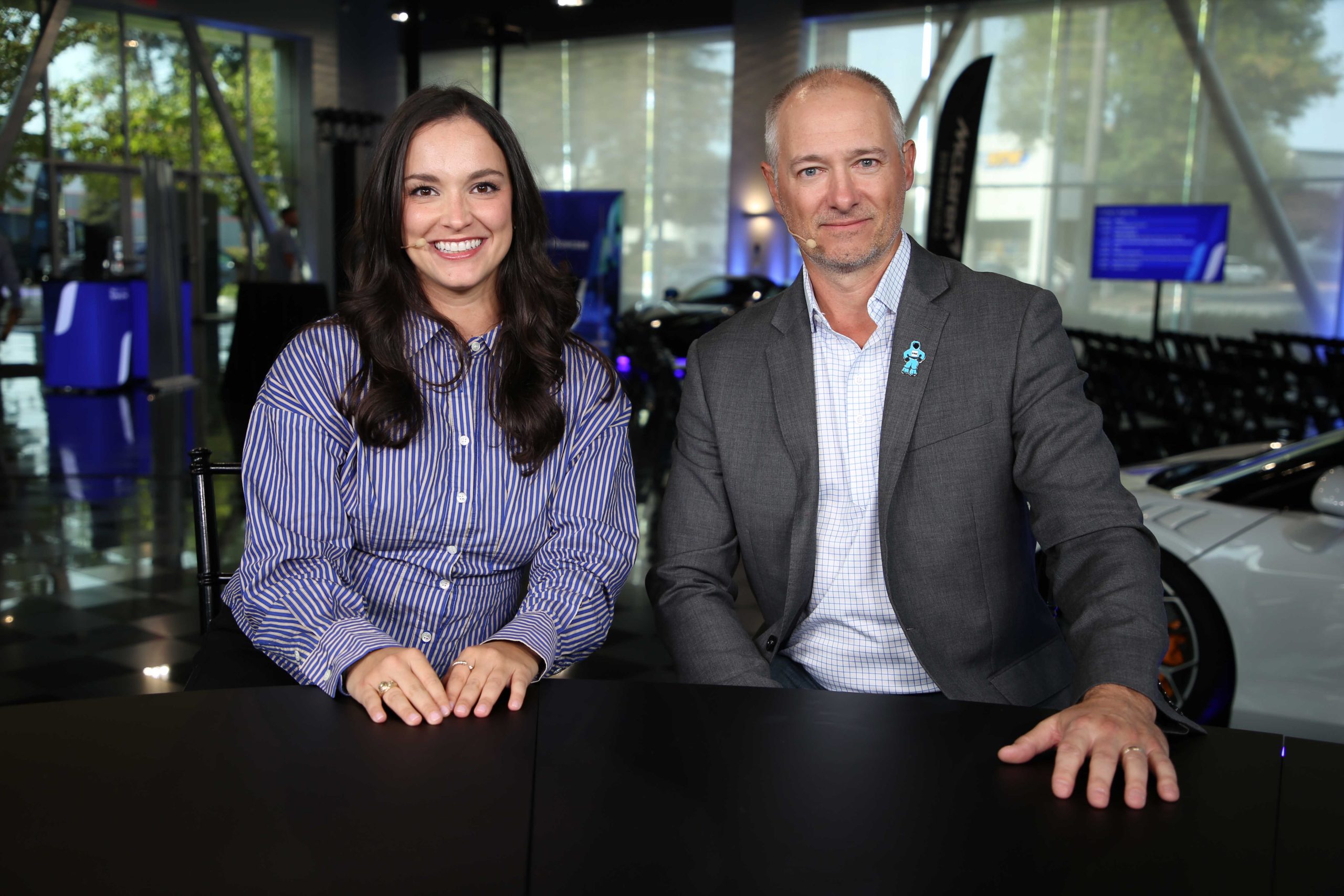
Tim Wood, sales director for the Northwest region at Intel, and O'Sullivan discussed enterprise AI scalability, rapid cloud token budget exhaustion, and leveraging existing central processing unit infrastructure for agentic workloads during an exclusive broadcast on theCUBE, SiliconANGLE Media's livestreaming studio. They emphasized that many buyers still focus on graphics processing units, even as workloads evolve.
O'Sullivan noted that "you can no longer do AI just for the sake of doing AI. You need to have a goal in mind that is in line with the corporation's goals." Intel's agentic AI architecture encompasses orchestration, inference, and edge computing, which aligns with the changing hardware requirements due to agentic AI. O'Sullivan's team recognized this shift months ago, but many customers have yet to adapt fully.
Enterprises can test deployment options before committing to production by evaluating open-weight models in sandbox environments, according to Wood. "A lot of enterprises already have CPUs in their data center. There may be existing resources and headroom in the infrastructure they already have that's capable of doing some of these next-generation apps and workloads," he explained.
Both companies approach this issue consultatively, considering existing infrastructure and capital against operating expense models before recommending a course of action. O'Sullivan reiterated that enterprise AI scalability necessitates assessing the entire stack. "A lot of [customers] just see the [graphics processing unit] and [ask], 'How fast can I get the GPU?' or Vera Rubin or what have you," she said.
"But it's about the data." The full video interview was part of SiliconANGLE's and theCUBE's coverage of Dell's "AI Leadership Symposium."
Written by urgent.news from SiliconANGLE's reporting — not their text. Machine-written — may contain errors; check the original before relying on it.