Chinese desalination plant cuts 60% energy use by turning waste brine into industrial salt
A large desalination plant on Bohai Bay has achieved an energy efficiency breakthrough, slashing electricity consumption by more than half while converting millions of tonnes of toxic waste brine into high-value chemical salt. Situated in the Caofeidian industrial zone of Tangshan, Hebei province, the facility recently entered its trial production stage, the state-run Science and Technology Daily…
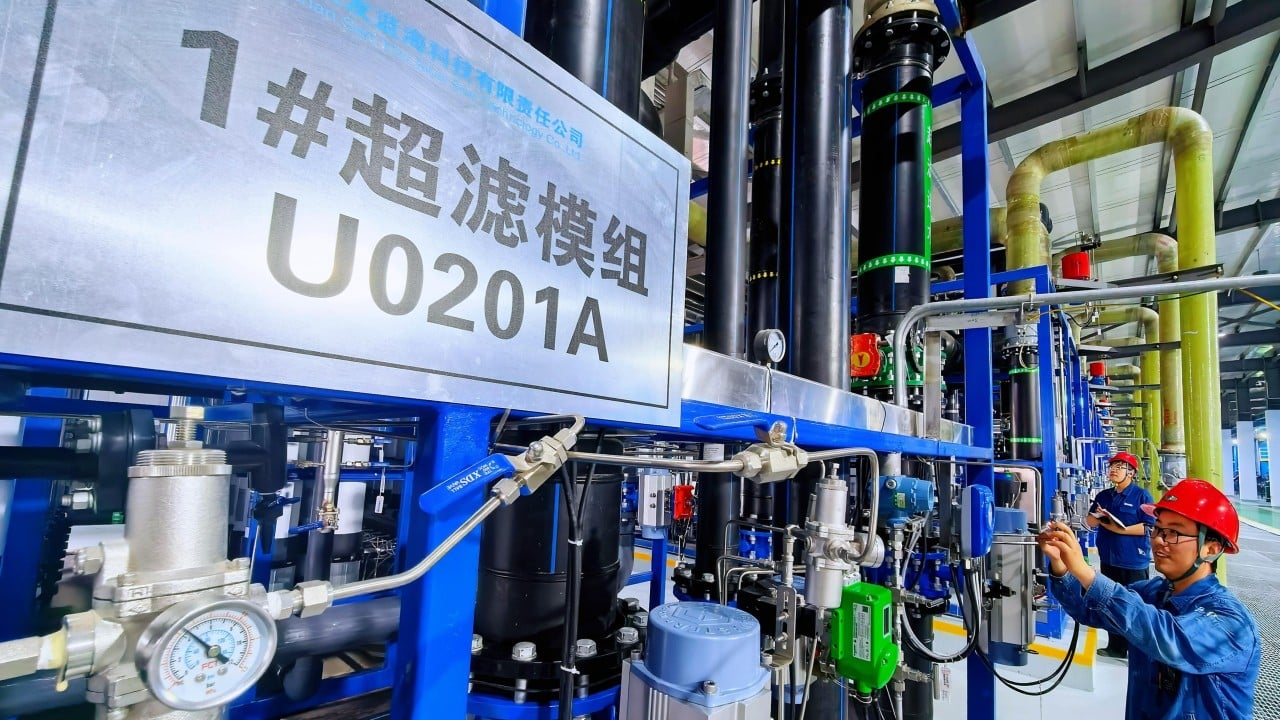
A massive desalination plant near Bohai Bay in Hebei province has made a significant energy efficiency breakthrough. By converting toxic waste brine into valuable industrial salt, the facility has reduced electricity consumption by over half. The plant, which is currently in trial production, aims to address the global issue of discharging concentrated seawater into the ocean.
The plant processes waste brine at a ratio of three-to-one, producing 1 tonne of refined concentrated seawater and 2 tonnes of fresh water. The refined brine is then used to produce soda ash, a crucial raw material utilized in various industries such as glass, metallurgy, papermaking, textile-dyeing, and food production. According to Zhao Lin, chief of research and development at the firm behind the innovation, the plant uses 60% less electricity than conventional desalination methods for every 10,000 yuan (US$1,490) of value produced.
The key challenge involved separating divalent ions like calcium, magnesium, and sulphate during high-ratio concentration, which typically precipitates like limescale in a kettle and can damage pipes and membranes. The research team successfully resolved this issue by dividing the concentration process into four stages and optimizing the sequence of membrane components. After rigorous testing of various membrane products, they selected a domestically produced brand for the production line.
Upon integrating the entire production line in June, the plant officially entered its commissioning stage. Once the third phase is completed, the facility is projected to process nearly 100 million tonnes of concentrated waste seawater annually, greatly alleviating the ecological burden on Bohai Bay.
Written by urgent.news from Reuters Business via SCMP's reporting — not their text. Machine-written — may contain errors; check the original before relying on it.
This story
This is one outlet's version. Read the fullest account.