China's central bank issues statement on RMB exchange rate outlook
China operates under a managed floating exchange rate regime, anchored in market supply and demand while referencing a basket of foreign currencies. Under this framework, market forces play a decisive role in determining the RMB exchange rate.
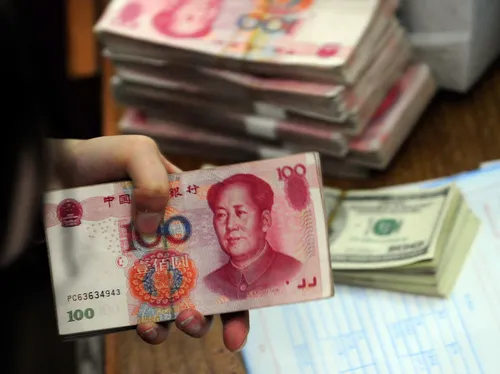
The People's Bank of China (PBOC) issued a statement on October 8 outlining its outlook for the renminbi (RMB) exchange rate. China employs a managed floating exchange rate system, where market supply and demand, rather than government intervention, primarily determine the currency's value. The policy framework emphasizes three key principles: allowing market dynamics to guide exchange rate movements, maintaining financial stability by minimizing excessive short-term volatility, and enhancing transparency in monetary and exchange rate policymaking.
Over the past two decades, the RMB has shown resilience and steady performance against other major currencies. Since 2010, the currency has experienced multiple cycles of appreciation and depreciation, indicating increased flexibility and more pronounced fluctuations. In recent years, the RMB has maintained a stable, two-way movement within a reasonable equilibrium range, appreciating orderly over time.
Looking ahead, the RMB exchange rate will be influenced by a complex interplay of economic, monetary, and geopolitical factors, as well as ongoing global uncertainties. The PBOC emphasized that China's trade growth is driven by industrial competitiveness and supply chain efficiency improvements, rather than currency manipulation. China has no intention of pursuing competitive devaluation, as it has not previously adopted such a practice.
Historical data demonstrates that past RMB appreciation did not impede China's trade expansion, while depreciation did not automatically result in higher export volumes. Chinese trade flows have become increasingly insulated from exchange rate swings, reflecting a significant structural shift in the economy's maturity. As a responsible global economic participant, China has consistently rejected the use of competitive currency depreciation to counter external pressures.
The PBOC noted that exchange rate dynamics are driven by various factors, including economic growth, monetary policy, financial markets, geopolitical developments, and unforeseen shocks. Importantly, there is no direct correlation between exchange rate levels and current account balances. Global imbalances are complex, stemming from shifting global division of labor, flaws in the international monetary system, and persistently high fiscal deficits and consumption in certain countries.
Addressing these imbalances requires collective efforts from all stakeholders, not accusations or blame directed at specific trading partners.
Throughout history, leading industrial countries have experienced periods of current account surpluses. Persistent deficit patterns within the current monetary framework reflect systemic characteristics rather than temporary anomalies. Declining trade competitiveness in some countries often stems from their own structural issues.
Each country should address these challenges through domestic structural reforms. Deficit countries should consolidate fiscal positions, raise domestic savings rates, and enhance industrial competitiveness, while surplus countries should focus on boosting consumption and investment. China has been an important contributor to global economic rebalancing, with plans to continue transforming its economic growth model, expanding domestic demand, improving the business environment, deepening high-standard opening-up, and pursuing a more open, inclusive, and balanced global economy during the 15th Five-Year Plan period (2026-2030).
Written by urgent.news from IOL's reporting — not their text. Machine-written — may contain errors; check the original before relying on it.