China advances coordinated development of intelligent computing, advanced storage capacity
With the number of large AI models rising year by year, demand for computing power is steadily being released, creating a need for a sufficiently robust computing foundation to support the development and industrial application of various models.
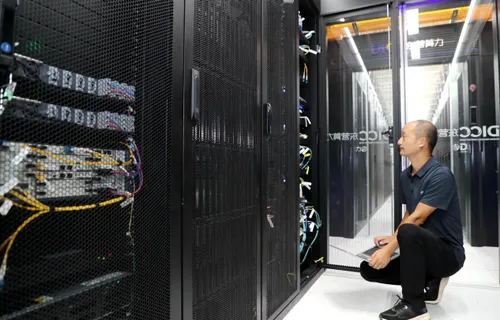
China Mobile, a leading state-backed telecommunications company in China, has significantly expanded its largest intelligent computing hub in northern Inner Mongolia, aligning with Beijing's ambitious plans to strengthen the nation's digital infrastructure and artificial intelligence capabilities. The recent completion of the expansion at the data center in Hohhot, Inner Mongolia's capital, has resulted in a substantial increase in processing capacity to 20,100 petaflops, marking a threefold boost from its previous capacity of 6,700 petaflops, as reported by Inner Mongolia Daily on Monday.
This expansion, the world's largest single-site intelligent computing center run by a telecoms operator, has allocated 16,700 petaflops to artificial intelligence and smart computing applications. Spanning approximately 44,500 square meters, or the size of six soccer fields, the project has a total power capacity of 120 megawatts.
The project, costing 2.7 billion yuan (approximately US$403 million), is situated in a region identified as a critical node in Beijing's "Eastern Data, Western Computing" strategy, which aims to shift data processing from the densely populated eastern part of the country to its energy-rich western provinces.
The expansion project is expected to serve around 90 percent of the computing power to the Beijing-Tianjin-Hebei economic zone. The Hohhot data center began operations in 2024 and utilizes around 20,000 AI accelerator cards. The National Development and Reform Commission, China's top economic planning body, has allocated 4 trillion yuan for the national computing network buildout during the 15th five-year plan.
Cities like Hohhot and Ulanqab, known traditionally for potato farming, are transforming into "Grassland Silicon Valley" due to their attraction of tech giants such as Huawei Technologies, ByteDance, and DeepSeek, as well as Western tech companies like Apple, which has planned to host its iCloud service within the city's data centers.
This computing hub showcases significant investment in green energy, with 88 percent of its power derived from renewable sources, reflecting China's commitment to aligning rapid technological advancement with environmental sustainability goals.
Rewritten by urgent.news; may contain errors — check the original.
Sources: iol.co.za · scmp.com