Brake-pedal failures in luxury EV put Chinese cars’ quality in regulatory spotlight
A safety failure spotted in tests of a Chinese electric vehicle (EV) made by a Huawei Technologies-backed luxury brand has raised doubts about the cars many consumers view as a source of national pride, while prompting regulators to step up policing of quality and reliability. The Ministry of Industry and Information Technology (MIIT), along with three other ministry-level authorities, published…
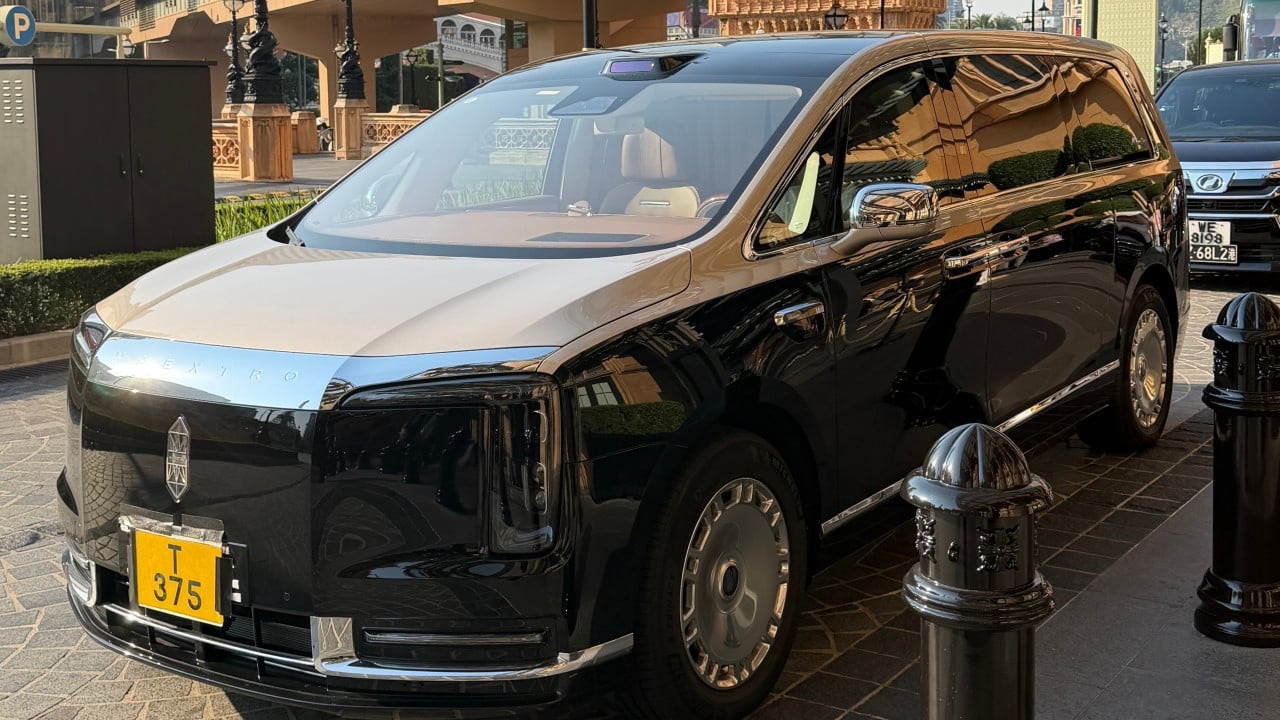
A safety issue discovered in tests of a Chinese electric vehicle (EV) built by a luxury brand backed by Huawei has raised concerns about the vehicles many consumers consider a symbol of national pride, prompting regulators to strengthen oversight of quality and reliability. Following the release of a video on a ByteDance-owned car-information platform showing brake-pedal brackets breaking on all three Maextro V800 EVs during emergency braking tests from 100km/h, the Communist Party's People's Daily commented on Sunday that a car's brake pedal should never fail while driving.
Although the details of the failures were still under investigation, the newspaper emphasized the significance of the Ministry of Industry and Information Technology's (MIIT) proposed rules as a strong response to safety risks on Chinese roads. The Maextro V800 multipurpose vehicle, priced at 766,000 yuan (US$114,462) with a base price, is one of the most expensive EV models in mainland China.
Assembled by JAC in eastern China's Anhui province and co-developed by Huawei, it was announced by the brand that they would resolve the brake pedal issue by the end of the month. The draft rules published on Saturday for public comment stipulate that extensive tests, like 30,000km of road testing, are required before any new model can be offered to consumers.
This incident has heightened consumers' worries about car safety, according to Gao Shen, an independent analyst in Shanghai. He urged Chinese carmakers and supply-chain vendors to prioritize quality over intelligence. A fatal crash involving a Xiaomi EV in March 2025 had caused nationwide concerns about autonomous driving technology, resulting in a recall and the gathering of over 60 carmakers for a government conference on the technology and its marketing.
Despite these challenges, Chinese carmakers and suppliers are viewed as leaders in EV technology and production, supported by government backing and consumer interest in innovation. Nearly all of the approximately 100 carmakers in China are developing new technologies, such as self-driving systems, to attract consumers in the world's largest automotive and EV market.
In August, MIIT vice-minister Xin Guobin warned at a press briefing in Beijing that new auto products and technologies would not be allowed on the market unless they passed stricter approval procedures. Some innovative designs had been hastily installed in vehicles without adequate testing and verification, he added. Beijing is also conducting a nationwide inspection campaign to evaluate the quality of Chinese-made cars.
Written by urgent.news from South China Morning Post's reporting — not their text. Machine-written — may contain errors; check the original before relying on it.