Bird flu killed their flocks. 5 months on, Maharashtra poultry farmers await their dues
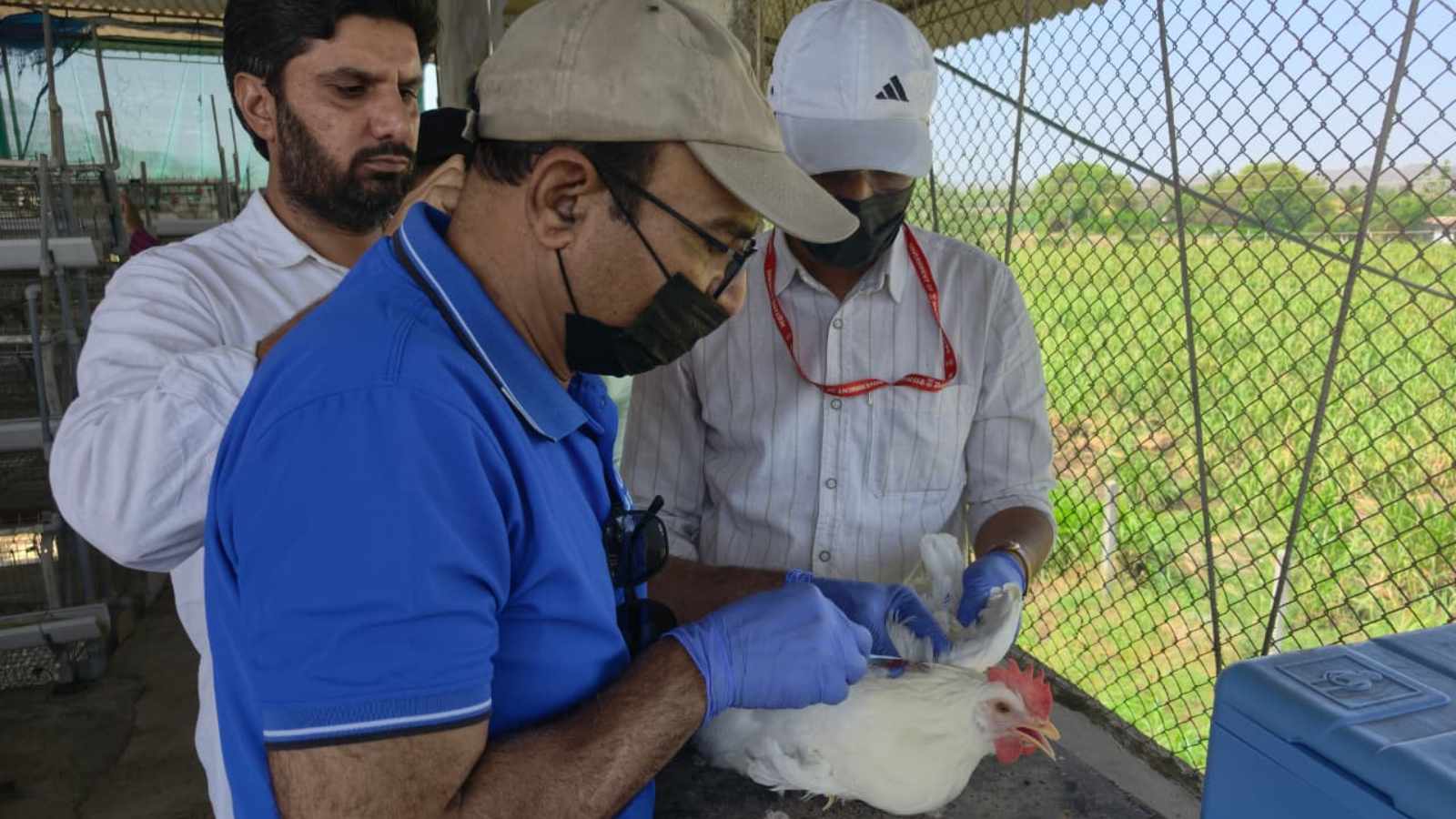
More than five months after bird flu struck Navapur taluka in Nandurbar, poultry farmers whose flocks were destroyed are still waiting for their share of compensation. The district's total claim, filed with proposals in June, July, August, and September, totaled Rs 9.80 crore for birds, eggs, feed, and operational costs. The state has repeatedly contacted the Center over the past few months to obtain the remaining funds, according to the district's animal husbandry secretary.
Bird flu was first reported on April 30, leading to the culling of 413,682 layer birds, the disposal of 24,91,723 eggs, and the removal of 5,48,958 kg of poultry feed. The district's compensation claim is listed at Rs 9,80,11,586, as per a statement from the District Deputy Commissioner of Animal Husbandry and Dairying in Nandurbar, dated September 9.
The first installment of Rs 6.73 crore, split evenly between the Center and the state, was approved on September 1 and transferred to farmers' bank accounts by the end of September. The remaining amount is still outstanding, and the state Animal Husbandry Department has been pushing for resolution in discussions with the Center.
The funding shortage resulted in officials canceling the culling of nearly 10,000 backyard birds in nearby farms, as the containment protocol mandated the destruction even if the birds tested negative. Their owners demanded immediate payment before the birds were taken away, but the department lacked the necessary funds. Dr Sanjay Kachane, Deputy Commissioner of Animal Husbandry and Dairy in Nandurbar, explained, "By May we had completed culling of all birds, destroying eggs and feed, but we had to cancel the backyard culling as farmers and families were demanding compensation on the spot immediately at the time of culling, and because of that, the backyard culling could not be carried out as we did not have any funds in hand."
Compensation is distributed under the centrally sponsored Assistance to States for Control of Animal Diseases (ASCAD) scheme, with the Center and the state each contributing half. State Commissioner of Animal Husbandry Dr Kiran Patil stated that the state cannot release its portion until the Center's share arrives, even if it has the funds available.
"It will be resolved in October," he told The Indian Express. State Secretary, Animal Husbandry, Dairy Development, and Fisheries, Dr Ramaswami N, expressed less certainty, informing this newspaper that the Center issued an order on August 14 releasing Rs 3.3672 crore as their share, and Maharashtra matched that amount, making Rs 6.7344 crore available.
However, he is uncertain about when the rest of the funds will be released by the Government of India. Dr Ramaswami also noted that the department cannot pre-budget the full amount, keeping only a minimal provision due to the unpredictable nature of such outbreaks. An industry that has faced multiple outbreaks of bird flu, Navapur is a key egg-producing region in western India, supplying nearly 10 lakh eggs daily to Mumbai, Jalgaon, Nashik, and Surat in Gujarat.
At its peak, it boasted over 70 poultry farms, but now only about 38 remain. The 2006 outbreak saw the culling of approximately 10 lakh birds and the destruction of 14 lakh eggs. In 2021, around 9 lakh birds and 60 lakh eggs were culled. According to the Navapur Poultry Association, the area's flock has dwindled from around 18 lakh layer birds before the 2006 outbreak to roughly 12 lakh after it.
Association president Arief Balesaria revealed that seven farms closed after the 2021 outbreak due to inability to recover, and some farmers sold their land, leased their sheds, or converted them into storage facilities. Even with full payment, farmers claim they would still be short. Under present rules, commercial poultry farmers receive Rs 140 per adult layer bird, Rs 4 per destroyed egg, and Rs 25 per kilogram of feed disposed of.
Balesaria expressed that it costs around Rs 500 to raise a layer bird until it begins laying. Farmers have been requesting higher compensation and immediate payment upon culling. "We have slowly started to buy chicks and rebuild our business, it will take us another year to start a full-fledged business," Balesaria stated.
Rewritten by urgent.news; may contain errors — check the original.
Source: indianexpress.com