Agriculture: Opting for sustainable farming
A small farmer, Mohammad Siddique Channa from Balochistan’s Lasbela district, seems contented since switching to organic cotton cultivation under organic agriculture (OA) practices. He now grows cotton on 15 acres of his land, making him one of many organic-certified cotton growers in Balochistan. He explains that OA practices in cotton cultivation reduced the expenses he used to incur on farm…
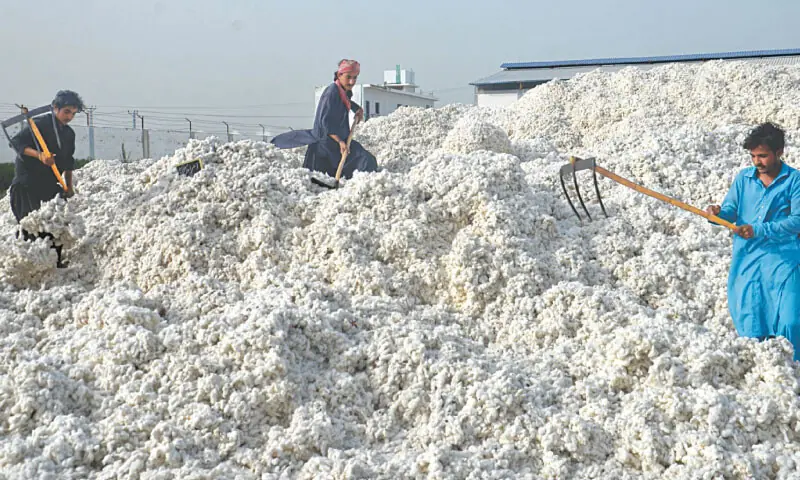
Mohammad Siddique Channa, a small farmer in Balochistan’s Lasbela district, has found success with organic cotton cultivation. By switching to organic agriculture (OA) practices, he has reduced his expenses on farm inputs such as urea, DAP, pesticides, non-GMO seeds, and insecticides. With support from the Balochistan government and textile millers, Channa expanded his organic cotton acreage from two to fifteen over seven to eight years.
He believes that Balochistan has the potential to significantly increase its organic crop acreage, particularly for vegetables, fruits, and major crops, as its land remains fertile in contrast to the degraded soils in Sindh and Punjab provinces. Channa's friend in Bela taluka, Munir Roonjho, reported a similar decrease in input costs, from Rs50,000 to Rs60,000 per acre, as OA practices eliminate the need for fertilizers, pesticides, and GMO seeds.
Rising farm input costs are pushing many smaller farmers into debt, as they borrow from private lenders to repay expenses, often using their harvest to repay loans. In the organic cotton project between 2016 and 2024, $1.9 per kilogram was earned as foreign exchange and $0.9 million as carbon credits. The Economic Survey of Pakistan 2025-26 estimates that fertilizers account for 10-15 percent of the production cost of major crops, with farmers spending Rs1.2 trillion annually on fertilizers.
A Rs100 increase in the price of a 50kg bag adds Rs20 billion in financial burden nationwide. OA practices have gained traction globally to alleviate this burden and are being pursued as a global movement. In Pakistan, Balochistan province is at the forefront of OA practices, primarily in cotton cultivation. The provincial government passed the Balochistan Organic Policy in November 2024 to promote OA by involving 12,000 farmers in collaboration with WWF-Pakistan.
Balochistan's organic cotton acreage has reached nearly 133,257 acres across four districts, and the province produced the first regenerative cotton bale in 2024.
Written by urgent.news from Dawn Business's reporting — not their text. Machine-written — may contain errors; check the original before relying on it.