Working Cray-1 supercomputer replica packs 30 vintage Mac Minis and 1.5 TFLOPS
Legendary 1975 supercomputer gets a modernized replica with old Mac Minis, showcasing decades of innovation.
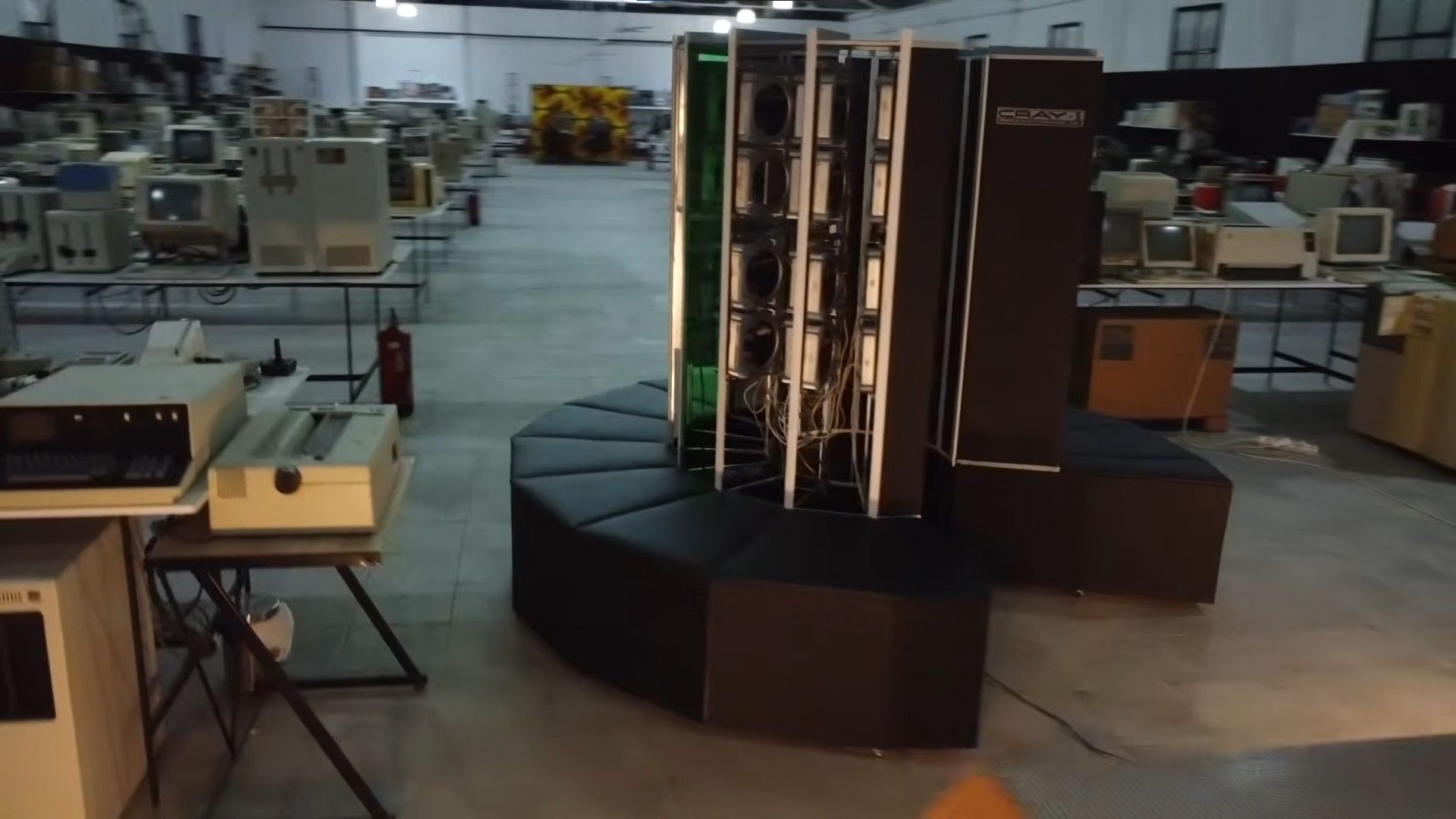
Spain's Museo de Historia de la Computación has unveiled a 18-month project to commemorate the 50th anniversary of the Cray-1 supercomputer and Apple's founding. The replica uses 30 vintage Mac Minis and a combination of dual-core i5 and quad-core i7 processors, totaling 70 cores for a peak performance of 1.5 TeraFLOPS, a 9,375x leap from the original Cray-1's 160 MegaFLOPS.
The original Cray-1, considered the first commercially successful supercomputer, was sold to science and engineering institutions for tasks like weather prediction, aerodynamics, nuclear physics, and structural analysis. Its vector processing technology allowed it to handle chunks of numbers in parallel, making it much more efficient than computers of the time that processed tasks one instruction at a time.
Unlike the original Cray-1, which required a network of refrigerant lines and 20-ton compressors for cooling, the replica is cooled passively through a convection-tower design, making it extremely quiet. To recreate the original supercomputer's appearance, the museum also built a retro-style control terminal, complete with a keyboard and screens embedded in a panel.
Visitors can see the replica in action by running large matrix multiplication problems, a task the vintage computer excels at. The museum plans to expand the system by purchasing additional M4 Mac Minis, aiming to enter the TOP500 supercomputers list. The replica is on permanent display at the museum, open to the public on Saturdays from 11:30 AM - 2:00 PM, but tours require a guide and the museum is closed during summer, Christmas, January, and February.
Written by urgent.news from Tom's Hardware's reporting — not their text. Machine-written — may contain errors; check the original before relying on it.