MCIT Honors Entities Excellence in digital transformation adoption
The Ministry of Communications and Information Technology (MCIT), in cooperation with Microsoft Office, showcased the second cohort of the Microsoft 365 Copilot Adoption Program, in a meeting for lead...
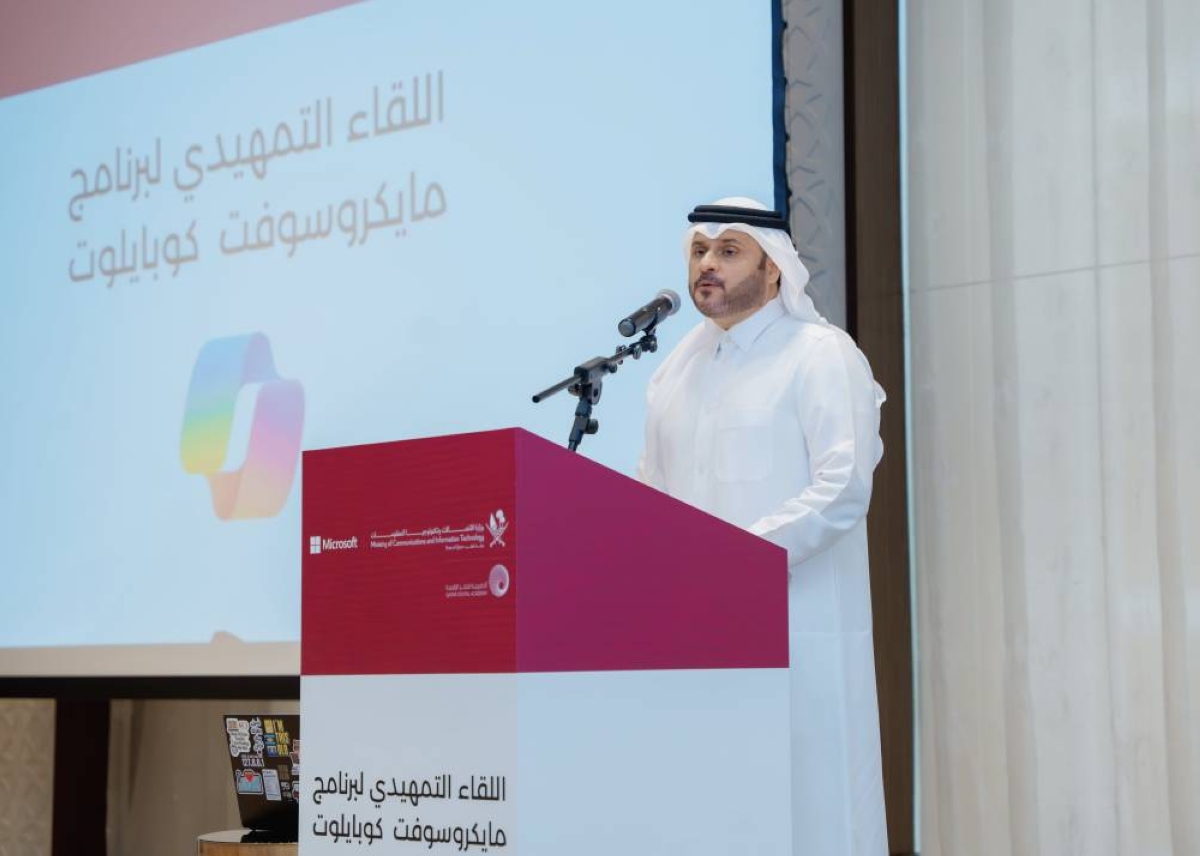
The Ministry of Communications and Information Technology (MCIT) in collaboration with Microsoft Office unveiled the second cohort of the Microsoft 365 Copilot Adoption Program. This gathering brought together leaders and representatives from 17 government and semi-government entities to discuss adoption metrics, training advancements, AI agent applications, and future priorities.
MCIT's Assistant Undersecretary for Infrastructure and Operations Affairs, Sami Mohammed Al Shammari, highlighted the significant strides made in Microsoft 365 Copilot adoption among participating entities. He emphasized the partnership with Microsoft to empower employees with AI technologies, stating that these achievements laid a solid foundation for the upcoming phase, which will concentrate on broadening usage, creating advanced applications, and enhancing the technology's impact on government efficiency.
The meeting revealed that over 8,000 users were actively utilizing the tool, representing a 69.6 percent adoption rate among 12,260 licensed individuals, along with approximately 2.1 million actions and tasks completed using the platform. These figures underscore the expanding scope of the tool's usage across the entities and serve as a benchmark for gauging adoption rates and pinpointing areas for further integration.
The program's initiatives for skill enhancement were also showcased, with 508 training sessions held for more than 9,000 employees. These sessions encompassed foundational training, executive leadership workshops, use case exploration workshops, specialized training, and skill development tailored to support the adoption of the tool within entities. Such efforts were aligned with business requirements and aimed at boosting employees' proficiency in leveraging the tool effectively in their daily tasks.
Additionally, the meeting touched upon the role of communication campaigns, activation activities, and learning resources in sustaining employee engagement and encouraging consistent use of the tool. Monitoring was achieved through dashboards and routine evaluations. The cohort also reviewed 96 AI agent use cases that emerged from the program, featuring practical demonstrations to identify avenues for process improvement and increased utilization of institutional knowledge, facilitating a shift from individual technology use to applications better aligned with entities' priorities and demands.
Written by urgent.news from Gulf Times's reporting — not their text. Machine-written — may contain errors; check the original before relying on it.