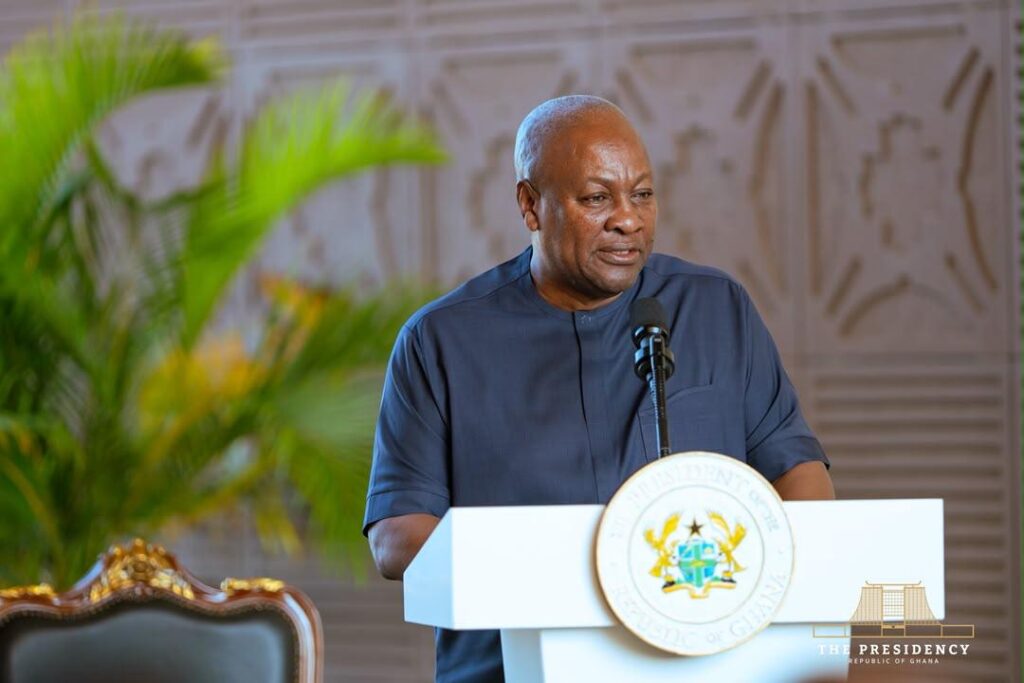
Mahama assures Ahafo Region of fair share of national development during Resetting Ghana Tour
President John Dramani Mahama on Saturday ended his two-day Resetting Ghana Tour of the Ahafo Region with an assurance to the chiefs and people that they would receive their fair share of national development. Speaking at a Citizens’ Engagement in Goaso to climax the tour, the President expressed gratitude to the chiefs and people of […]
Ghana's legal analyst, Prince Anuwar-Sadat Amadu, has advised the nation's government to base its bid to join the BRICS grouping on national interests, economic assessments and diplomatic strategies. In interviews with Skyy Power FM and Pent Radio in Takoradi, Prince Sadat highlighted both the potential benefits and reservations about BRICS membership, urging a thorough examination of the decision within the context of global shift, constitutional duties, diplomatic customs, and tangible advantages for the country.
BRICS and shifts in the global order
Prince Sadat traced the origins of BRICS to historical initiatives by developing countries to secure increased representation in international matters. He referenced significant events such as the 1955 Bandung Conference, the formation of the Non-Aligned Movement in 1961, the Group of 77 in 1964, and the 1974 call for a New International Economic Order. He argued that BRICS represented the growing impact of emerging economies in a system traditionally controlled by Western nations.
BRICS expansion and implications
The term BRIC was first used in 2001 by Goldman Sachs economist Jim O’Neill to highlight the economic potential of Brazil, Russia, India, and China, which later expanded to include South Africa. Prince Sadat cautioned that while the growing multipolar world order didn't ensure equal power distribution, Ghana needed to consider disparities in economic strength, technological progress, and negotiation capabilities among nations.
Economic opportunities and constraints
Prince Sadat emphasized that the central question was whether joining BRICS would genuinely advance Ghana's economic growth and diplomatic goals, rather than merely seeking to challenge Western-led institutions. He identified possible advantages like trade diversification, foreign direct investment, industrial development, technology transfer, infrastructure financing, and access to emerging markets.
However, he stressed that membership would not automatically offer financial aid or ensure economic expansion. He also made a distinction between joining BRICS and becoming a part of the New Development Bank, emphasizing the need for clear government communication on intended membership, associated obligations, and potential development gains.
Industrialization and value addition
Prince Sadat expressed concern over Ghana's continuous reliance on exporting raw commodities while importing more valuable manufactured goods. He argued that merely diversifying trading partners wouldn't resolve the country's economic structure. Instead, he suggested using international partnerships to strengthen domestic industrialization, enhance technological capacity, and promote local value addition.
He used gold, cocoa, and other natural resources as examples of Ghanaian products that could benefit from local processing and industrialization. He suggested assessing the success of Ghana's BRICS engagement by the country's progress in producing and exporting more competitive, value-added goods, rather than merely increasing trade volumes.
Diplomatic considerations and constitutional requirements
Prince Sadat noted that Ghana's foreign policy historically emphasized non-alignment, Pan-Africanism, multilateral cooperation, and national sovereignty. He advocated for a strategy based on strategic autonomy and multi-alignment, enabling Ghana to strengthen ties with BRICS members without jeopardizing cooperation with the United States, the United Kingdom, the European Union, and international financial institutions.
He also mentioned the potential benefits of using local currencies in BRICS transactions, but cautioned that these would depend on currency stability, trade dynamics, settlement infrastructure, and associated financial risks.
Prince Sadat referred to Articles 40, 73, and 75 of Ghana's 1992 Constitution, which cover international relations and international agreements. While a decision to pursue BRICS membership does not itself form a treaty requiring parliamentary approval, he emphasized that any subsequent legally binding agreements or financial commitments would need to comply with constitutional requirements.
He called for transparency regarding potential obligations and for parliamentary oversight and public accountability, especially if public funds or legally binding commitments were involved.
Rewritten by urgent.news; may contain errors — check the original.
Sources: myjoyonline.com · adomonline.com · 3news.com
This story
This is one outlet's version. Read the fullest account.