Frugals push ahead: EU budget to be debated from cuts
The Irish presidency of the EU Council presents a proposal that contemplates cuts of 140 billion regarding the volume that the European Commission put on the table, which predisposes the debate towards adjustments.
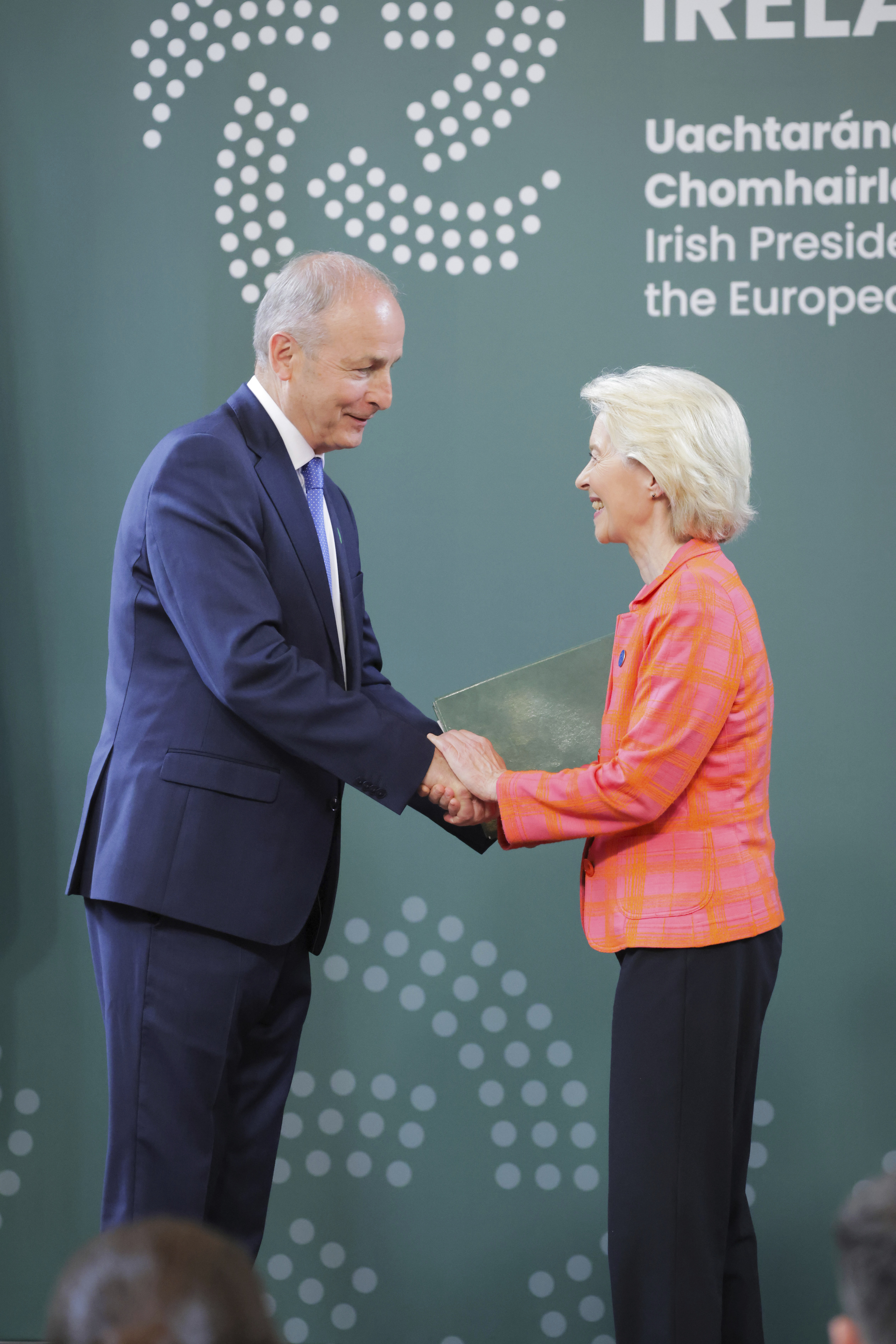
The Irish presidency of the EU Council has unveiled a proposal targeting reductions of 140 billion euros from the European Commission's proposed budget, sparking debate over necessary adjustments. This marks the final phase in discussions regarding the EU's future budget, known as the Multiannual Financial Framework (MFF), for the period 2028 to 2034.
Ireland, currently holding the rotating EU Council presidency, introduced the proposal this weekend, cutting the budget by 8% compared to the figures set by the European Commission in the summer of 2025.
The new MFF, addressing priorities such as corporate competitiveness and European re-armament, will be reduced to approximately 1.86 trillion euros, a drop of 140 billion euros. No member state was satisfied with the European Commission's initial stance, with cohesion-friendly nations like Spain requesting more funding and the frugal group, consisting of Germany, the Netherlands, Austria, Sweden, Denmark, and Finland, promising further cuts.
By initiating the debate from a position of cuts, the frugal countries scored a significant point in negotiations.
Irish European Affairs and Defense Minister Thomas Byrne expressed conviction that revising the budget's total volume and rebalancing priorities would address member states' preferences and open the door to the next negotiation stage. He emphasized considering the fiscal realities faced by all member states. Regarding the most significant budget cuts, the so-called national item, which encompasses all cohesion policy areas including economic, social, territorial, agriculture, rural prosperity, maritime, and security, will receive 914.179 million euros, a 3% decrease from the European Commission's original proposal.
Defense and competitiveness funds will receive 456 billion euros, a 13% reduction compared to the Commission's proposal. Notably, the European Competitiveness Fund, including the Horizon Europe research program, will be allocated 362 billion euros, down from the Commission's 409 billion euros.
The debate has already seen opposition from the frugal countries, who consider the Irish proposal as a push for negotiations to demand additional cuts. Ireland's Irish presidency is appreciated for its tireless efforts in these challenging negotiations, but a consensus on the new proposal's size remains elusive. Germany's Chancellor Friedrich Merz and Sweden's Minister for European Affairs Jessica Rosencrantz have voiced concerns over the proposal's feasibility, insisting that the total budget must be significantly reduced.
Rosencrantz emphasized that the numbers presented are unfeasible, and a better budget must be fought for, not one that is larger. Spain, which believes the European budget should be more ambitious than the Commission's initial proposal, has yet to voice its opinion and risks falling behind the frugal narrative.
Written by urgent.news from Expansion ES's reporting — not their text. Machine-written — may contain errors; check the original before relying on it.