India’s cockroach party leaders freed as election chief protests mount
A New Delhi court ordered on Sunday the release of three leaders of the Cockroach Janta Party (CJP), including its founder Abhijeet Dipke, their lawyer said, a day after they were detained. “Executive Magistrate court releases Abhijeet, Saurav (Das) and Ashutosh (Ranka),” lawyer Ratna Singh said in a social media post. The trio were detained on Saturday ahead of a major protest against the…
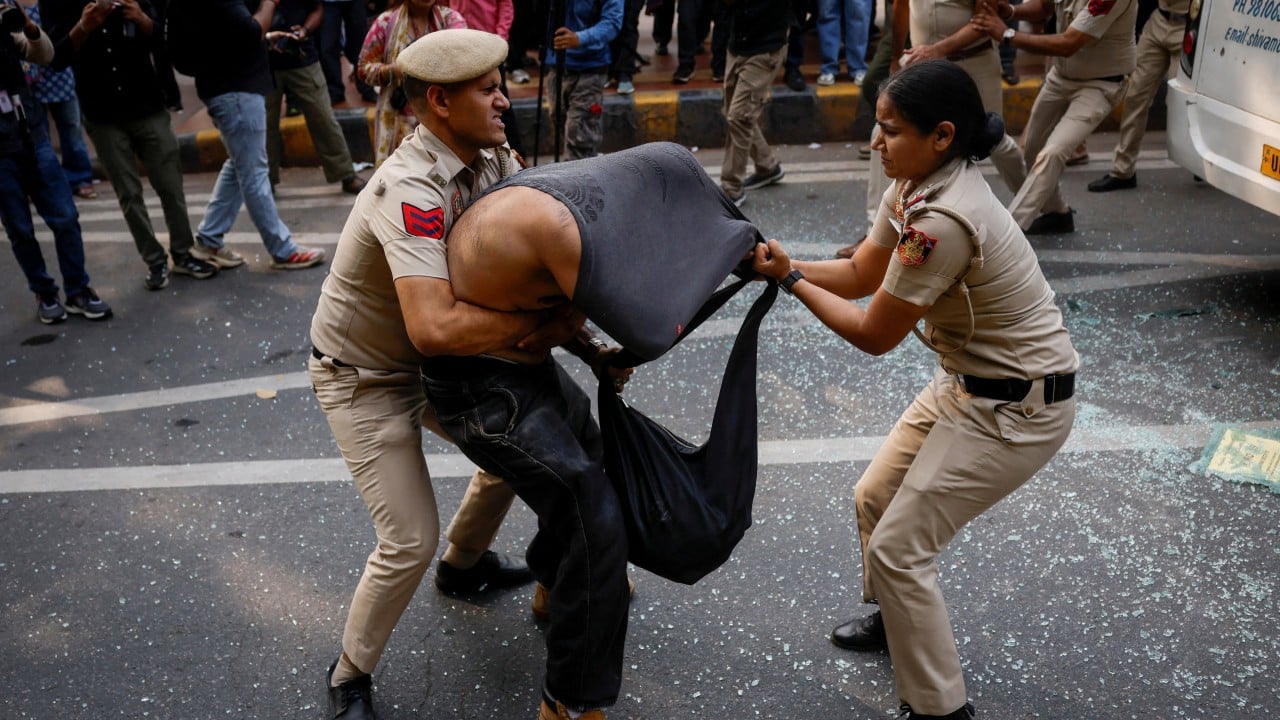
In New Delhi, three leaders of the Cockroach Janta Party (CJP), including its founder Abhijeet Dipke, were released from custody on Sunday by a court. The trio, along with their lawyer Ratna Singh, announced their release via a social media post. They were detained on Saturday ahead of a significant protest against India's chief election commissioner, in response to allegations of misconduct during a nationwide voter roll revision. This protest marks the culmination of weeks of opposition mobilization.
More than 15,000 protesters were reportedly detained in Delhi while attempting to march to the Jantar Mantar protest site, despite a heavy security presence. CJP leader Ajinkya Shinde stated, "We will be back, let them fill up all the jails." The protests have intensified calls for the chief election commissioner, Gyanesh Kumar, to resign and for a halt to the voter revision exercise, which some allege could disenfranchise millions of voters and favor Prime Minister Narendra Modi's ruling Bharatiya Janata Party (BJP).
Authorities deployed thousands of police, closed metro stations, cancelled trains, and shut down mobile internet around the protest site.
The CJP, which started as a satirical online movement in May, has seen thousands of protesters detained. Opposition parties claim the voter roll revision could unfairly target legitimate voters, while the ECI maintains the revisions are aimed at removing ineligible voters, including "foreign illegal immigrants." The protests echo a similar movement in July, which led to the resignation of an education minister over an examination scandal.
This time, the demand is for Kumar's resignation and an end to the voter revision. The BJP, however, dismissed the protest as an attempt to spread "anarchy."
Amnesty International denounced the "lockdown-like restrictions" on peaceful protests, while the leader of the opposition Congress party, Rahul Gandhi, encouraged continued demonstrations. The United Nations' human rights office urged India to release those arbitrarily detained and expressed concern over mass detentions. Despite the protests, India's next general election is not until 2029, though the state of Uttar Pradesh will vote next year.
Political analyst Nilanjan Mukhopadhyay noted that this protest could pose a significant challenge for Modi during his third term.
Written by urgent.news from South China Morning Post's reporting — not their text. Machine-written — may contain errors; check the original before relying on it.