Can you really tell if someone has high blood sugar by looking at their face?
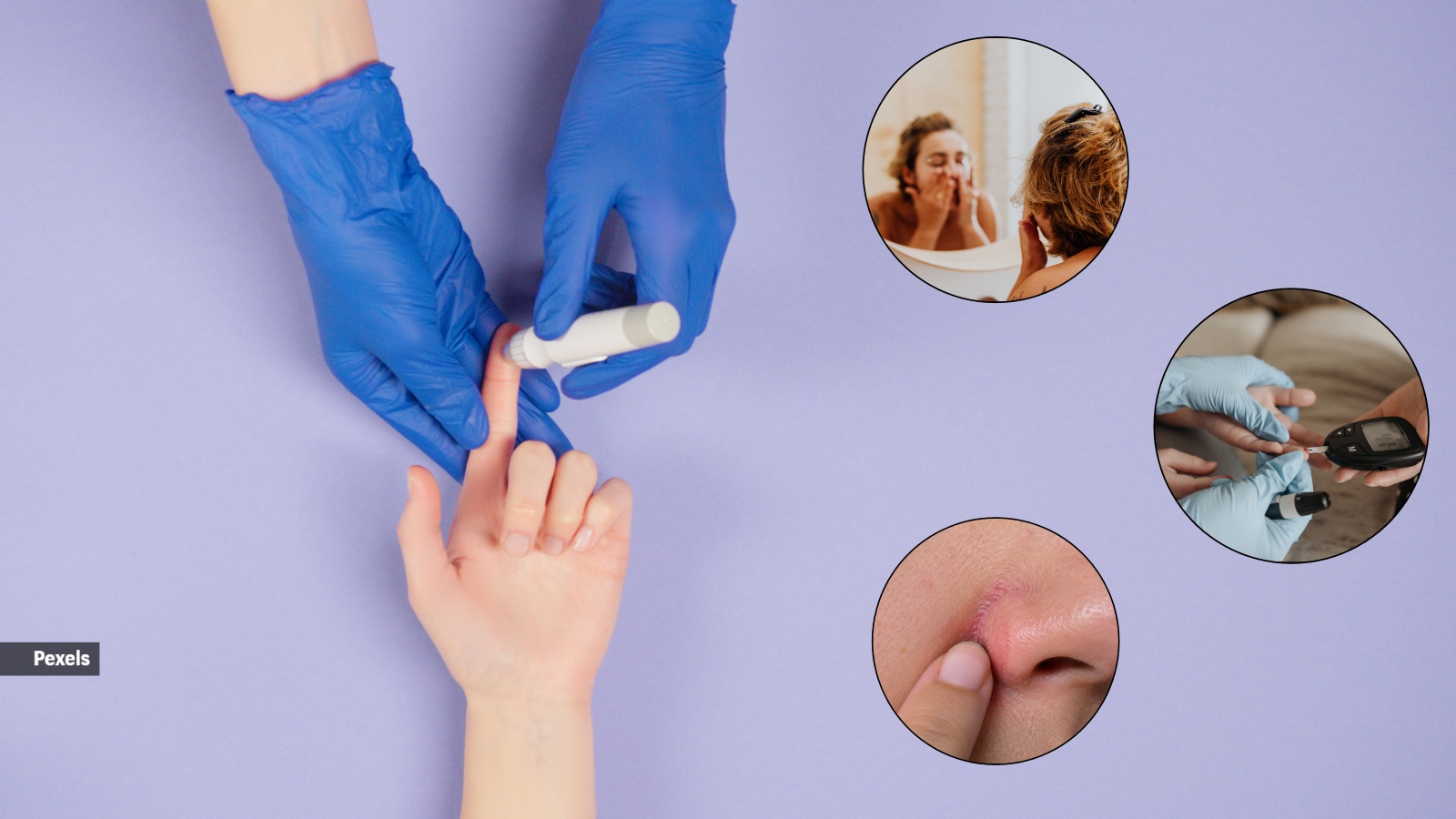
The claim that one can identify high blood sugar levels by looking at someone's face is not supported by medical professionals. Social media often presents red patches beside the nose, darkened skin, and fungal rashes as "proof" of diabetes, but Dr Rajiv Kovil, a Diabetes & Obesity Specialist, clarifies that a person's face cannot provide a blood sugar reading. He emphasizes that diagnosing diabetes from someone's nose is conjecture disguised as medicine.
Certain skin changes could indicate a need for a metabolic check-up, such as acanthosis nigricans, which appears as darkened, thickened, velvety skin often around the neck and body folds. This may signify significant insulin resistance even before diabetes develops. However, these changes are not a substitute for laboratory testing.
Recurrent bacterial or fungal infections could also serve as clues that a person might need a metabolic evaluation. Additionally, skin tags can accompany insulin resistance and type 2 diabetes.
Some skin clues, like a fungal infection, are not an HbA1c reading. The presence of a fungal rash does not prove that someone's blood sugar is high, as people without diabetes can also develop such infections. Xanthelasma, yellowish plaques near the inner parts of the eyelids, represents lipid-laden cells and can indicate dyslipidaemia and broader cardiometabolic risk. While it can occur with diabetes, it is not exclusive to diabetic individuals.
Written by urgent.news from The Indian Express's reporting — not their text. Machine-written — may contain errors; check the original before relying on it.