As clock ticks on China’s commercial land leases, renewal plans allay investors’ concerns
Groundbreaking land-renewal policies recently announced in Guangzhou and Shanghai represent a step forward in stabilising China’s commercial property market and shoring up investors’ confidence amid Beijing’s efforts to revive the real estate industry, according to officials and industry analysts. The new rules governing the leasing of land for commercial and industrial use will also facilitate…
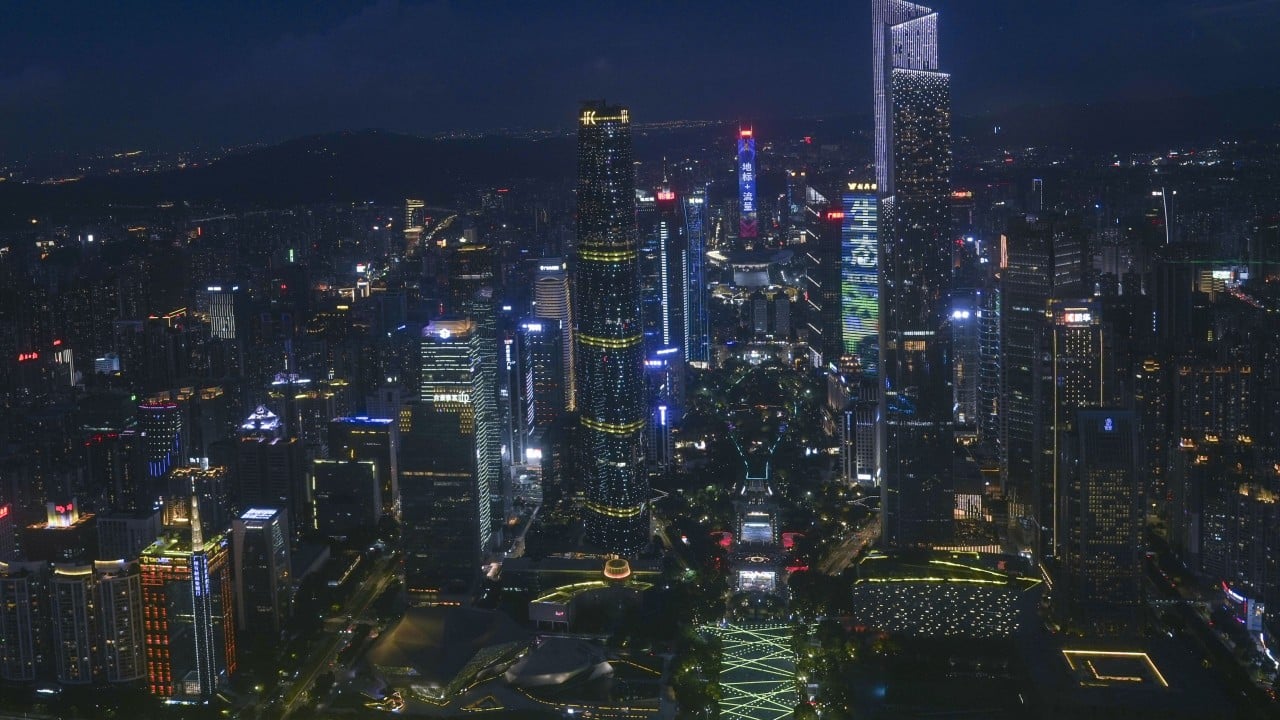
Recent land-renewal policies unveiled in Guangzhou and Shanghai aim to stabilize China's commercial real estate market and restore investor confidence, according to officials and industry experts. These new regulations, which govern the leasing of land for commercial and industrial purposes, will also help in the issuance of exchange-traded real estate investment trusts (REITs), a financing mechanism that developers can employ to replenish their resources.
As Yan Yuejin, deputy director of the E-House China Real Estate Research Institute, explained, the policies effectively tackle regulatory loopholes related to the renewal of expired non-residential land-use rights, marking a significant milestone for authorities and market participants in revitalizing existing property assets, promoting urban renewal, and stabilizing market expectations.
The Guangzhou and Shanghai governments have set a minimum land-use fee of 70% of the fair market value for lease extensions after expiration. In China, land is owned by the government, and developers and owners pay fees to secure land-use rights through lease agreements with authorities. Following the deregulation of the real estate market in the early 1990s, leases for commercial properties such as shopping centers, factory sites, office buildings, and residential developments came with varying durations: 40 years, 50 years, and 70 years, respectively.
Lease expirations have raised concerns about property values and the legal rights and interests of users. Guangzhou introduced comprehensive land-renewal policies in April, followed by Shanghai in late July, with Xiamen and Hangzhou subsequently releasing similar frameworks for regulating lease extensions.
According to property services firm Cushman & Wakefield, more than 1 trillion yuan (US$14.2 billion) of non-residential properties have leases expiring within the next 20 years. Top policymakers will approach the land-renewal issue cautiously, with Wang Feng, chairman of Shanghai-based financial services group Ye Lang Capital, stating that it would take time for central and local governments to develop clear-cut rules to facilitate transactions and maintain market order.
The real estate market is crucial to the national economy, and Wang emphasized that policymakers would adopt a cautious stance on the land-renewal issue, viewing the policies in Shanghai and Guangzhou as trial runs that could be adjusted in the future.
Brokers reported that office building prices in Shanghai had dropped by 30 to 40% from their peak due to a national property crisis that began in 2021, attracting local investors seeking bargains. Yan noted that the renewal policies have effectively alleviated investors' concerns about REITs backed by commercial properties, as lease extensions will enable them to generate stable and sustainable returns.
REITs allow asset owners to raise funds from valuable but illiquid assets without relinquishing control, providing investors with regular dividends generated by the underlying properties. The mainland's first four exchange-traded REITs backed by commercial properties debuted on the Shanghai exchange on June 18 after raising a combined 20.3 billion yuan.
Written by urgent.news from SCMP Business's reporting — not their text. Machine-written — may contain errors; check the original before relying on it.