Amid frontline advances, Ukraine's cities face up to lack of air defence
AS Ukraine’s capital came under some of the heaviest direct bombardment of the war last week, President Volodymyr Zelenskyy met a delegation of Japanese members of parliament and then German Chancellor Friedrich Merz.
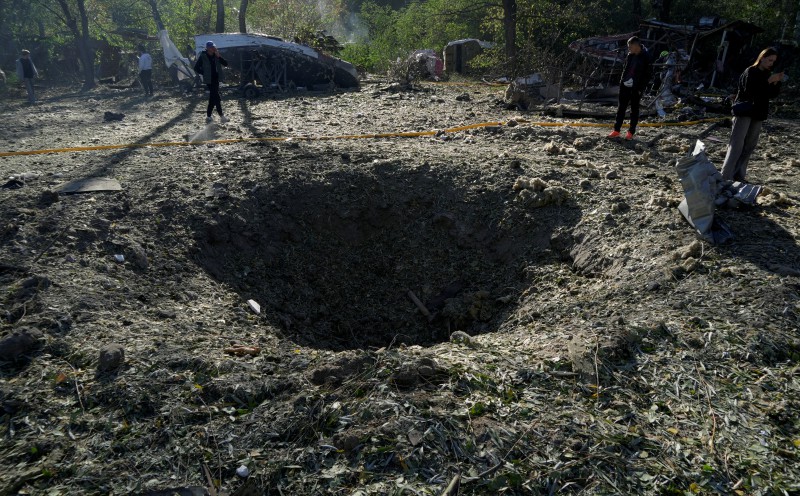
Last week, Ukraine's capital city, Kyiv, faced some of the most intense bombardment of the ongoing war, as President Volodymyr Zelenskyy met with Japanese and German officials. The leaders assured that neither Germany nor major nations planned to evacuate their embassies in the Ukrainian capital, despite Kremlin warnings. Zelenskyy emphasized that protection against Russian airstrikes was the top priority, as the frontline situation worsened.
While Ukrainian soldiers made advances on the battlefield, survival in open areas became increasingly difficult, with both sides now utilizing underground tunnels and new drone designs. Ukrainian officials reported that Russia launched 900 Shahed drones last week, targeting essential infrastructure, including Kyiv's bridges. The counteroffensive, Operation Vivaldi, has seen significant progress in the Lyman region, reducing the threat of further Russian advances.
However, Ukraine struggles with the constant barrage of Russian ballistic missiles and Shahed drones, which continue to penetrate the country's cities and infrastructure. Western allies have provided Ukraine with F-16 jets, but many are grounded due to engine part shortages. Ukraine canceled its annual arms fair in Lviv, and Western firms seek partnerships for testing their latest weaponry, including new drones capable of penetrating Russian bunkers.
As the war enters a harsher winter, Ukraine faces a critical challenge in securing heat and power for its citizens, while Russia continues to innovate with new drone technologies.
Written by urgent.news from New Straits Times's reporting — not their text. Machine-written — may contain errors; check the original before relying on it.