‘A Hawaiian son’: Honolulu honours Sun Yat-sen as his landmarks vanish
Eddie Flores pressed the button at a pedestrian crossing on King Street, then pointed across the road. In the spring of 1910, Chinese revolutionary Sun Yat-sen lodged over there, on the second floor of a shop owned by a friend and fellow party member. “It’s no longer there,” said Flores, chairman of the restaurant chain L&L Hawaiian Barbecue. “But we can more or less point out where the building…
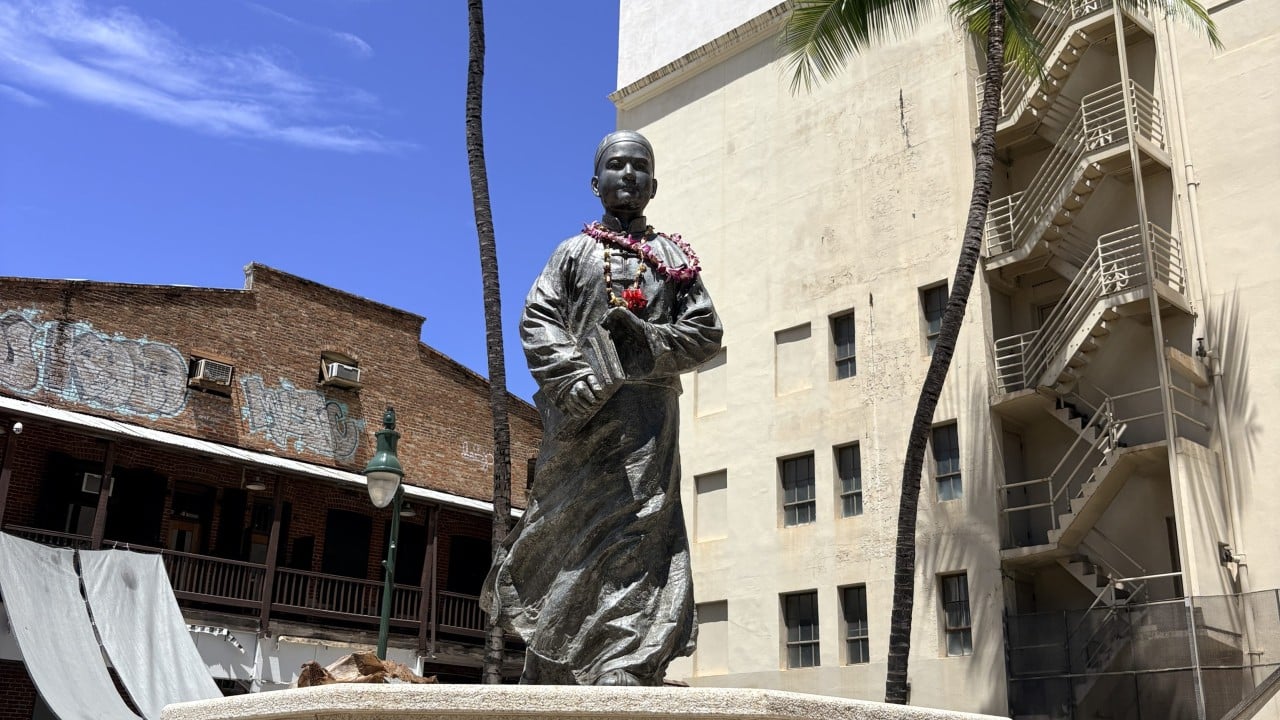
Honolulu honored Chinese revolutionary Sun Yat-sen (1866-1925) on November 1, marking the 160th anniversary of his birth. The city unveiled a mural, held a lei-draping ceremony, and led walking tours to reflect on his years in Hawaii. Sun first arrived in 1876 at age 12 or 13, staying on Maui with his elder brother. He later resided in Honolulu's King Street area, where followers once met in secret basements and a bank clerk's house.
In 1894, about 20 men gathered to form the Revive China Society, pledging to overthrow the Qing dynasty. Sun's birth certificate, revealing his birth in Hawaii, helped him bypass immigration barriers in the U.S. In 1904, he traveled to San Francisco to gather funds for the revolution, using his Hawaii birth certificate to avoid the 1882 Chinese Exclusion Act.
Hawaii, once called the gateway to Asia, played a significant role in Sun's journey, with many early Chinese immigrants hailing from his birth county. Sun's influence in Hawaii was not universal, with historians noting a slower and more divided support system.
Written by urgent.news from Reuters Business via SCMP's reporting — not their text. Machine-written — may contain errors; check the original before relying on it.
This story
This is one outlet's version. Read the fullest account.