World’s first 3D-printed remote control aircraft with a jet turbine takes flight, aims for Mach 0.8 to beat world record for fastest model aircraft
Team of graduates attempts to beat Guiness World Record for fastest jet-powered model aircraft using PETG and clever engineering.
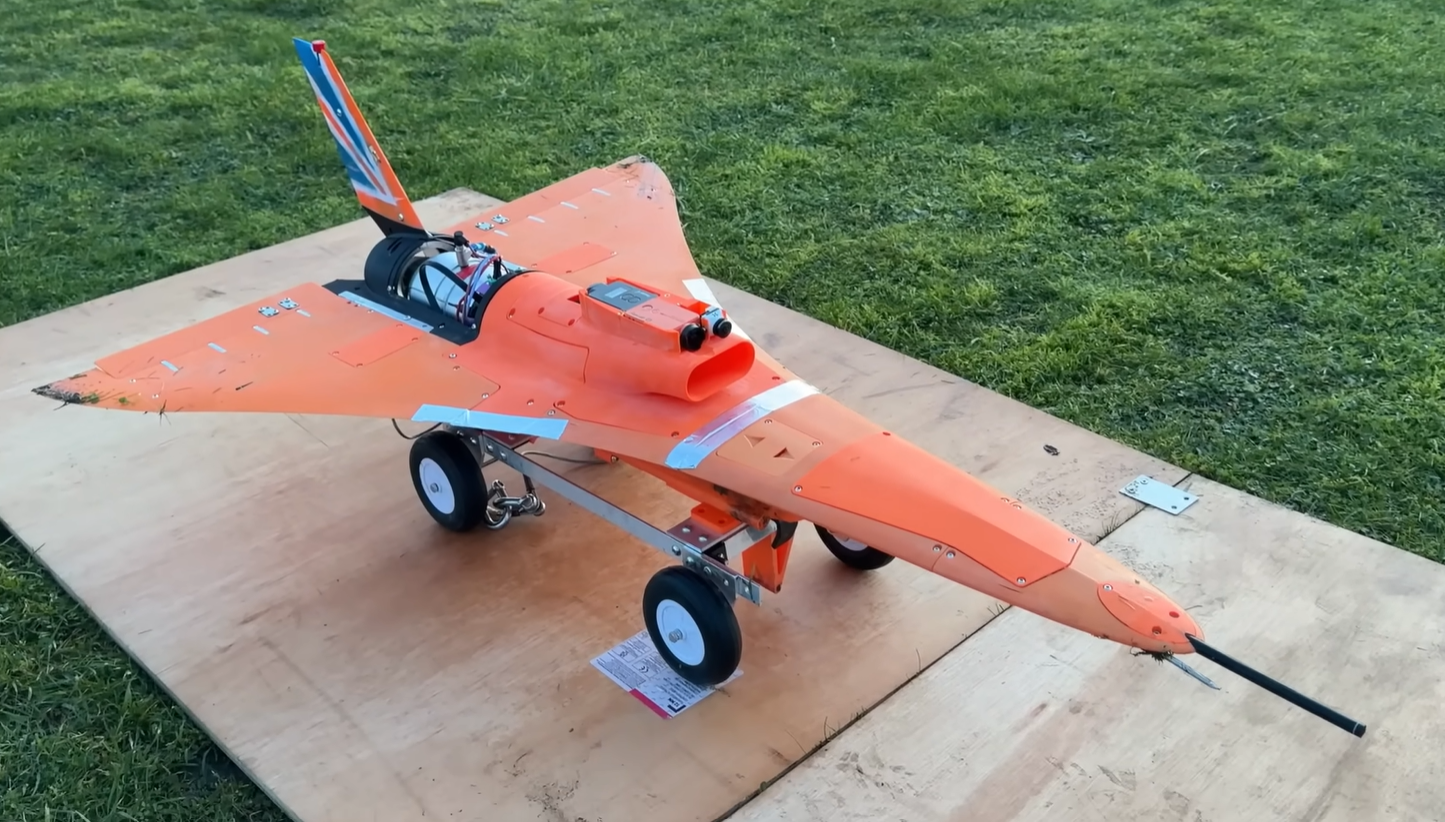
The Kingchaser, a 3D-printed jet-powered remote-controlled aircraft, has successfully taken flight in an ambitious attempt to break the world speed record. Weighing in at just over 20 pounds, the aircraft was constructed primarily from PETG and PPS-CF, with carbon-fiber rods, aluminum, and an aluminum skeleton reinforcing its structure. The team, graduates from the University of Bath, aimed for a speed of Mach 0.8, in hopes of surpassing the current Guinness World Record set by German pilot Neils Herbrich nine years ago.
The Kingchaser is not the team's first attempt at a 3D-printed aircraft. In their earlier work, they created the Kinglet, an even smaller prototype made of PETG and PET-CF, which used an Electric Ducted Fan (EDF) instead of a jet turbine for early-stage development. The team's design changes came about due to the increased size and force the larger aircraft had to endure.
The aircraft is powered by the Jetcat P60, a miniature jet turbine engine capable of producing 63 N · m of thrust, allowing for a top speed of 205 mph (330 km/h). Although the Jetcat P60 might not be powerful enough to break the current world record, the Mach Initiative's primary goal was to achieve flight with a jet engine. The team postponed their initial plan to use a 150Nm jet engine in the Kingfisher MK2, opting instead to build a new aircraft, the Kingchaser, which is 20% larger than the Kingfisher.
The Kingchaser is equipped with a fully instrumented avionics system, allowing for extensive telemetry collection and an FPV system for better piloting at high speeds. 70 kg-cm (5.06 ft-lbs) high-torque servos were used on the elevons to control the aircraft at speed. While there is no current announcement of when the record attempt will be made, the team's progress can be followed through their entertaining build logs on their YouTube channel.
Written by urgent.news from Tom's Hardware's reporting — not their text. Machine-written — may contain errors; check the original before relying on it.