Winner of scientific imagery contest was AI generated
Nikon disqualifies the winner of its prestigious science competition for using AI after microscopy experts questioned the accuracy of the clip on social media.
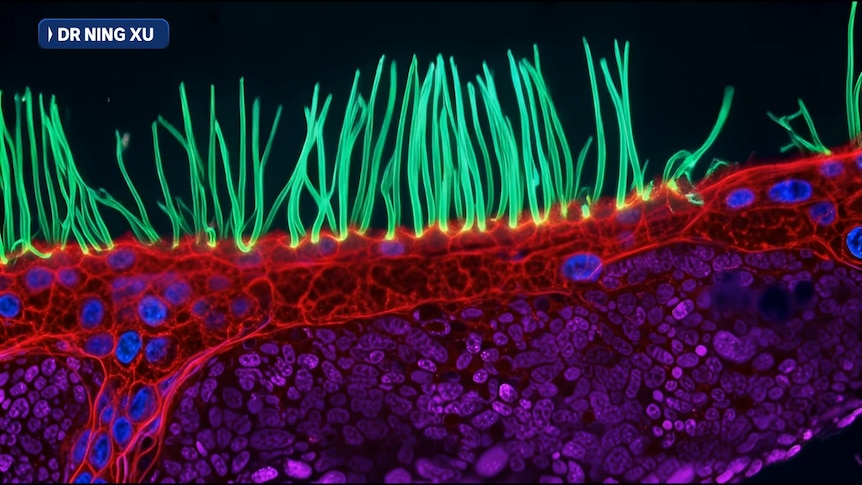
An international science competition has disqualified the winner of its annual Small World In Motion competition after it was revealed the winning video was generated using AI. The original winner, Ning Xu, an optical engineering researcher at Tsinghua University in China, had used a series of complex light waves to illuminate microscopic structures in a way that showed tiny hair-like structures in the airways of a child with rare genetic disease primary ciliary dyskinesia (PCD).
Dr Xu's video, magnified to 100 times its original size, claimed to provide a better understanding of PCD by showing cilia that line airways to clear out mucus. The video, which claimed to depict nuclei and cilia accurately, was found to violate the competition's rules regarding the use of generative AI. Nikon, the competition's organizer, stated that the decision to disqualify Xu was based on the video's eligibility and not a judgment of Xu's professional reputation or scientific contributions.
The controversy has led to a call for the winning work to be externally examined by the microscopy community, with concerns that the portrayal of PCD in the video could shape public understanding of the poorly understood disease. Following the controversy, Vietnamese researcher Nguyen Nam Nhat was named the new winner of the competition, for a video of a microscopic roundworm encountering a single-celled organism called a Dileptus.
The competition, which started in 1975, offers a US$3,000 prize to the winner. Nikon has reached out to Dr Xu for comment on the decision.
Written by urgent.news from ABC News AU's reporting — not their text. Machine-written — may contain errors; check the original before relying on it.