Why the TP-Link M7450 remains relevant despite the rise of 5G hotspots
With 5G increasingly common across the UAE, buying a dedicated 4G portable Wi-Fi router might seem unnecessary. Yet the TP-Link M7450 makes a convincing case for keeping your mobile internet separate from your smartphone, particularly when travelling, working remotely or connecting several devices at once. Its combination of LTE-Advanced connectivity, support for up to 32 devices and a battery…
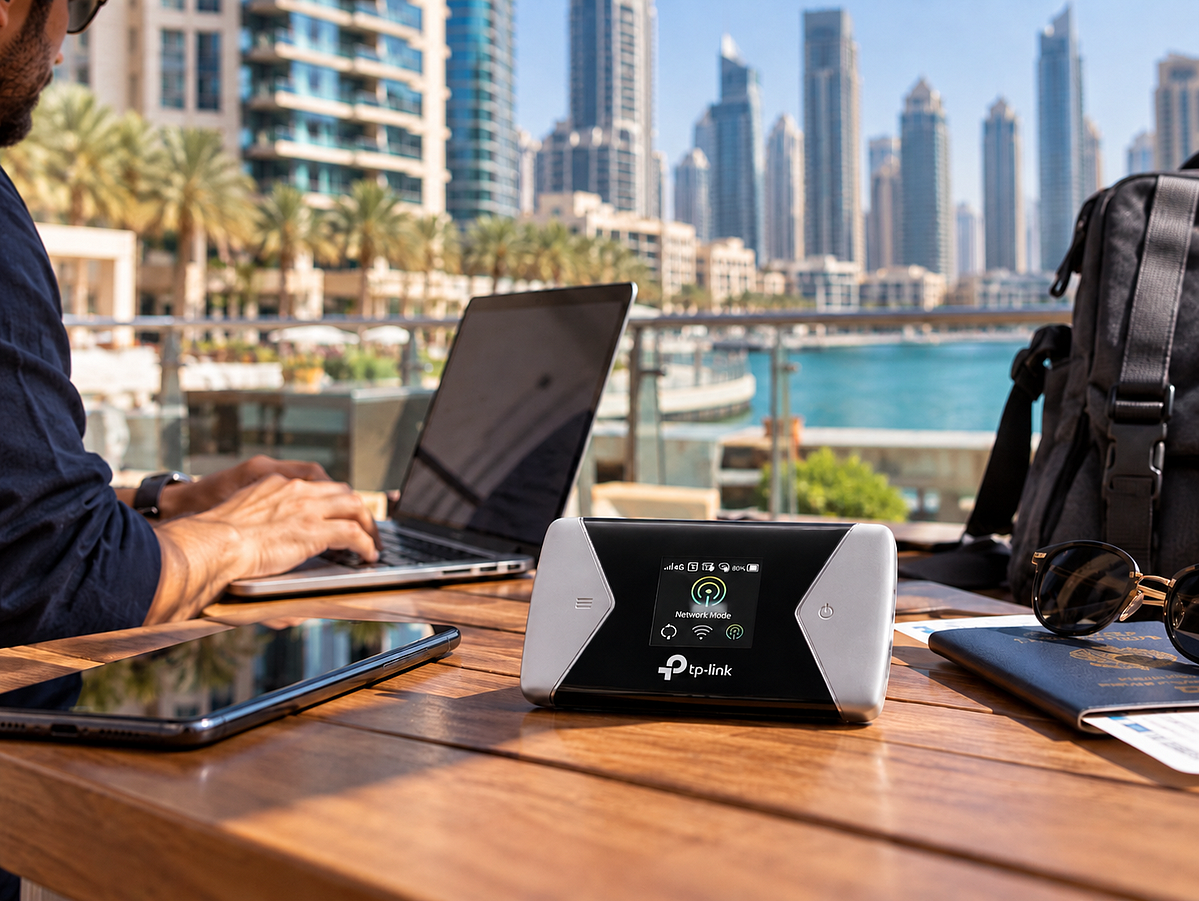
Despite the increasing prevalence of 5G hotspots in the UAE, the TP-Link M7450 continues to hold its ground as a practical choice for mobile internet sharing. Its 4G connectivity offers a useful alternative to depending on a smartphone's battery and internet functions. The router's support for up to 32 devices makes it an ideal solution for families, remote workers and frequent travellers who need to connect multiple devices simultaneously.
With an LTE-Advanced Category 6 connection, the M7450 delivers theoretical download speeds of up to 300Mbps and upload speeds of up to 50Mbps. Carrier aggregation technology allows the router to combine compatible mobile network channels, boosting available bandwidth. It supports dual-band Wi-Fi on 2.4GHz and 5GHz frequencies, providing flexibility for various devices and environments. A built-in 3,000mAh battery ensures up to 15 hours of operation, making it a reliable companion for travel and remote work.
For UAE residents who require portable, shared internet access over the fastest network technology, the TP-Link M7450 remains a sensible option. The device's compact size, ease of use, and practical features make it a valuable addition to any mobile-connected lifestyle.
Written by urgent.news from Gulf News's reporting — not their text. Machine-written — may contain errors; check the original before relying on it.