UPSC Ethics Answer Practice: AI Ethics in Governance | Question and Case Study
The UPSC Ethics paper tests a candidate's ethical judgment rather than their ability to recall facts. The GS IV syllabus evaluates a future public servant's attitude towards integrity, probity, problem-solving, and dealing with societal challenges. The UPSC Ethics Answer Practice series aims to build this skill by providing real-world issues from the news, mapping the values, principles, stakeholders, and competing duties involved, and testing them through a theory question and a case study.
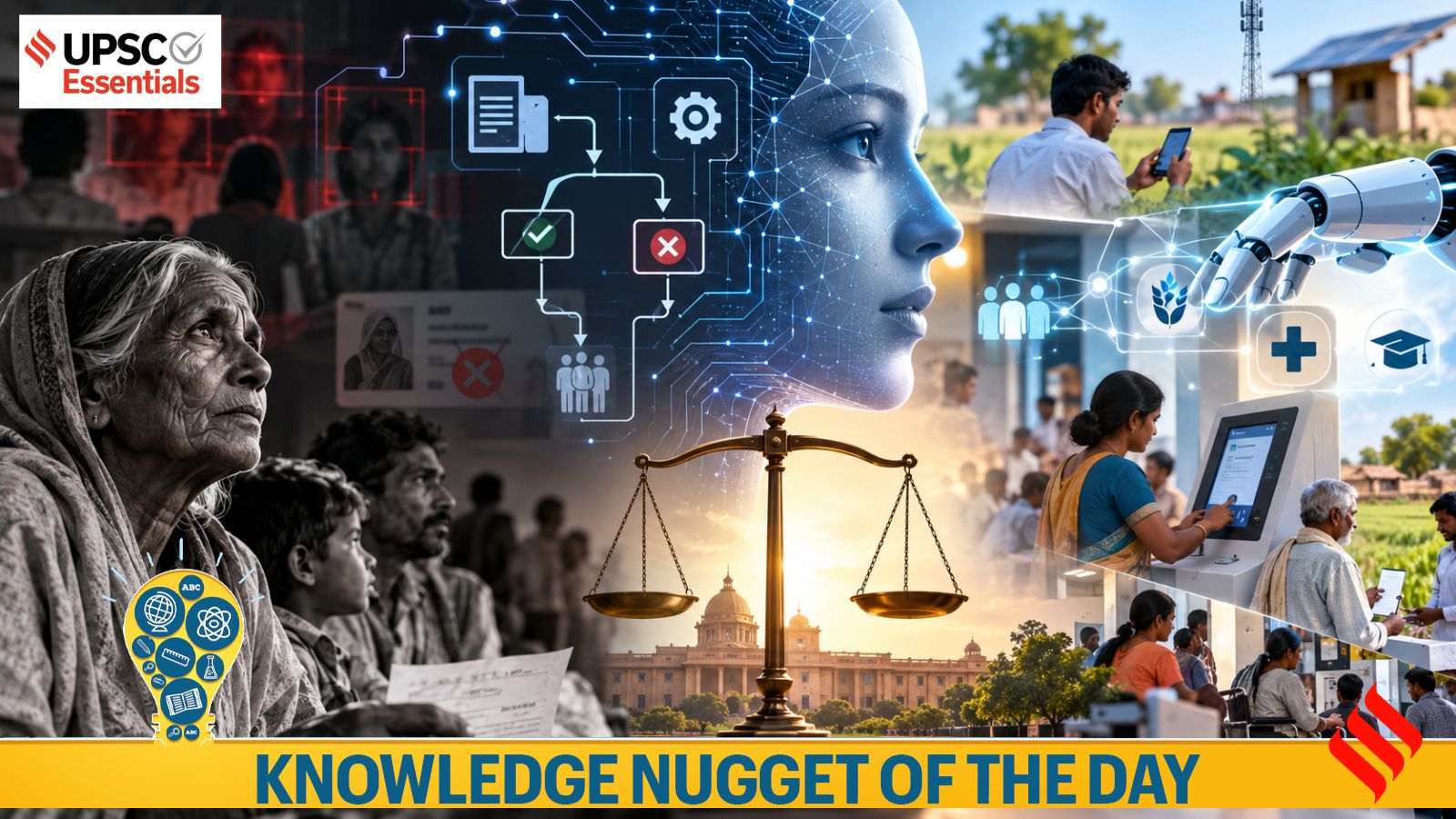
This week's focus is on AI and technology ethics in governance. The question prompts the examiner to examine a statement about innovation in governance and its implications for the use of Artificial Intelligence (AI) in public service delivery. The statement highlights the distribution of risk arising from using agentic AI in making administrative decisions, which can have severe consequences for citizens such as lost pensions, denied ration, or missed medicine.
The examination of this statement requires the candidate to consider several factors. First, who bears the risk of the AI experiment, and did they have any say in it? While efficiency is desired in the administrative setup, it cannot replace empathy, justice, and the state's obligation to prevent exclusion from service delivery. The AI Impact Summit 2026's motto of "Sarvajana Hitaya, Sarvajana Sukhaya" can serve as a guiding principle for administrators while integrating AI into decision-making.
Candidates must anchor AI ethics in enforceable human rights principles, including privacy, equality, non-discrimination, due process, and dignity. International frameworks like the UNESCO AI Ethics Principles and the UNDP Human Development Report 2025 emphasize this rights-based grounding. India's AI Governance Guidelines list "Innovation over Restraint" among its guiding principles, alongside People First, Accountability, and Fairness & Equity.
The candidate should also consider the lived realities and local contexts of AI systems, including caste dynamics, gendered labor, linguistic diversity, rural-urban divides, and digital precarity. These realities demand intersectional fairness and representational justice from technological systems. The Kisan e-Mitra chatbot and the Wadhwani AI tool for tuberculosis identification demonstrate the potential of AI to reach remote citizens and improve service delivery.
However, utilitarian, Rawlsian, and Kantian perspectives must be weighed when evaluating the severity, concentration, and reversibility of harm caused by AI.
Ultimately, the examination of this statement requires candidates to navigate the complex interplay between AI's potential benefits and the ethical concerns surrounding its implementation in governance.
Written by urgent.news from The Indian Express's reporting — not their text. Machine-written — may contain errors; check the original before relying on it.