Toddler hides but peeks? Psychology says they're juggling 2 feelings at once
Toddlers can display uncertainty when encountering unfamiliar guests, yet their innate curiosity drives them to observe before participating. Parents play a vital role in supporting this behavior by giving their little ones the freedom to explore social interactions at their own pace. By maintaining a calm demeanor, caregivers can ease their child's entry into interaction, fostering enriching…
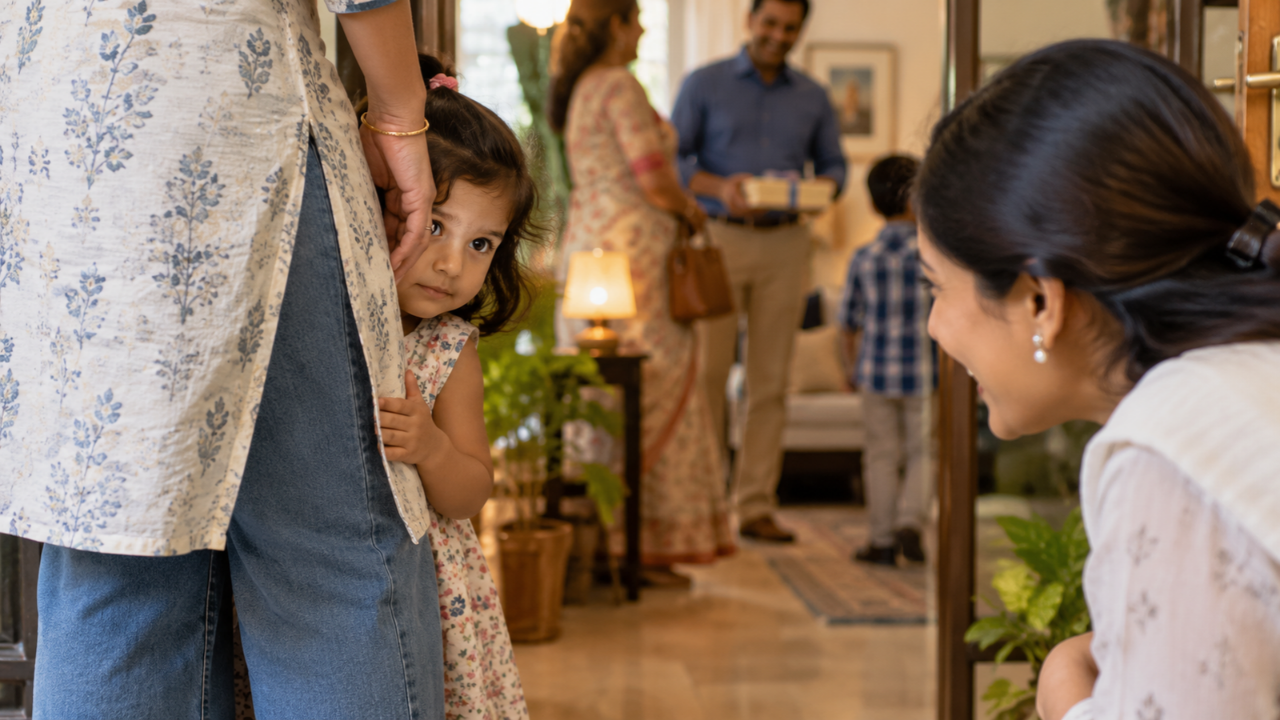
In family gatherings, toddlers often hide behind a parent when an unfamiliar person arrives. This behaviour can appear puzzling, as the child is simultaneously curious and hesitant. Developmental psychology provides insight into this phenomenon, suggesting that children can feel multiple emotions at once. An unfamiliar visitor presents a variety of new stimuli, such as a different face, voice, and greeting. Even with familiar relatives, changes in setting or behaviour can cause unease.
Researchers have studied behavioural inhibition, which describes how some children respond cautiously to new people, places, and experiences. This temperament is not necessarily indicative of an anxiety disorder, but it can affect how a child approaches social situations. When a toddler hides behind a parent, they may be managing both a desire to maintain some distance and an interest in learning about the newcomer.
Peeking is not proof that the child is ready to interact; it might simply be a way to stay engaged while controlling the level of closeness.
A parent's calm reaction can be crucial in helping a toddler navigate these feelings. By remaining relaxed and allowing interactions to unfold gradually, parents can create a supportive environment. If the parent becomes tense or insists on immediate greetings, the toddler may feel more pressure. Understanding that individual temperament plays a role is essential, as some children take longer to warm up to new situations.
While a cautious approach is not a sign of an anxiety disorder, it is a factor that should be considered in a child's overall development. Parents should focus on helping their child gradually become more comfortable with everyday social experiences without rushing the process.
Written by urgent.news from Times of India's reporting — not their text. Machine-written — may contain errors; check the original before relying on it.