The scaffolding will be removed from the facade of Notre-Dame Basilica in Montreal
While the restoration of the facade is complete, the basilica still has several years of work ahead of it.
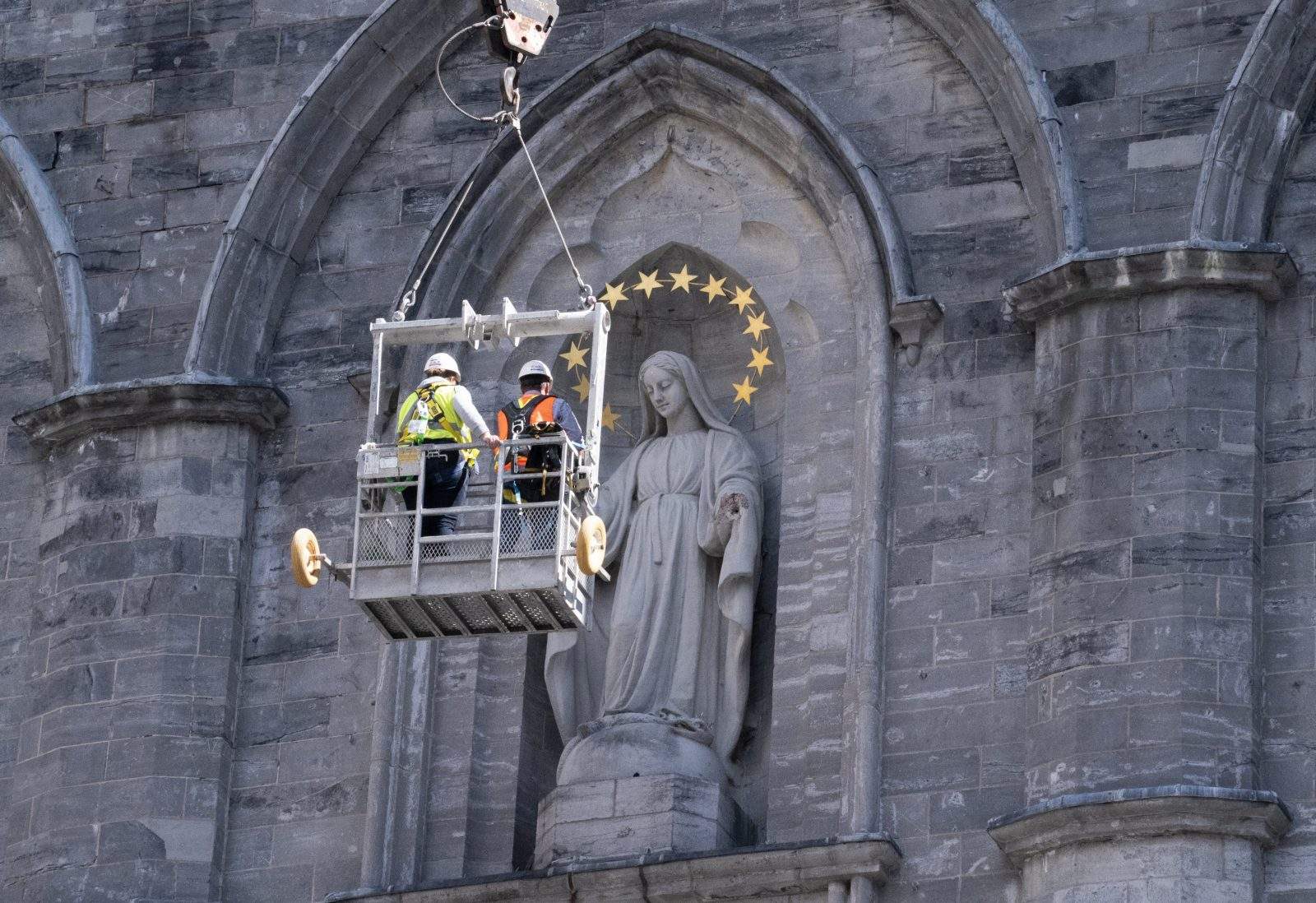
The Notre-Dame Basilica in Montreal, after remaining obscured behind scaffolding for nearly a decade, is set to reveal its restored facade on October 25. While the exterior restoration is nearing completion, the church still requires several years of work ahead. About 20% of the necessary work has already been completed, according to Michel Issa, the executive director of the Fabrique de la paroisse Notre-Dame de Montréal.
He estimates that the exterior renovations will take four years, though he acknowledges this timeframe might be optimistic. The interior restoration could extend the project by another five to ten years, he added.
The total cost of the restoration is estimated at $100 million. To finance this endeavor, the basilica has organized benefit concerts, generates revenue from its coffee shop, Le Firmament, and conducts fundraisers. A recent fundraising campaign introduces a novel approach: allowing donors to "sponsor a stone" by inscribing digital messages on the church’s facade.
These messages can be viewed using augmented reality via a cellphone directly on the facade or by projecting a model of the facade onto a flat surface. However, the inscriptions won’t be visible until early 2027.
The extensive renovations are necessary due to the overall structure of the basilica requiring reinforcement and restoration. Over the years, freezing and thawing cycles have caused the stone to crack in various locations. The stones, sourced from an old quarry in Montreal’s Mile End neighborhood, have varying qualities. Some stones were salvaged from the bottom of the quarry and are of lower quality, while others were placed incorrectly, resulting in permeability issues.
The mortar that held the stones together has also been replaced with epoxy, increasing the pressure on the stones. Despite the best efforts of past generations, these choices have contributed to the current condition of the basilica.
These structural weaknesses also impact the interior, leading to water infiltration and moisture problems that deteriorate painted decorations. Rather than repainting, the parish aims to reattach each flake of paint, a labor-intensive and time-consuming process that adheres to best practices in heritage conservation. The basilica’s iconic blue vault, among other sections, will require restoration.
The scaffolding needed for these tasks stands about ten storeys high, potentially interrupting concerts and tours and reducing the church’s revenue.
Failing to complete this restoration could lead to exponential deterioration, exacerbating existing problems. Therefore, the restoration is crucial to prevent further damage and preserve the basilica for future generations.
Written by urgent.news from Global News's reporting — not their text. Machine-written — may contain errors; check the original before relying on it.
This story
This is one outlet's version. Read the fullest account.