The festive economy: Clay, craft, and women’s livelihoods
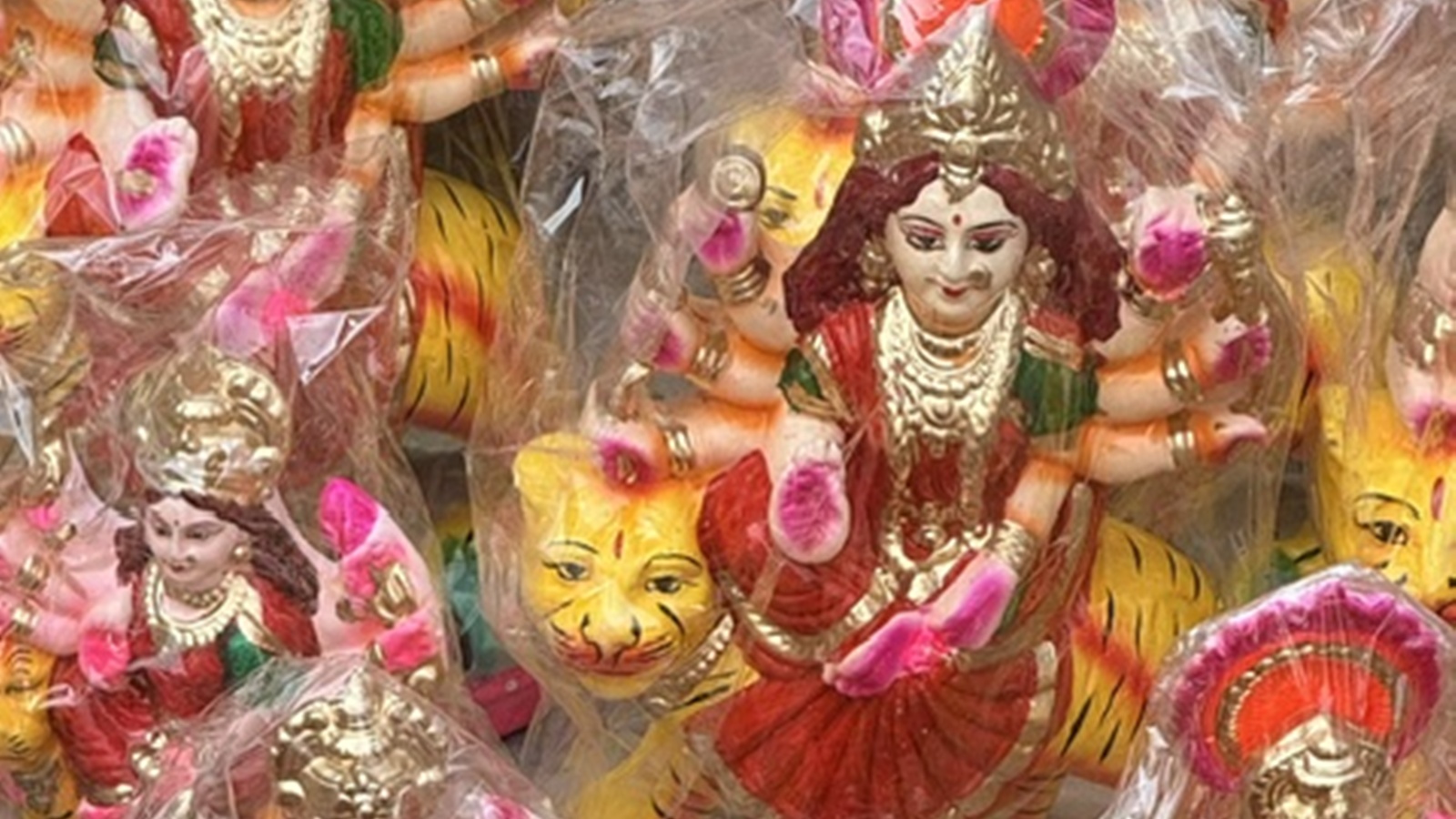
During September and October, India celebrates various festivals such as Ganesh Chaturthi, Durga Puja, and Dussehra, leading to increased production of idols, sculptures, and clay toys. In Maharashtra, farmers display oxen and livestock idols in local markets as part of the Pola festival, thanking their animals for their agricultural contributions.
Across India, especially in West Bengal, Jharkhand, Assam, Odisha, and Bihar, women adorn themselves with lanterns, lanterns, and alponas during the Mahalaya festival, marking the arrival of the goddess.
Clay diyas (Photo: Swasti Pachauri) Idol makers paint the eyes of clay goddesses using a sacred kohl made from Bilva patra and ghee, following traditional rituals. Kumortuli, a traditional potters' colony in Kolkata, is a significant center for idol-making, supplying idols for festivals nationwide. Pandal hopping becomes a popular activity during this time, as autumnal blooms of saptaparni and subtle autumn air enhance the festive ambiance.
Indigenous artisans and local stories also contribute to the festive economy. In Delhi's potters' colony, women like Soniya and Sharda continue their families' pottery and idol-making traditions. They travel with their children to markets, using clay lamps, pots, and idols to sell during the festive season. Soniya, in particular, prefers creating idols herself, while Sharda purchases them from wholesale markets due to limited internet access and the lack of a smartphone-driven content economy.
Challenges faced by artisans include limited digital access and inventory storage issues when unsold products remain at the end of the season.
Written by urgent.news from The Indian Express's reporting — not their text. Machine-written — may contain errors; check the original before relying on it.
Also reported by 1 other outlet
- The festive economy: Clay, craft, and women’s livelihoods indianexpress.com