Supreme Court Must Act Decisively To Restore Electoral Democracy
By K Raveendran India’s electoral democracy has reached a critical juncture where judicial intervention can no longer remain confined to procedural scrutiny and expressions of concern. The mounting controversy surrounding Chief Election Commissioner Gyanesh Kumar, the unprecedented scale of voter deletions under the Special Intensive Revision (SIR), and the government’s increasingly coercive…
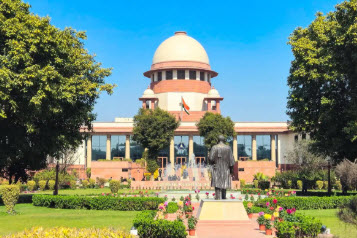
India's electoral democracy stands at a critical juncture, where the Supreme Court must take decisive action to safeguard the fundamental right to vote. Controversies surrounding Chief Election Commissioner Gyanesh Kumar, the massive voter deletions under the Special Intensive Revision (SIR), and the government's aggressive response to public protests have created a constitutional crisis.
The Court, which has allowed the SIR to proceed under judicial supervision, now bears the responsibility to prevent further erosion of electoral integrity.
Opposition parties, civil society groups, and youth movements are questioning the credibility of the Election Commission itself, not just individual decisions. The detention of protesters, restrictions on public transport, and deployment of security personnel in New Delhi ahead of the October 10 demonstrations have fueled fears that the government views criticism of the Election Commission as a threat to its own authority.
This line of thinking dangerously blurs the line between the government and a constitutionally independent institution.
The parliamentary route for removing Gyanesh Kumar has proven virtually impossible due to the stringent protection afforded to him by Article 324(5), which grants him immunity comparable to that of a Supreme Court judge. Removal would require a complex parliamentary process involving significant majorities, making success highly unlikely without substantial support from beyond the Opposition.
This protection was intended to shield the Chief Election Commissioner from arbitrary executive interference, not to grant immunity from judicial examination of unconstitutional conduct or administrative wrongdoing.
The Supreme Court cannot simply dismiss the Chief Election Commissioner through an extraordinary exercise of discretion. However, it possesses the authority to examine unlawful decisions, invalidate unconstitutional procedures, and demand institutional accountability. The Court's scrutiny must begin with a thorough examination of the decisions that have brought the Commission's credibility into question.
Allegations that Gyanesh Kumar took important decisions regarding the SIR without the concurrence of the other two Election Commissioners raise concerns about collective decision-making and the concentration of electoral authority.
The Court's October 5 proceedings reflected the seriousness of these allegations and its reluctance to act without verified evidence. While the Court declined to suspend Kumar based solely on newspaper reports, it sought responses from the Commission and other parties, indicating its willingness to investigate further. The immediate requirement is a transparent examination of the Commission's internal records, including disputed decisions, recorded objections, and the procedures followed in approving the SIR.
The broader controversy surrounding the SIR is equally consequential. Electoral rolls must be accurate, with duplicate entries, deceased voters, and ineligible individuals removed. However, the process cannot become a mechanism for excluding eligible citizens due to a lack of documents, administrative obstacles, or inability to navigate complex verification procedures.
The reported removal of over 130 million names from electoral rolls has generated widespread concern about the scale and consequences of the revision exercise. The Court must determine whether these removals comply with constitutional guarantees and whether they have unfairly disenfranchised citizens.
Rewritten by urgent.news; may contain errors — check the original.
Source: thearabianpost.com