Ringen um Billionensumme: Streit um EU-Haushalt: Merz lehnt auch neuen Vorschlag ab
Mit wie viel Geld soll der nächste langfristige EU-Haushalt ausgestattet werden? Über diese Frage wird in Brüssel intensiv gerungen. Nun liegt ein Vorschlag auf dem Tisch.
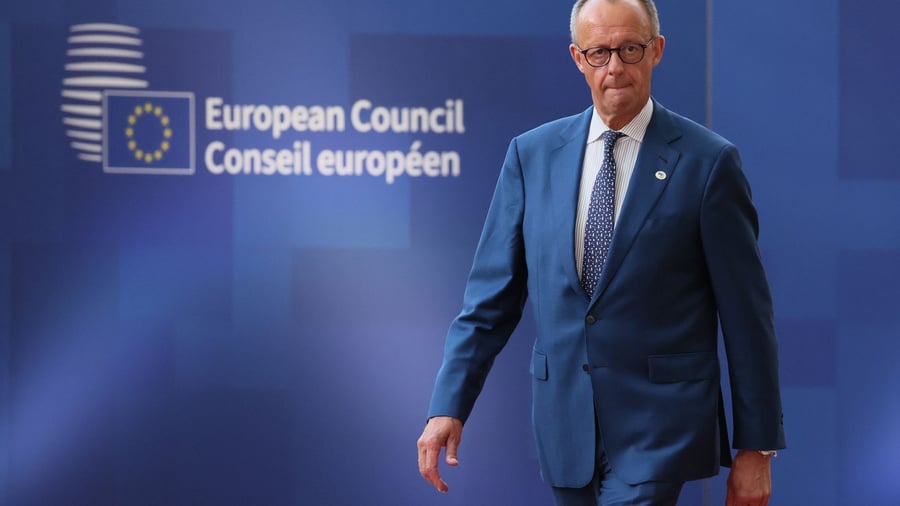
In the European Union, tensions continue to rise over the upcoming long-term EU budget. On Saturday, Federal Chancellor Friedrich Merz dismissed a new proposal from the current Irish presidency as unacceptable, stating that the proposed amount was not a basis for agreement. The EU budget must be affordable for those bearing the main financial burden.
Previously, the Irish EU presidency took a confrontational stance against Germany and other major net contributors. A presented concept reduces the next budget by around 159 billion euros compared to the original EU Commission proposal, totaling approximately 1.826 trillion euros. Net contributors demanded hundreds of billions less for Germany and other important net contributor countries like the Netherlands, Sweden, and Austria, who contribute more than they receive.
Merz emphasized that all contributing countries should prioritize and modernize EU spending. The traditional large budget items for agricultural and cohesion policy would remain largely untouched. Merz noted that the necessary adjustments should be made by all, as prioritization and modernization of EU spending are the responsibility of everyone.
An agreement by the end of the year seems unlikely, and it is unlikely that the new proposal will break the deadlock in negotiations. Austria, among the eight net contributors, has already pledged to contribute over 60% of the EU budget and cannot demand more from its taxpayers. Swedish EU Minister Jessica Rosencrantz called the proposal inadequate and demanded a significant reduction in the overall volume.
An EU diplomat criticized the proposal for favoring 20th-century political priorities and missing out on financial realities of the 21st century. Representatives from Ireland stressed that national allocations for agriculture and cohesion should not be further reduced, including several net contributors. The Irish proposal leaves key questions of financing open.
Possible new EU own resources include contributions from large corporations, emissions trading revenues, carbon border adjustment taxes, and taxes on tobacco and electronic waste. However, no agreement has been reached on these instruments. The majority of the long-term EU budget will still need to be funded through Member State contributions, with each country paying a percentage of its gross national income.
Germany, as the largest economy in the EU, contributes the largest share, recently over a fifth. The German budget contribution totals around 34.1 billion euros, including around 29.6 billion euros in national contributions and approximately 4.4 billion euros in German levies, which are considered traditional EU own resources. In 2025, Germany's net EU contribution will be around 21.8 billion euros.
The proposed budget volume of 1.826 trillion euros in current prices accounts for an anticipated price development during the seven-year financial period. In current prices of 2025, this budget framework for 2028-2034 would amount to approximately 1.622 trillion euros. The Irish presidency initially proposed a total budget of 1.763 trillion euros, which is now being reduced by the Irish presidency by around 141 billion euros, or eight percent.
Written by urgent.news from Handelsblatt's reporting — not their text. Machine-written — may contain errors; check the original before relying on it.