Politischer Stimmungstest: Tschechiens Opposition mit Achtungserfolg bei Senatswahl
Die regierenden Rechtspopulisten siegen bei der Kommunalwahl, bei der Senatswahl jedoch erzielt die Opposition einen überraschenden Teilerfolg. Was das für das politische Gleichgewicht bedeutet.
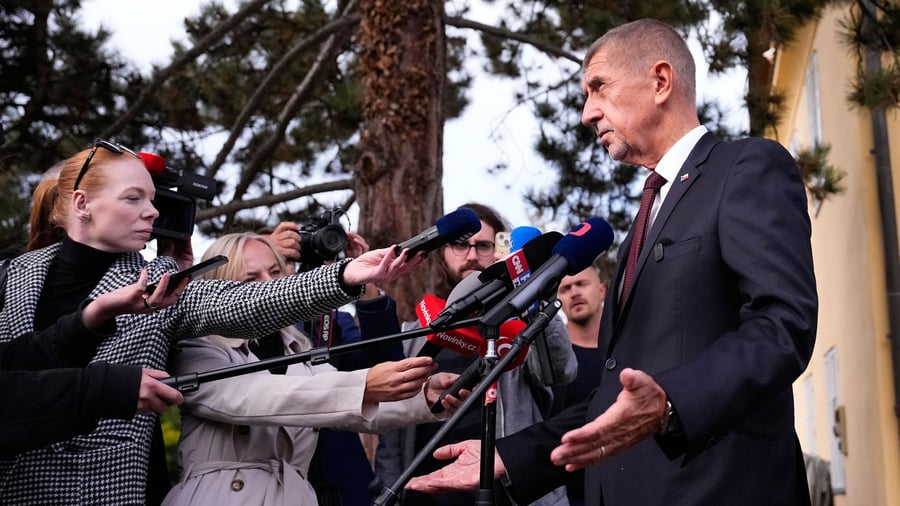
In the recent Senate election in the Czech Republic, the liberal and conservative opposition parties achieved a surprising level of respectability, with five of their candidates securing outright majority in the first round of voting. This was revealed by tallying over 90% of the electoral districts. The remaining seats will be decided in upcoming runoff elections.
The far-right populist ANO party, led by Prime Minister and billionaire Andrej Babis, is leading in these second-round elections. It is clear that the opposition will retain their majority in the Senate, thus maintaining a check on the government dominated by right-wing parties in the Chamber of Deputies. The Chamber serves as a democratic safeguard, able to delay legislative changes and prevent constitutional amendments.
Therefore, it is termed a "democratic insurance policy." The ANO party, led by Prime Minister Babis, performed best in local elections, coming close to their 2022 results with nearly 13% of the votes (compared to 16.60% in 2022). However, they still received the majority of municipal mandates. The most prominent opposition parties were the Citizen's Party STAN, the Christian Democrats (KDU-CSL), and the Civic Democrats (ODS).
Prague, known as the liberal stronghold of the opposition, saw ANO emerge victorious, while Pilsen (Plzen) and Ostrava (industrial city) were won by ANO. The complete results are expected to be released on Sunday. These elections serve as an important sentiment test for the government led by Babis since his inauguration in December.
Critics accuse Babis and his party of being in a constant conflict of interest due to his previous business empire. Recently, the government's plan to finance public broadcasting directly from the state budget, instead of through broadcasting fees, has also been met with criticism.
Written by urgent.news from Handelsblatt's reporting — not their text. Machine-written — may contain errors; check the original before relying on it.