Irish EU budget gamble: Now the real negotiating begins
So tightly guarded and last-minute was the Irish Government's draft proposal for the next seven-year EU budget that Thomas Byrne, the Minister of State for European Affairs, had only one of a few printed copies with him on the Aer Lingus flight from Dublin to Brussels on Friday night.
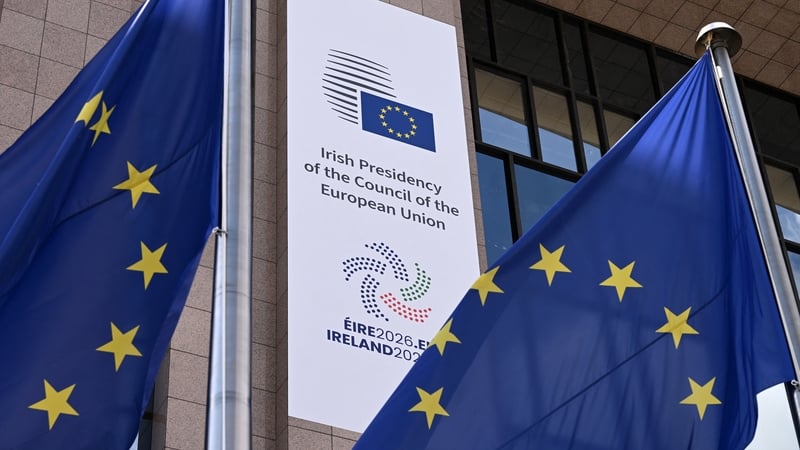
The Irish Government's draft proposal for the next seven-year EU budget has been met with intense speculation and negotiations. Dubbed the Negotiating Box, or Nego Box, the draft contains over 50 pages of detailed breakdowns. The primary focus is on the potential cuts Ireland plans to make, which areas would be affected most, and how Ireland intends to generate new revenue to prevent the EU from accumulating further debt.
The European Commission initially proposed a budget of €1.76 trillion for the period 2028-2034, which is 1.26% of gross national income. This is an increase from the current budget, which is 1.12% of GNI. The Commission suggested a new structure for spending and managing the budget, emphasizing competitiveness and defense over traditional areas such as the Common Agricultural Policy (CAP), which accounted for nearly one-third of the budget in 2021-27.
The draft budget is a subject of heated debate between the EU's net-contributor states, such as Germany, Finland, Denmark, the Netherlands, Sweden, and Austria, who advocate for a smaller budget focused on defense and competitiveness, and a larger group of 17 countries, including Italy, Poland, Spain, Bulgaria, Croatia, Cyprus, Czechia, Estonia, Greece, Hungary, Latvia, Lithuania, Malta, Portugal, Romania, Slovakia, and Slovenia, who desire a bigger budget to maintain agriculture and cohesion spending.
The Cyprus presidency presented the first detailed Nego Box, proposing a 2% cut or €32.8 billion from the Commission's original budget. However, richer member states pressured Ireland to make even deeper cuts. The Irish negotiating box must set an overall volume that can realistically be financed by those responsible for the majority of the budget, according to a joint letter from German, Danish, Austrian, Dutch, Finnish, and Swedish leaders.
Despite the mounting pressure, Ireland's position remains delicate, as the neutral chair of the presidency must balance the interests of both the net-contributor states and the coalition backing agriculture and cohesion spending.
Written by urgent.news from RTE News's reporting — not their text. Machine-written — may contain errors; check the original before relying on it.