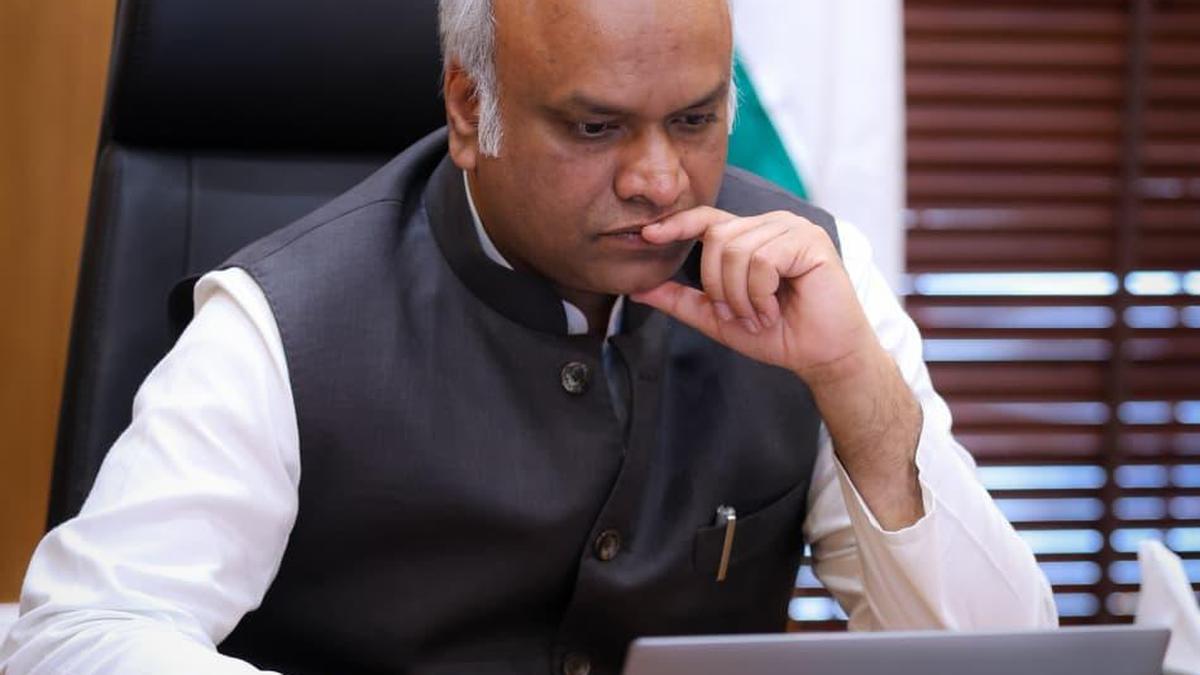
If India plays its cards right, suspension of PERM may be an opportunity: Priyank Kharge
Karnataka’s IT-BT Minister discusses the potential implications of the suspension, the State’s AI skilling roadmap, its approach to sustainable data centres and plans to build a deep-tech ecosystem focused on solving real-world problems.
The US government has recently suspended eight major technology companies, including Infosys, TCS, Wipro, and HCLTech, from the Permanent Labour Certification (PERM) program, a crucial pathway for employer-sponsored green cards. This suspension could lead to uncertainty in employment prospects for Indian tech workers and increase costs for Indian companies.
However, IT-BT Minister Priyank Kharge believes this could present an opportunity for India to attract investments by bolstering the state's talent pool. Speaking to The Hindu, Kharge discussed the implications of the PERM certification changes, the state's AI skilling roadmap, sustainable data center initiatives, and plans to build a deep-tech ecosystem centered on addressing real-world challenges.
Kharge emphasized that the suspension might make future employment prospects uncertain for Indian tech workers and raise costs for Indian companies. However, he believes that India can capitalize on this situation by sending the right signals to investors, attracting talent instead of companies moving to other locations. Bengaluru has historically attracted investments due to its concentration, drawing talent from across Karnataka and India.
Nonetheless, Kharge questioned whether there is sufficient AI talent to meet the demand for high-value jobs that may come to India.
The minister highlighted that Bengaluru ranks fifth globally in AI skillsets and is working tirelessly to improve this position. The government is collaborating with various AI companies, such as Anthropic, OpenAI, Google, and Sarvam, to develop the necessary policies and promote a strong foundation of skills. Kharge stressed the importance of heavy STEM education and filling gaps in higher education to ensure that India remains competitive in the tech industry.
Written by urgent.news from The Hindu's reporting — not their text. Machine-written — may contain errors; check the original before relying on it.