High Berth Rate: The growth of the cruise industry
Despite some bad press in recent months, the cruise industry continues to grow rapidly - while profits at the biggest players outstrip anything their landed industry-mates could dream of, writes Adam Maguire.
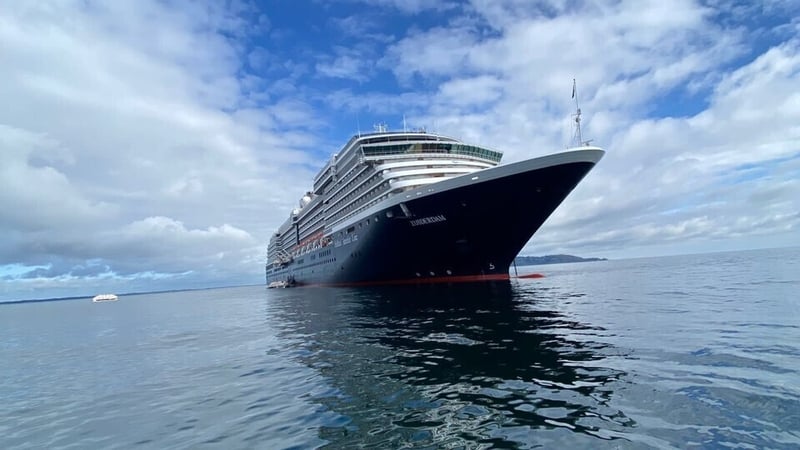
Dublin Port welcomed the World Voyager, the final cruise ship of the 2026 season, marking the end of the city's cruise ship season. Cork Port will also be bidding farewell to three cruise liners soon, bringing its season to a close. The rise of the cruise industry has been significant, with the Port of Cork's cruise-related economy contribution estimated to be over €17 million.
Globally, there were 37.2 million passengers on ocean-going cruise ships last year, a more than 25% increase compared to 2019 pre-pandemic numbers. This surge is largely due to the growth of the fleet, which saw 327 cruise liners in operation this year, 17 more than in 2025 and around 57 more than in 2019.
The industry's expansion is further highlighted by the increase in lower berths, or double bed rooms, in the fleet. This year, there were just over 690,000 lower berths, a 6% increase in a single year and 140,000 more than pre-covid. The Cruise Lines International Association (CLIA) predicts a continued rise in the number of passengers, with more than 38 million ocean-going passengers expected this year, and over 42 million by the end of the decade.
Despite recent negative publicity, such as the MV Hondius incident and the Netflix documentary on the Carnival Triumph, cruise ship popularity remains high.
The average cruise passenger is 46.7 years old, a number relatively stable since 2019 when it was 46.8 years old. However, demographics vary globally. Western Europeans are generally older, with an average age of 50 and tend to book longer trips, while passengers from the Middle East and Central America are younger, typically in their early 40s or late 30s.
The United States, making up 55% of all global cruise-goers, is the biggest market, followed by Germany with 2.8 million passengers. Ireland and the UK, with 2.5 million passengers, hold third place.
Cruise ships offer a variety of experiences for different interests, from sun-seeking tourists to young families, history enthusiasts, and nature lovers. This variety, coupled with the industry's scale, has resulted in direct revenues of more than $60 billion for cruise ship companies last year, with an estimated $70 billion figure.
The top three companies, Royal Caribbean, Carnival, and Norwegian, generate the majority of these revenues. Despite the occasional disasters, the industry continues to grow, demonstrating its resilience and appeal to holidaymakers.
Written by urgent.news from RTE News's reporting — not their text. Machine-written — may contain errors; check the original before relying on it.