Hegseth's public execution plan meets the age of viral violence
Defense Secretary Pete Hegseth's announcement that the Fort Hood shooter's execution will be livestreamed reflects a shift toward putting raw, real-world violence on display for unlimited audiences. Why it matters: The Trump administration has made a show of flexing American power, sometimes with grisly footage. Now, it's preparing to make the government's ultimate punishment available for all to…
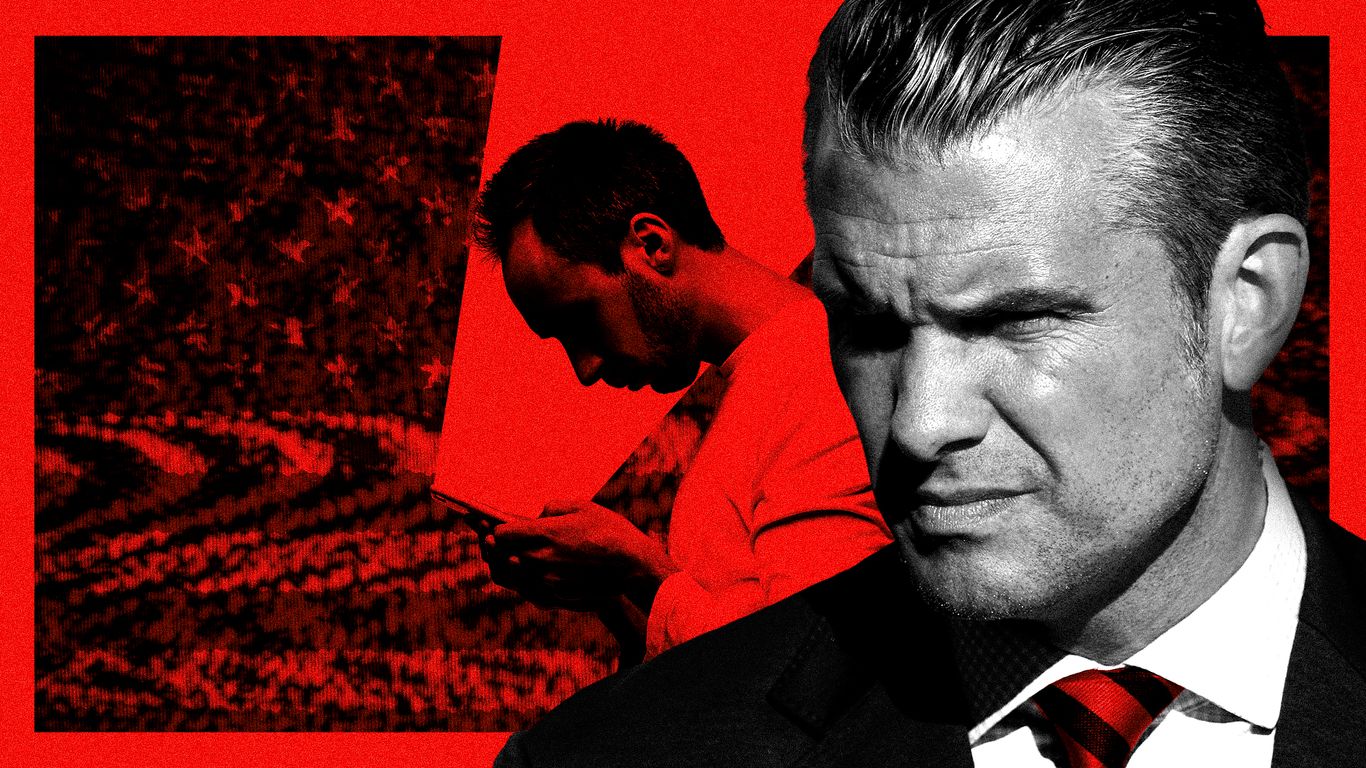
Defense Secretary Pete Hegseth announced that the execution of Nidal Hasan, the Fort Hood shooter, will be streamed live, marking a shift towards broadcasting real-world violence for a global audience. This move reflects the Trump administration's emphasis on showcasing American power, sometimes through visceral footage. The administration is set to make capital punishment readily accessible to all, as Americans are increasingly exposed to shocking images on their devices, often without warning.
Footage from the Hamas attacks and Israel's military campaign in Gaza has proliferated on the internet, with some videos spreading rapidly across social media platforms like X. The August 2025 killing of Ukrainian refugee Iryna Zarutska on a Charlotte train also went viral, sparking debates about crime and public safety. Trump admitted to watching a video of the August 2025 killing of Ukrainian refugee Iryna Zarutska on a Charlotte train, expressing regret over his viewing.
The prospect of a live broadcast of Hasan's execution would be unprecedented, as public executions are rare worldwide, primarily occurring in Iran and Taliban-run Afghanistan. Tech companies are grappling with the decision of whether to allow the Pentagon to livestream the event on their platforms. While TikTok and Kick have explicitly stated that they would not permit such a livestream, YouTube, Meta, X and Twitch have not commented on the matter.
Elon Musk, the owner of X, has positioned the platform as a defense against internet censorship in the pursuit of free speech. Hegseth's plan is testing the boundaries of this philosophy.
The announcement raises the question of whether America will revert to public executions after nearly a century-long absence. Hegseth argued that public executions serve to emphasize the severe consequences of such actions. In the 1930s, the 20,000-person attendance at Rainey Bethea's execution in Kentucky remains the last known public execution in the United States.
A livestreamed execution could potentially reach billions, highlighting the contrast between past and present. Vice President JD Vance expressed skepticism about the event being livestreamed and whether he would watch it. The bottom line is that America once moved away from public executions but is now poised to broadcast one to the world.
Written by urgent.news from Axios's reporting — not their text. Machine-written — may contain errors; check the original before relying on it.