Following a deadly train crash, Indonesia steps up safety reforms as experts push for long-term improvements
Authorities have begun addressing communication, signalling and other safety gaps exposed by the deadly April train crash, but experts say Indonesia needs broader reforms to prevent similar accidents elsewhere.
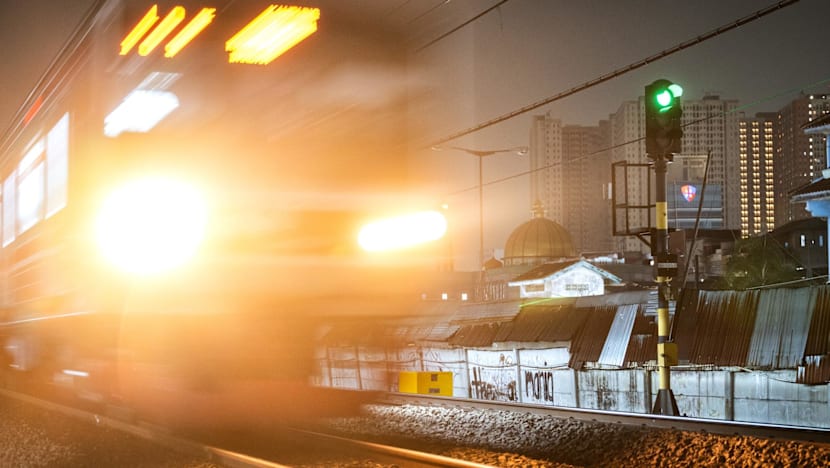
Indonesia is taking steps to improve railway safety following a devastating April train crash that killed 16 people, all of whom were women. The incident occurred when an electric taxi stalled at an unmanned level crossing near East Bekasi Station, and was struck by a commuter train traveling west. Another train, an express service heading from Jakarta to Surabaya, then collided with the stationary commuter train, crushing passengers inside the women-only carriage at the rear. The entire sequence of events took just three minutes and 48 seconds.
A National Transportation Safety Committee (KNKT) investigation found communication problems, poor timetable management, and a lack of standard operating procedures (SOP) to report and respond to emergencies as contributing factors to the crash. The committee also noted the intense lighting in the nearby Gang Delima neighborhood and the traditional market beside the tracks, which made railway signals difficult to distinguish and were compounded by scratches and cracks on the express train's windscreen.
The KNKT issued 17 recommendations to train operators and the Ministry of Transportation, calling for tighter SOPs, more training, and improvements in various infrastructures, systems, and facilities. However, experts argue that these recommendations, which focus on the specific crash location, do not address broader safety gaps across the country.
Yusa Permana, a transportation planning and policy expert, told CNA that similar issues exist throughout Indonesia, and there is a need for national efforts to address these concerns.
The KNKT report highlighted that the initial communication from the driver of the commuter train involved was so poor that it took the southern railway traffic controller three minutes and 20 seconds to fully understand the situation and activate an emergency response. By the time the express train driver saw a red signal instructing him to stop, he was only 500 meters away from the crash site, traveling at over 100 km/h.
Despite slowing the train to 78 km/h and applying the emergency brake about 275 meters from the station, the express train collided with the stationary commuter train. The KNKT concluded that the express train driver would have needed an additional 500 to 550 meters to come to a complete stop. Jakarta police have named the express train driver, identified as 37-year-old AN, a suspect in the crash.
Written by urgent.news from Channel News Asia's reporting — not their text. Machine-written — may contain errors; check the original before relying on it.