Fifty billion seedlings: Can Ethiopia replant its ravaged forests?
A legacy of deforestation has left Ethiopia struggling with more intense flooding and drought. The country is trying to restore its native forests through one of the world’s most ambitious and well-funded tree-planting campaigns, but such projects in other nations have often fallen short.
In central Ethiopia's Gurage Zone, Niku Argane's farm has suffered due to years of flooding and drought, leading to soil erosion and reduced crop yields. This is a common issue across the country, where Ethiopia nearly lost its forests over the past century for farming, grazing, and fuel use. The loss of trees has left landscapes vulnerable to erosion and made crops more susceptible to extreme weather.
Climate change has exacerbated the problem, with heavier rainfall causing landslides and more intense droughts drying out the land. This land degradation costs Ethiopia an estimated $4.3 billion annually in reduced harvests and lost income, affecting the livelihoods of over 100 million people dependent on agriculture.
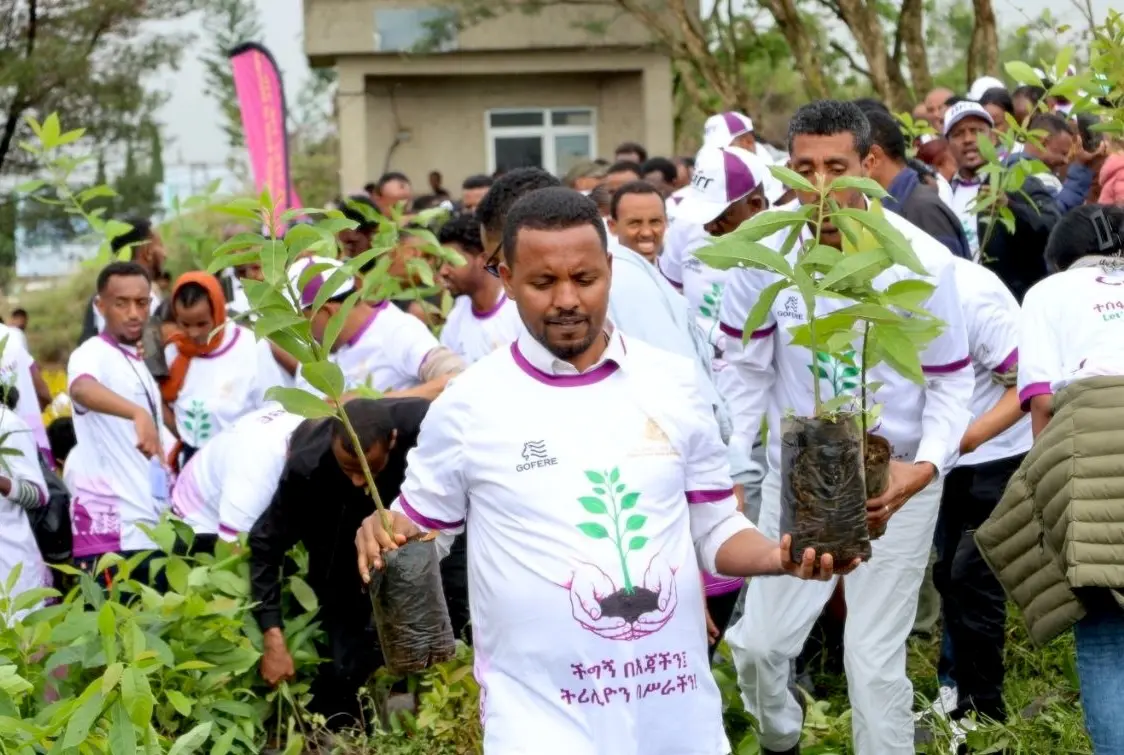
To combat these challenges, the Ethiopian government launched the Green Legacy Initiative in 2019, mobilizing millions of citizens to plant trees across the nation. By 2024, over 47 billion tree seedlings had been planted, as part of a goal to plant 50 billion by 2030. Volunteers plant trees on steep hillsides, integrating them into farmland, and sequestering carbon to help protect future generations from increasingly extreme weather.
While reforestation efforts are often unsuccessful, the scale of Ethiopia's ambition gives hope. Even if only 30% of the trees survive, the impact will still be significant.
In the early 20th century, forests covered 35 to 40% of Ethiopia. However, due to deforestation for agriculture, pasture, fuel, and construction, forest cover dropped to less than 3% by 1989. By the 2000s, restoration programs increased, and the government committed significant funding to landscape restoration. In August 2024, 26.6 million Ethiopians planted 800 million tree seedlings in a single day, surpassing the previous year's record.
This effort, combined with reduced soil erosion and a rise in forest cover, shows promise for reversing the country's environmental decline.
Written by urgent.news from Grist's reporting — not their text. Machine-written — may contain errors; check the original before relying on it.