Expedition hopes to find aviator Amelia Earhart’s plane on remote island
A team of researchers are on their way to a remote island to inspect what they think could be the wreckage of famed aviator Amelia Earhart's plane.
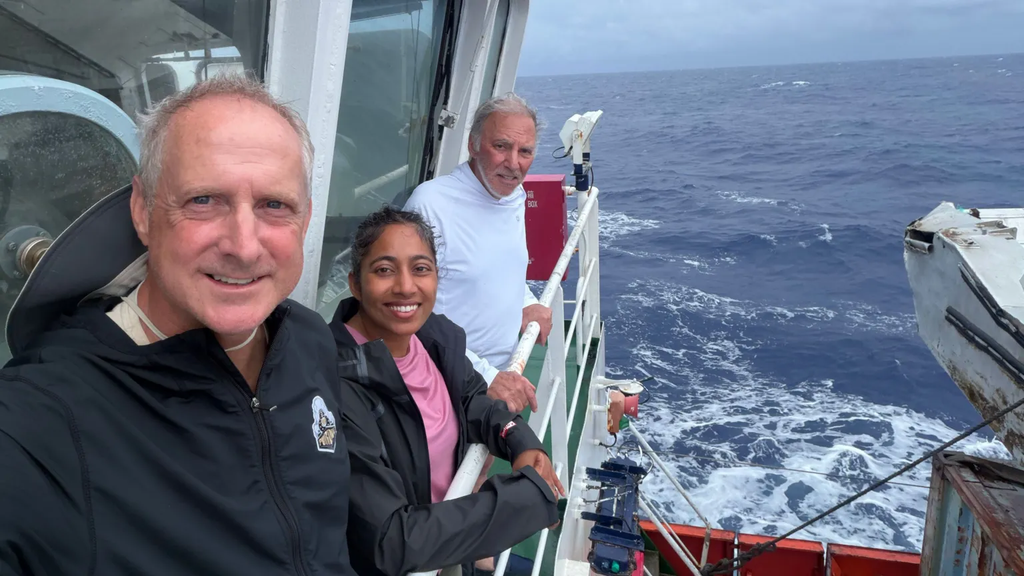
Researchers from the US-based Archaeological Legacy Institute (ALI) and Purdue University are en route to a remote island in the Pacific Ocean to investigate what they believe could be the wreckage of aviation pioneer Amelia Earhart's plane. The team plans to arrive at Nikumaroro Island by Monday in the hope of shedding light on the mystery surrounding her disappearance in 1937.
Earhart vanished while attempting to circumnavigate the globe, sparking decades of speculation about her fate. The researchers are particularly interested in a so-called Taraia Object, which was first spotted on satellite imagery in 2020 and confirmed in aerial photography dating back to 1938. The object, visible on the edge of a lagoon off Nikumaroro, has been the subject of much debate.
Some experts suspect it could be remnants of Earhart's Electra twin-engine plane, while others remain skeptical. The team is currently halfway through their 830-mile journey from Kiribati, having departed the country's capital on Wednesday. When they reach Nikumaroro, they will have to navigate a narrow passage between the atoll's reef, which was created by the British in 1963, the last time the island was inhabited.
Richard Pettigrew, head of ALI and expedition lead, expressed excitement about the potential discovery, stating that finding Earhart's Electra aircraft would be "the discovery of a lifetime." Earhart had successfully flown across South America, Africa, and Asia in her Electra plane before arriving in Lae, Papua New Guinea on July 2, 1937.
Her final leg of the journey, attempting to reach Hawaii and then California, ended in tragedy as her plane disappeared without a trace near Howland Island. The official explanation suggests that Earhart ran out of fuel while struggling to find the island, leading to a crash into the ocean. However, no physical evidence has ever been found.
Another theory proposes that Earhart intentionally navigated to Nikumaroro, where she ditched her plane and perished as a castaway. The researchers arriving at the island have partially credited Gillespie for uncovering evidence of human presence on the atoll in the 1930s and forensic analysis of skeletal remains discovered there in the 1940s.
These findings support their theory, but Gillespie remains skeptical, likening the Taraia Object to fallen tree debris.
Written by urgent.news from MyJoyOnline Ghana's reporting — not their text. Machine-written — may contain errors; check the original before relying on it.